Failed Knee Replacement Specialist in Kansas City: Your Guide to Next Steps

Does a painful knee replacement automatically mean the implant has failed? No. Persistent pain, stiffness, or instability deserves careful attention, but symptoms alone don’t determine whether revision surgery is needed. If you’re searching “failed knee replacement specialist kansas city,” you may be looking for clear answers as well as relief from symptoms.
It’s understandable to feel concerned when everyday movement is difficult and the possibility of another surgery feels daunting. A thorough evaluation can help distinguish implant problems, such as loosening, infection, or instability, from other possible causes. Revision knee surgery is one possible treatment, not an automatic response to pain.
This guide explains how a specialist may assess a painful knee replacement, which treatment options may be considered, and what information to bring to a consultation. At Swope Joint Replacement, Dr. Ryan Swope provides personalized revision knee care with direct physician access. Understanding the evaluation process can help you take part in decisions about your care and prepare for a second opinion in Kansas City.
Table of Contents
Persistent Pain After Knee Replacement in Kansas City: When to Seek an Evaluation
How a Failed Knee Replacement Specialist Evaluates the Problem
Failed Knee Replacement Treatment Options: Matching Care to the Cause
How to Prepare for a Revision Knee Consultation in Kansas City
Revision Knee Care with Swope Joint Replacement in Kansas City
Persistent Pain After Knee Replacement in Kansas City: When to Seek an Evaluation
Persistent symptoms after a major operation can be unsettling, especially when they interfere with walking, sleep, or confidence in your knee. They deserve attention, but they don’t identify the cause on their own. A painful or “failed” knee replacement is a concern to investigate, not a diagnosis you can make from discomfort alone. If you’re searching for a failed knee replacement specialist kansas city patients can consult, start by noting what has changed and when to seek help.
Which symptoms after knee replacement should prompt a specialist conversation?
Talk with an orthopaedic specialist if pain persists, returns after a period of improvement, or gets worse. Also report swelling, stiffness, a feeling that the knee may give way, or reduced mobility. These symptoms can affect function and warrant discussion, but none proves that the implant has failed.
Before your appointment, note when each symptom began, whether it is changing, and what makes it better or worse. Describe the practical effects: stairs may have become difficult, you may need support to stand, or you may not be able to walk as far as before. Specific examples help the specialist understand how your knee affects daily life.
Why symptoms do not confirm a failed knee implant
Different problems can cause similar symptoms, and each may call for a different response. Pain or stiffness alone doesn’t establish loosening, infection, or another implant complication, and it doesn’t automatically mean revision surgery is appropriate. The Knee Replacement Surgery Overview describes possible complications, but symptoms are clues to assess, not proof of implant failure. A suspected problem needs investigation; confirming the cause requires clinical evaluation.
That distinction matters. A careful assessment considers your history and examination alongside relevant records and imaging before treatment options are discussed. The goal is to understand what may be causing your symptoms, rather than assume every painful replacement needs another operation.
Routine follow-up or urgent care? For persistent or worsening symptoms without a sudden emergency, arrange an orthopaedic evaluation and follow any instructions from your surgical team. Seek urgent medical care for concerning acute changes, such as a sudden inability to bear weight after an injury, rapidly increasing swelling, or a hot, red knee with fever or drainage. If you believe you’re experiencing an emergency, call 911 or go to an emergency department. Don’t wait for a routine specialist appointment when symptoms feel urgent.
A specialist consultation in Kansas City or a nearby community can help you organize your symptoms and concerns. You don’t need to decide on revision surgery before that conversation. Start by describing what changed, when it changed, and how it limits activities that matter to you.
How a Failed Knee Replacement Specialist Evaluates the Problem
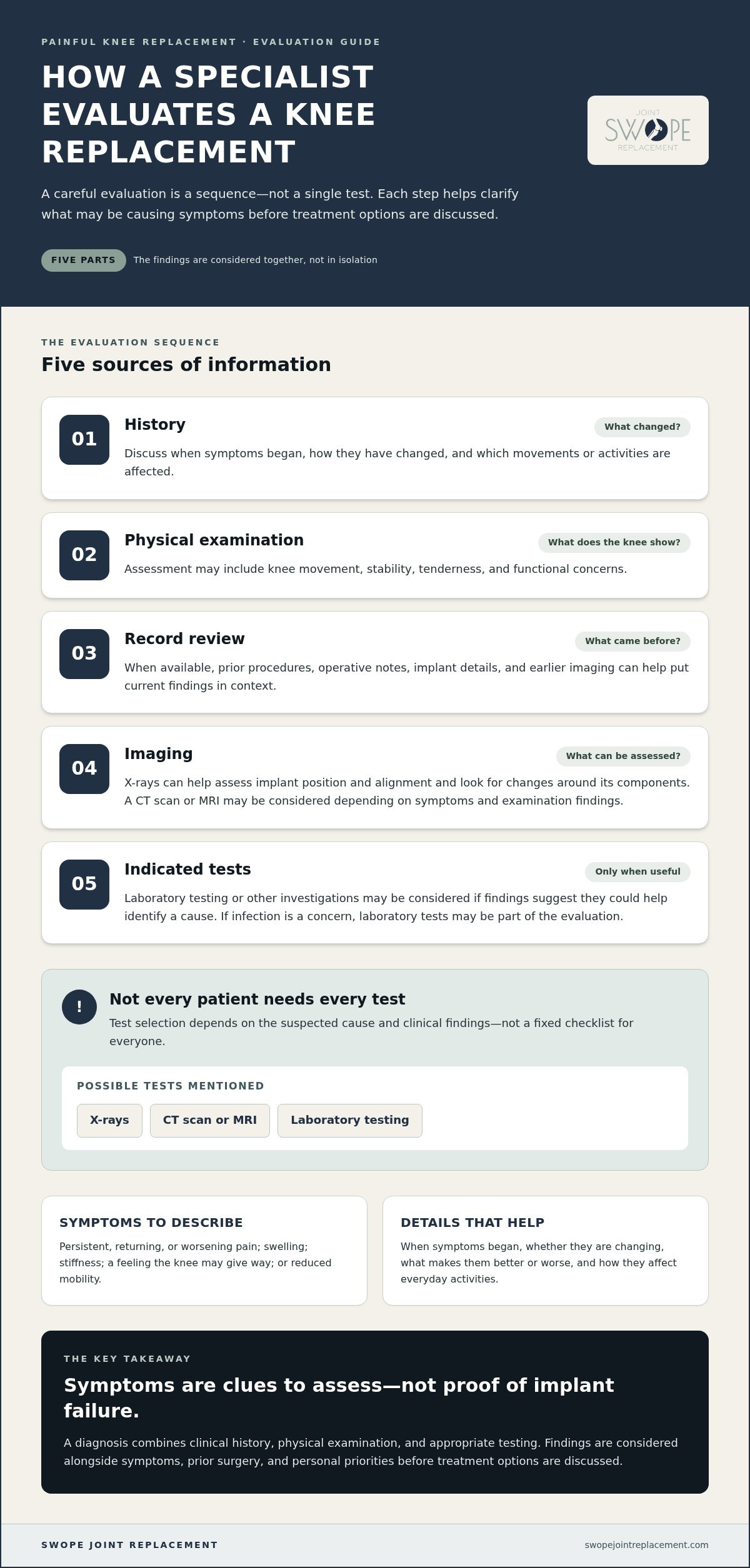
A careful evaluation is a sequence, not a single test. A failed knee replacement specialist in Kansas City will listen to your experience, examine the knee, review relevant records, and consider imaging or other tests that fit your symptoms. Each step helps clarify what may be happening before treatment options are discussed. Not every patient needs every test.
The process commonly includes:
History: When symptoms began, how they have changed, and which movements or activities are affected.
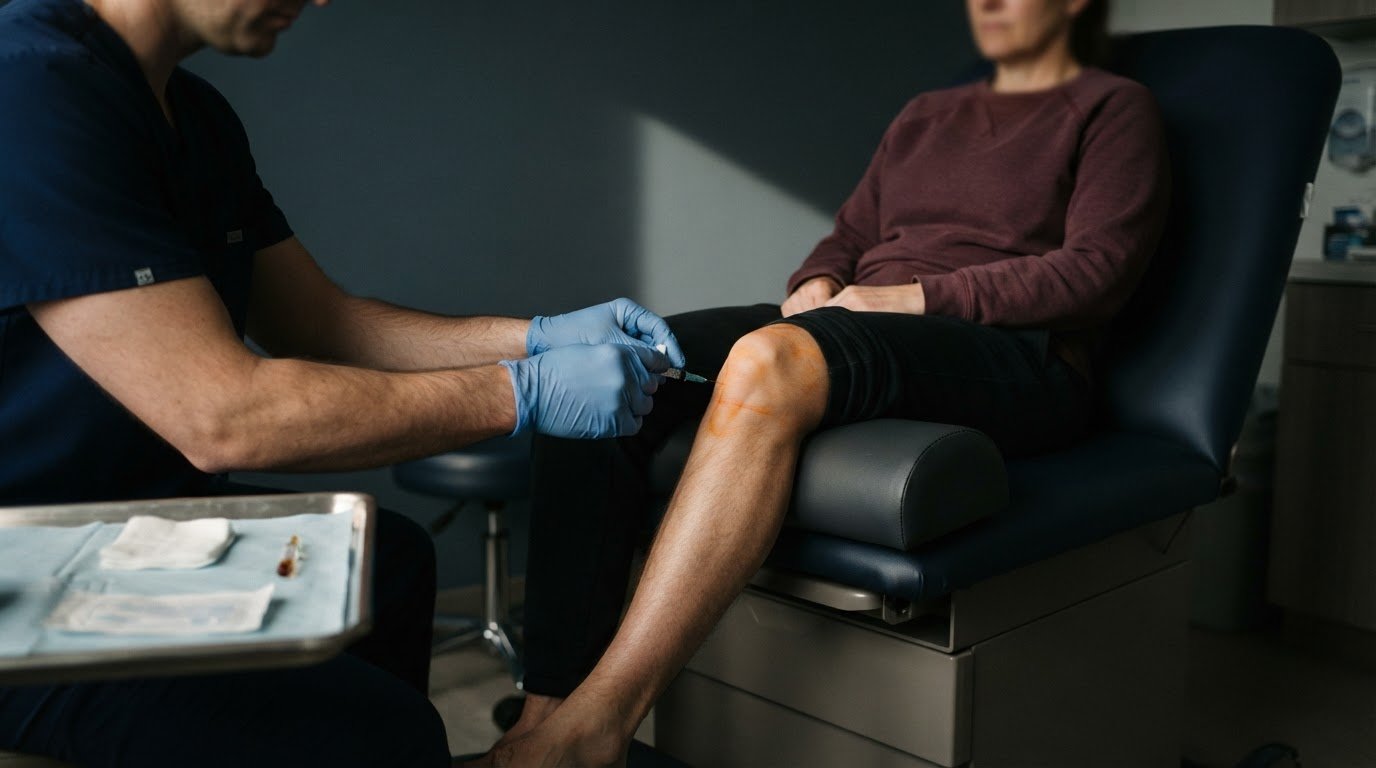
Physical examination: Assessment of knee movement, stability, tenderness, and functional concerns.
Record review: Consideration of prior procedures, operative notes, implant details, and earlier imaging when available.
Imaging: X-rays, with additional imaging considered when the clinical picture calls for it.
Indicated tests: Laboratory testing or other investigations if findings suggest they may help identify a cause.
What the history and examination can help clarify
Describe where you feel symptoms, when they started, and whether they are steady or changing. Explain how they affect movement, from getting out of a chair to walking on uneven ground. The examination can help assess motion, stability, tenderness, and functional limitations. Share details about previous knee procedures, wound concerns, and relevant health history so the clinician can interpret the findings in context.
How imaging and other tests inform the evaluation
X-rays can help the specialist assess implant position and alignment and look for changes around its components. Depending on your symptoms and examination, additional imaging, such as a CT scan or MRI, may be considered. If infection is a concern, laboratory tests may be part of the evaluation. Test selection depends on the suspected cause and clinical findings, rather than a fixed checklist for everyone.
Diagnosis combines your clinical history, physical examination, and appropriate testing. No image or test should be interpreted in isolation. The specialist considers how results relate to your symptoms, prior surgery, and priorities. For example, an imaging finding must be considered alongside what you feel and what the examination shows.
Your goals also belong in the discussion. The same finding may have different importance depending on whether your main concern is pain at rest, confidence on stairs, or returning to a valued activity. Once the clinician connects the available evidence with your daily experience, you can review reasonable paths forward and the reasons for them. Revision surgery is considered when the evaluation supports it, not simply because symptoms are present.
For patients in Kansas City and nearby communities, Dr. Ryan Swope’s concierge orthopaedic practice offers direct physician access and an individualized evaluation. Learn about revision knee care and the practice’s approach to consultation and treatment planning.
Failed Knee Replacement Treatment Options: Matching Care to the Cause
Persistent symptoms don’t automatically mean the entire knee implant must be removed. The next step depends on the evaluation, how the implant and surrounding bone appear, and how symptoms affect your life. A failed knee replacement specialist in Kansas City can explain which options fit the clinical findings and why. Treatment may focus on a specific cause, involve revision of selected components, or require a more extensive revision.
When care may focus on a specific cause or component
Not every painful replacement requires removal of every implant component. If the evaluation identifies a problem that can be addressed selectively, a surgeon may consider a limited revision, such as replacing one component while retaining another. This isn’t a universal rule or a decision based on symptoms alone. It depends on what the assessment shows, the condition and compatibility of the components, and the treating surgeon’s judgment.
In other cases, care may address a cause without revising the implant. Observation or non-operative treatment may be reasonable when appropriate to the findings and your needs. These options aren’t substitutes for surgery when a mechanical problem requires correction, but they can be part of a considered plan when revision isn’t indicated or another issue is being addressed.
When a more extensive revision may be considered
Revision knee surgery replaces part or all of a previous knee prosthesis when clinical findings support that approach. Infection, loosening, instability, or bone loss are possible reasons for further evaluation, not automatic indications for the same operation. If more of the implant or surrounding structure is involved, planning may need to account for the extent of the problem and the condition of the bone.
Before deciding, discuss expected benefits, risks, and alternatives in relation to your health, symptoms, and goals. No approach can promise a particular result. A careful conversation can help you understand why a treatment is being considered, what it is intended to address, and what questions remain before you decide.
How to Prepare for a Revision Knee Consultation in Kansas City
A little preparation can make a specialist consultation more focused. You don’t need to arrive with a diagnosis or decide whether you want surgery. Bring what you have, describe what has changed, and note what you hope to do. For patients seeking a failed knee replacement specialist kansas city residents can consult, clear information helps the physician understand both the clinical history and the person living with the symptoms.
Records and symptom details to bring
Gather records from your original knee replacement and any later procedures or evaluations, if available. Prior images and radiology reports can help the specialist review changes over time. If you don’t have every document, bring what you can. The physician can help determine what else may be useful.
Operative notes and available implant or component details
Prior X-rays or other imaging, along with reports
Relevant medical records, including notes from previous evaluations or treatments
A current medication list and a brief summary of treatments you’ve tried
Prepare a short timeline, too. Include when symptoms began, whether they have changed, and what you’ve noticed since treatment. Describe function in everyday terms: how far you can walk, whether stairs are difficult, or if standing from a chair feels less steady. These details connect your concerns to specific activities and goals.
Questions that support an informed decision
Bring a written list of questions so you can understand the findings and the reasoning behind recommendations. It’s reasonable to ask what the evaluation can explain, what remains uncertain, and what information may still be needed before choosing a path.
Which findings may explain my symptoms, and what is still unclear?
What treatment options fit these findings, and what are the trade-offs?
What are the potential benefits and risks of each option in my situation?
If revision is being considered, what parts of the implant may need attention, and why?
What recovery considerations might affect my work, home responsibilities, or mobility goals?
How does the recommendation relate to activities I hope to return to?
Share what matters most to you. Perhaps your priority is walking comfortably around the neighborhood, managing stairs at home, or feeling more confident on your feet. Naming that goal keeps the conversation centered on your life, not only on imaging or implant details.
Dr. Ryan Swope provides personalized revision knee care through Swope Joint Replacement in Overland Park, serving Kansas City and nearby communities, including Olathe, Lee’s Summit, Lenexa, Leawood, Blue Springs, and Independence. Patients have direct access to their physician in this concierge orthopaedic practice, making it possible to discuss records, concerns, and treatment considerations directly with the surgeon. Learn about revision knee consultation.
Revision Knee Care with Swope Joint Replacement in Kansas City
Persistent symptoms after knee replacement can leave you with difficult questions. Is the implant causing the problem? Could another approach help? Does revision surgery make sense for you? At Swope Joint Replacement, Dr. Ryan Swope provides personalized evaluation and direct physician access for patients in Kansas City and nearby communities. The goal is to understand your concerns and findings before discussing an appropriate next step.
What a personalized revision evaluation is designed to do
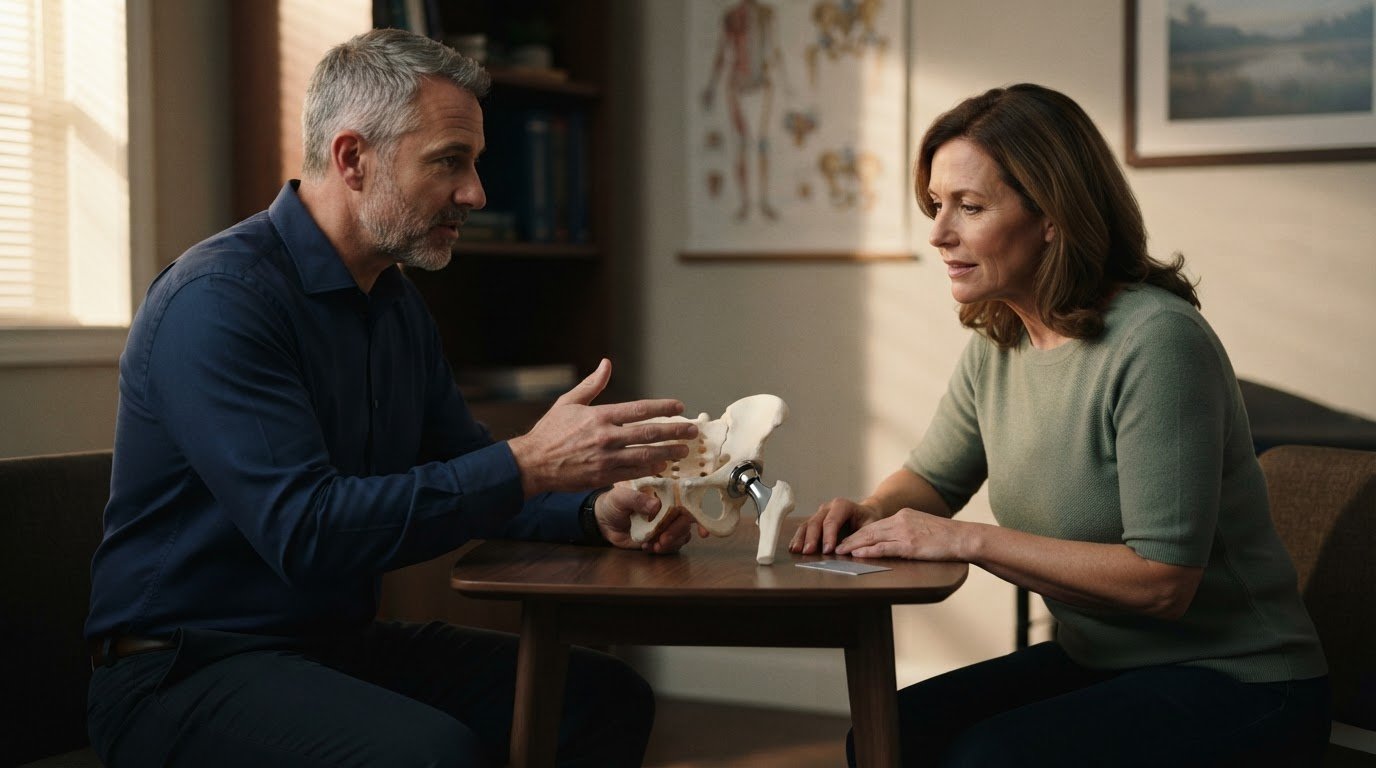
An evaluation brings together your medical and surgical history, physical examination, and available diagnostic findings. Dr. Swope considers how those details relate to your symptoms and what matters in your daily life. He can explain what the findings may indicate, what remains uncertain, and why a particular option may or may not fit. Dr. Swope performs revision knee surgery when clinical findings support that path, but it isn’t an automatic response to pain.
Your questions and goals belong in the conversation. You may be focused on managing stairs, walking more comfortably, or understanding whether an implant concern has been identified. Discussing those priorities helps frame the options around your needs. If revision is appropriate, the scope of surgery depends on the problem and the condition of the implant and surrounding structures. Ask about expected benefits, potential risks, alternatives, and recovery considerations before making decisions.
Understanding the practice’s care and payment model
Swope Joint Replacement uses a concierge orthopaedic care model with direct access to the physician. The practice operates outside in-network insurance arrangements and offers cash pricing. Patients can discuss payment options and out-of-network insurance with the practice as part of planning their care.
For someone searching for a failed knee replacement specialist kansas city, a thoughtful consultation offers a place to review symptoms, available records, and concerns with the surgeon. You don’t need to arrive certain that you want surgery. Begin by seeking a clear explanation of what the evaluation shows and which next steps may be reasonable.
Learn more about personalized orthopaedic care in Kansas City and the practice’s approach to individualized treatment planning.
Move Forward With a Clearer Plan
You don’t have to decide about another operation before you understand what may be behind your symptoms. The next step can be a focused conversation that helps you consider your choices, voice your concerns, and decide what feels right for your health and daily life. Seeking a failed knee replacement specialist kansas city patients can consult is one way to turn unanswered questions into a more informed plan.
Bring your priorities into that discussion, including what you hope to regain and what you’re unsure about. Clear explanations can help you understand your options and the reasoning behind them. Whatever the evaluation shows, an informed choice starts with understanding the findings.
Explore revision knee care with Swope Joint Replacement and discuss a plan based on your evaluation and goals.
Frequently Asked Questions
Can knee revision surgery be considered soon after the original replacement?
Yes. Revision may be considered soon after a knee replacement if an evaluation identifies a problem that warrants it, but there’s no standard waiting period that applies to everyone. Timing depends on the suspected cause, your health, and the available findings. Some concerns need prompt medical attention; others require further assessment before choosing treatment. Ask the specialist what makes the situation time-sensitive, what can safely wait, and what signs should prompt you to seek care sooner.
Can an infection affect a knee replacement without a fever?
Yes. Not having a fever doesn’t rule out infection, and having one symptom alone can’t confirm it. If infection is a concern, share changes such as increasing discomfort, wound drainage, or feeling generally unwell with a clinician, who can decide whether examination or testing is appropriate. If your symptoms are rapidly worsening or you feel acutely unwell, seek urgent medical care rather than waiting for a routine appointment.
Can I get a second opinion if another surgeon recommended knee revision?
Yes. You can seek a second opinion to better understand the recommendation and the findings behind it. This doesn’t dismiss the first surgeon’s assessment; it gives you another opportunity to discuss your case and make an informed choice. Bring the written recommendation, test results, and your questions. If you searched “failed knee replacement specialist kansas city,” a second-opinion consultation can help clarify what the available evidence supports and what uncertainties remain.
Does revision knee surgery always involve replacing the whole implant?
No. Depending on the clinical findings, revision may involve changing selected components or replacing more of the prosthesis. The plan can be affected by the condition of the existing parts and the surrounding bone and tissues. Rather than assuming every component must be removed, ask which parts the surgeon proposes to revise, what problem each change is meant to address, and whether another approach is reasonable in your case.
Will I need a special implant for revision knee replacement?
Not necessarily. Implant selection is based on the specific problem, the existing components, bone support, and other individual considerations. There isn’t one revision implant that suits every patient. Ask the surgeon to explain what the proposed components are designed to address and how the plan accounts for your findings. If more than one approach is possible, discussing the differences can help you understand why a particular recommendation fits your situation.
How long do revision knee implants last?
There isn’t a single lifespan that can predict how long an implant will work for an individual. Longevity can vary with the reason for revision, health, activity, implant factors, and follow-up care. Published estimates describe groups of patients, not a guarantee for your outcome. Ask your surgeon which evidence is relevant to your circumstances and what follow-up plan is recommended to monitor your knee over time.
Can I request review of knee X-rays or records from another facility?
Yes. You can bring available records and images for the specialist to consider as part of your evaluation. If your X-rays are stored digitally, bring the image files or instructions for accessing them, as well as the written radiology report when available. Patients coming from Overland Park, Kansas City, Olathe, Lee’s Summit, Lenexa, Leawood, Blue Springs, or Independence can organize these materials before the visit. The clinician can advise whether anything else is needed.
Schedule a revision knee consultation with Swope Joint Replacement to discuss your symptoms, records, and next steps with Dr. Ryan Swope.
Comments