Is Knee Replacement Surgery Outpatient? What to Expect in 2026

Going home the same day after knee replacement is possible, but it isn’t automatic. If you’re asking, “is knee replacement surgery outpatient,” the answer depends on more than the procedure itself. Your overall health, progress with early movement, and support at home all help shape a safe discharge plan.
It’s understandable to want a clear answer before surgery, especially when you’re weighing pain control, mobility, and whether you’ll feel secure at home. Outpatient surgery generally means leaving the facility without an overnight stay, but your care team should explain what that means for your specific plan. The goal is not simply to leave sooner. It’s to make sure you’re ready.
This guide covers what outpatient knee replacement involves, which personal and practical factors can affect discharge timing, and what to prepare at home. It also suggests questions to ask your surgeon about pain management, safe movement, and support during early recovery. These conversations can help you plan around your own health and circumstances, rather than making assumptions about what outpatient care means.
Table of Contents
Is knee replacement surgery outpatient, or will you stay overnight?
How do surgeons decide if outpatient knee replacement is appropriate?
Outpatient vs. overnight knee replacement: what changes for patients?
How can you prepare for outpatient knee replacement at home?
What should you ask a knee replacement surgeon about outpatient care?
Is knee replacement surgery outpatient, or will you stay overnight?
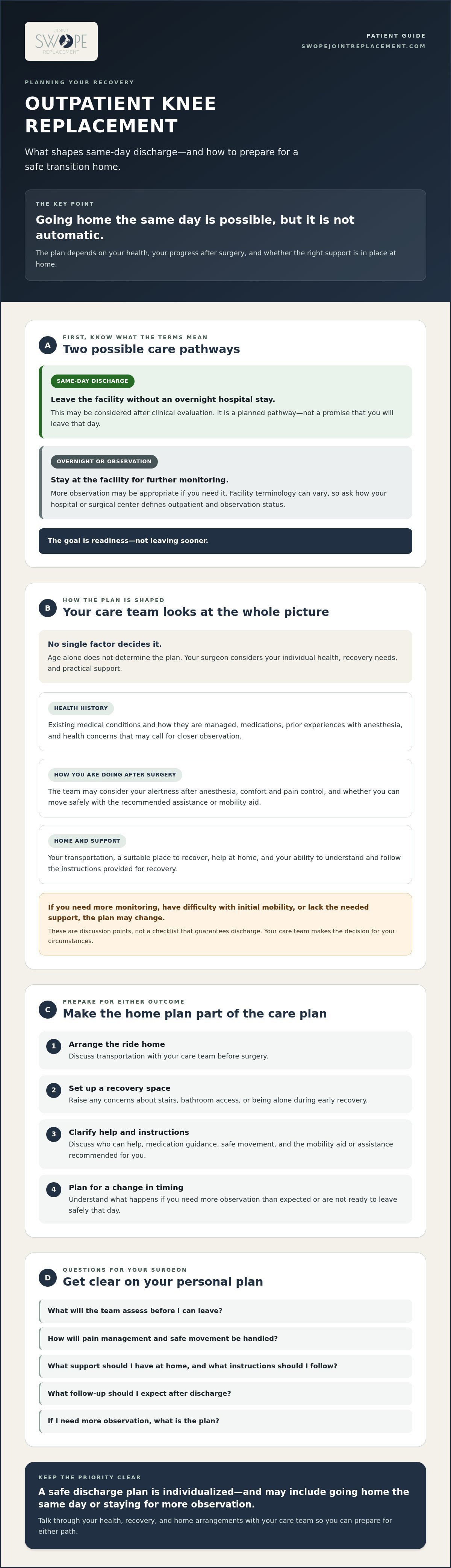
Some patients go home the day of knee replacement surgery; others need more observation before discharge. If you’re asking, “is knee replacement surgery outpatient,” the answer depends on your health, your recovery after surgery, and the plan your surgeon and care team consider safest for you.
A planned outpatient pathway is not a promise of same-day discharge. Your care team may adjust the plan if you need additional monitoring or aren’t ready to leave safely. The priority is a discharge decision that fits your needs, not a predetermined timeline.
What does outpatient knee replacement mean?
Outpatient describes the planned care setting and whether you stay overnight, not a different operation. A patient discharged the same day leaves the facility without an overnight hospital stay. A short inpatient or observation stay means remaining at the facility for further monitoring, even if discharge follows soon afterward. Terms can vary by facility, so ask how your surgical center or hospital defines outpatient and observation status. For a general overview of surgical technique, recovery, and potential risks, see Knee replacement.
Is same-day discharge possible for total knee replacement?
Same-day discharge may be considered for selected patients after clinical evaluation. Age alone doesn’t determine the plan, and no single factor tells the whole story. Your surgeon may consider your overall health, how well existing medical conditions are managed, and whether you have reliable help and a suitable place to recover.
Your progress on the day also matters. The team may assess your comfort, alertness, and ability to move safely, then consider those observations alongside your medical needs and home arrangements. If you need more monitoring, have difficulty with initial mobility, or don’t yet have the right support in place, an overnight stay may be more appropriate. These are examples to discuss, not a checklist that guarantees discharge.
Ask your surgeon what the team will assess before you leave and what could change the plan. Knowing what to expect can help you prepare for either possibility without treating same-day discharge as a given.
How do surgeons decide if outpatient knee replacement is appropriate?
Outpatient suitability is an individualized decision, not a label assigned by age or a single health factor. Your surgeon considers your medical history, current health, expected recovery needs, and the practical support available after discharge. The aim is to understand the whole picture before recommending a care setting.
Your discharge plan should reflect your overall safety needs, not a target to leave the facility quickly. The question “is knee replacement surgery outpatient” has no one-size-fits-all answer. Your care team can explain which parts of your situation matter and how they’ll decide whether you’re ready to go home.
Which health and recovery factors may affect discharge?
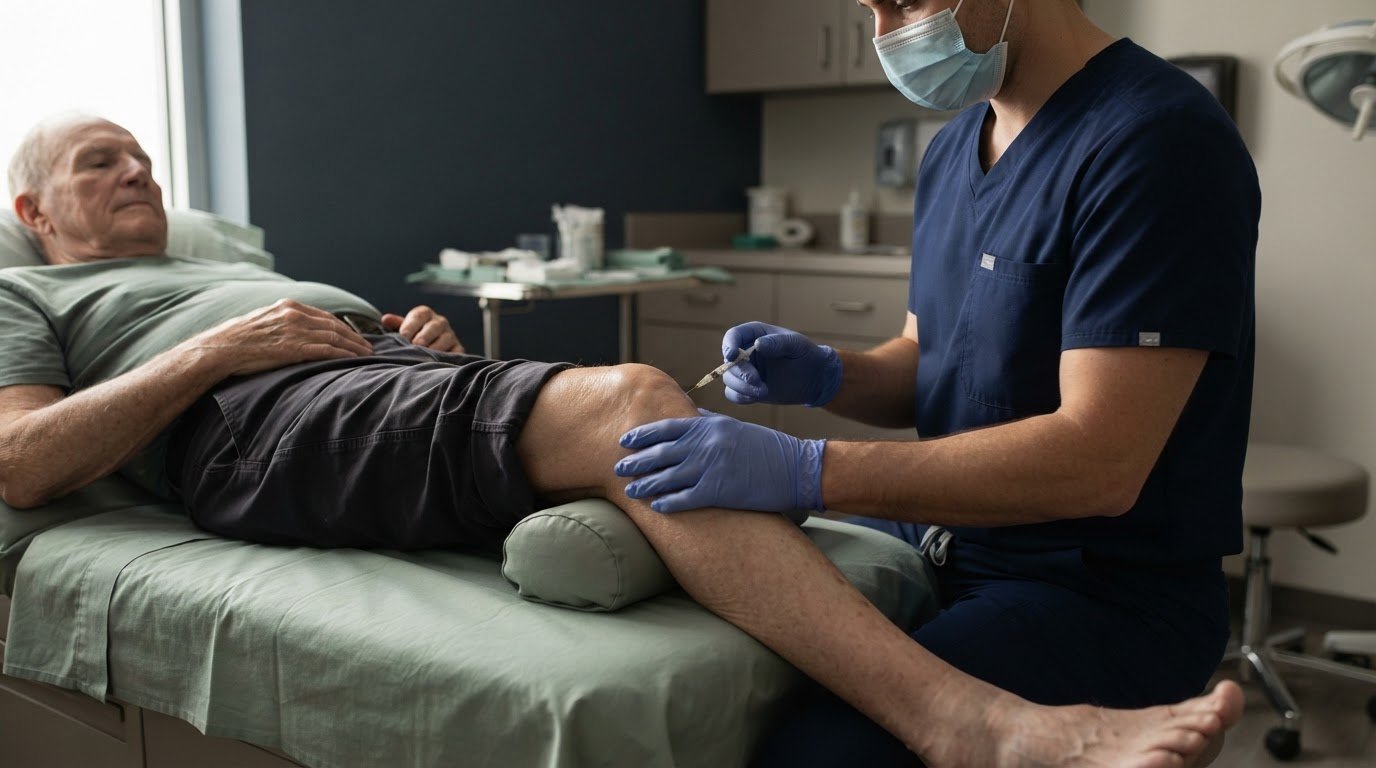
Your surgeon may review existing medical conditions, medications, prior experiences with anesthesia, and health concerns that could require closer observation. These are discussion points, not automatic reasons for or against outpatient care. Only your clinician can assess how your individual history affects the plan.
After surgery, the team may consider whether you’re alert after anesthesia, whether your pain is manageable, and whether you can move safely enough for the next stage of recovery. You’ll also need to understand and follow the instructions provided for home. The AAOS guide to what to expect after knee replacement describes recovery and goals patients may need to meet before same-day discharge. Ask your care team which checks apply to your plan and what happens if you don’t meet them that day. An overnight stay may be considered if more observation or support is needed.
Why do mobility and home support matter?
Before discharge, your team may assess whether you can change positions and move safely with the assistance or mobility aid they recommend. These checks help the team judge whether the trip from the facility to your recovery space is manageable. They aren’t a promise of how quickly you’ll regain mobility.
Planning also extends beyond the facility. Discuss how you’ll get home, who can help, and whether your home setup presents any concerns. Stairs, bathroom access, and being alone during early recovery are useful topics to raise. Your care team can advise what support is appropriate for your circumstances and what to arrange before surgery.
Share your medical history and current medications with your care team.
Ask which mobility and recovery checks inform discharge.
Discuss transportation, home support, and a backup plan if you need to stay longer.
Bring these details to your planning conversation with your surgeon. If you’re considering knee replacement, you can discuss your knee replacement questions as part of an individualized orthopaedic consultation. Swope Joint Replacement provides personalized orthopaedic care for patients in Overland Park, Kansas City, Olathe, Lee’s Summit, Lenexa, Leawood, Blue Springs, and Independence.
Outpatient vs. overnight knee replacement: what changes for patients?
The main difference is where you spend the first night, not whether you receive a personalized recovery plan. If you’re comparing options and wondering, “is knee replacement surgery outpatient,” distinguish a planned same-day discharge from a short stay for observation. Neither setting is automatically safer, faster, or better for every patient.
What is different about the first day after surgery?
With either pathway, the care team monitors your recovery and discusses what you’ll need after leaving. They may review your comfort, alertness, movement, and readiness for the next stage of care. Checks and facility processes vary, so ask your surgeon or care team how they work at your planned location.
If the team recommends an overnight stay, it provides additional time for observation when they consider that appropriate. It doesn’t necessarily mean something has gone wrong. The plan may change based on your recovery and the team’s clinical judgment.
Does outpatient surgery mean less support?
No. The discharge setting alone doesn’t tell you how much guidance or follow-up you’ll receive. What matters is understanding your instructions and knowing whom to contact with routine post-operative questions. Before surgery, ask who will handle those questions, how follow-up is arranged, and what to do if your discharge plan changes.
Routine follow-up is different from emergency care. Confirm with your care team how urgent concerns should be handled, and don’t assume a practice provides round-the-clock availability. Whichever pathway is planned, you should leave with clear instructions suited to your recovery and home arrangements.
How can you prepare for outpatient knee replacement at home?
Preparing your home can make the transition after discharge more manageable. If you’re asking, “is knee replacement surgery outpatient,” discuss not only whether you may go home the same day, but also what you’ll need once you arrive. Your surgeon and care team should guide the plan based on your health, mobility, and home circumstances.
What should you arrange before surgery?
Use this checklist as a starting point, then confirm the details with your care team:
Arrange transportation. Confirm how you’ll travel home and whether the clinical team recommends that a support person accompany you.
Plan for help. Discuss who can assist at home and what support may be needed after discharge.
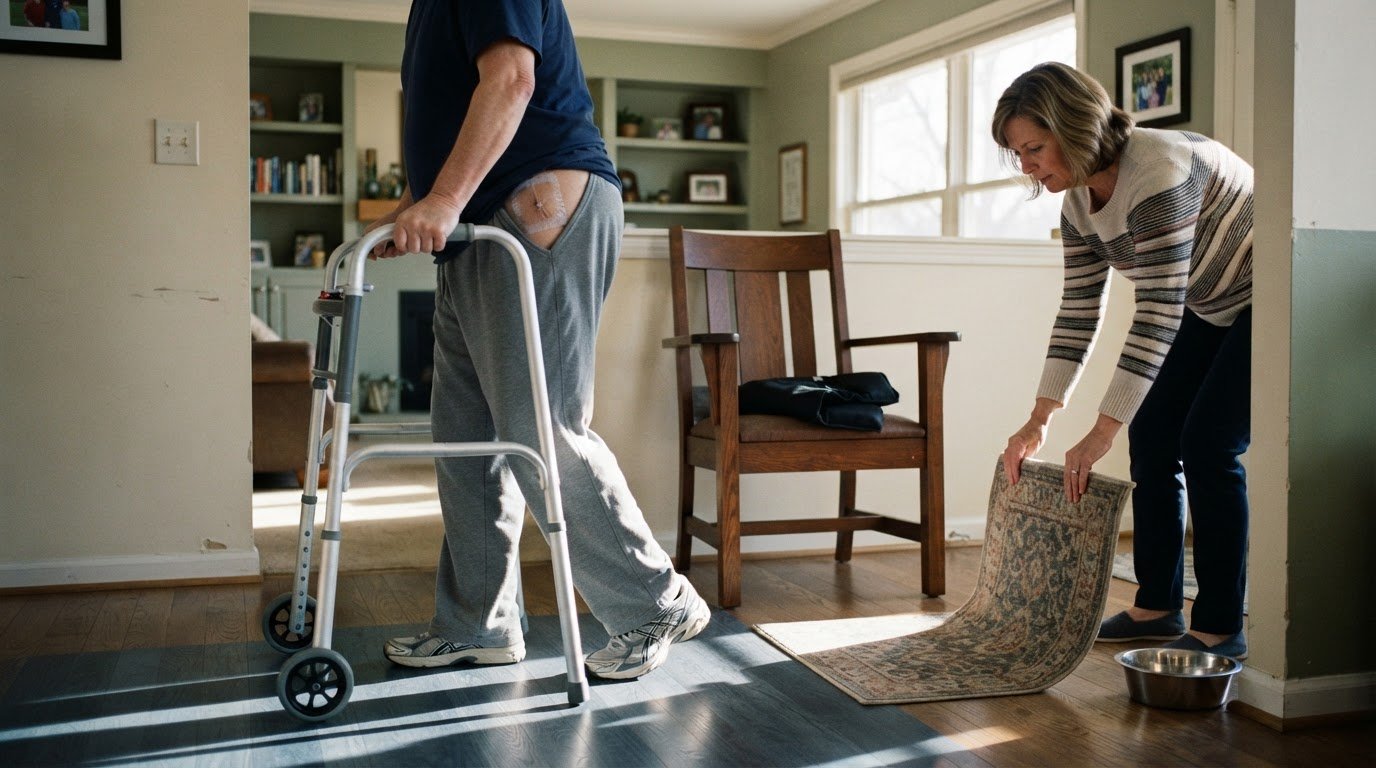
Prepare a recovery space. Keep frequently used items within easy reach, and clear clutter or loose rugs from the routes you expect to use.
Ask about equipment. Check with your surgeon or rehabilitation team about any mobility aids or other equipment you may need. Don’t assume what’s required.
Review instructions in advance. Confirm who to contact with routine questions after discharge and how urgent concerns should be handled.
Small practical details can help. For example, setting up a place to rest near the items you use most may reduce the need to move around unnecessarily. Your care team can help you adapt your preparation to your home and likely needs.
What should you expect after arriving home?
Follow the written plan your care team provides for wound care, medicines, activity, and follow-up. Confirm any medication instructions directly with them, including what to take and when. Ask for clarification before discharge if a direction is unclear.
Recovery needs vary, so follow your care team’s guidance rather than relying on a fixed timeline or someone else’s experience. Confirm what mobility support to use, how follow-up will be arranged, and whom to contact with routine post-operative questions. Your plan should also explain what to do if you have a concerning symptom. Follow your clinicians’ instructions for seeking urgent local medical care when needed.
Before surgery, review your transportation, home setup, and support plan with your surgeon. You can discuss knee replacement planning with Swope Joint Replacement as part of an individualized orthopaedic consultation.
What should you ask a knee replacement surgeon about outpatient care?
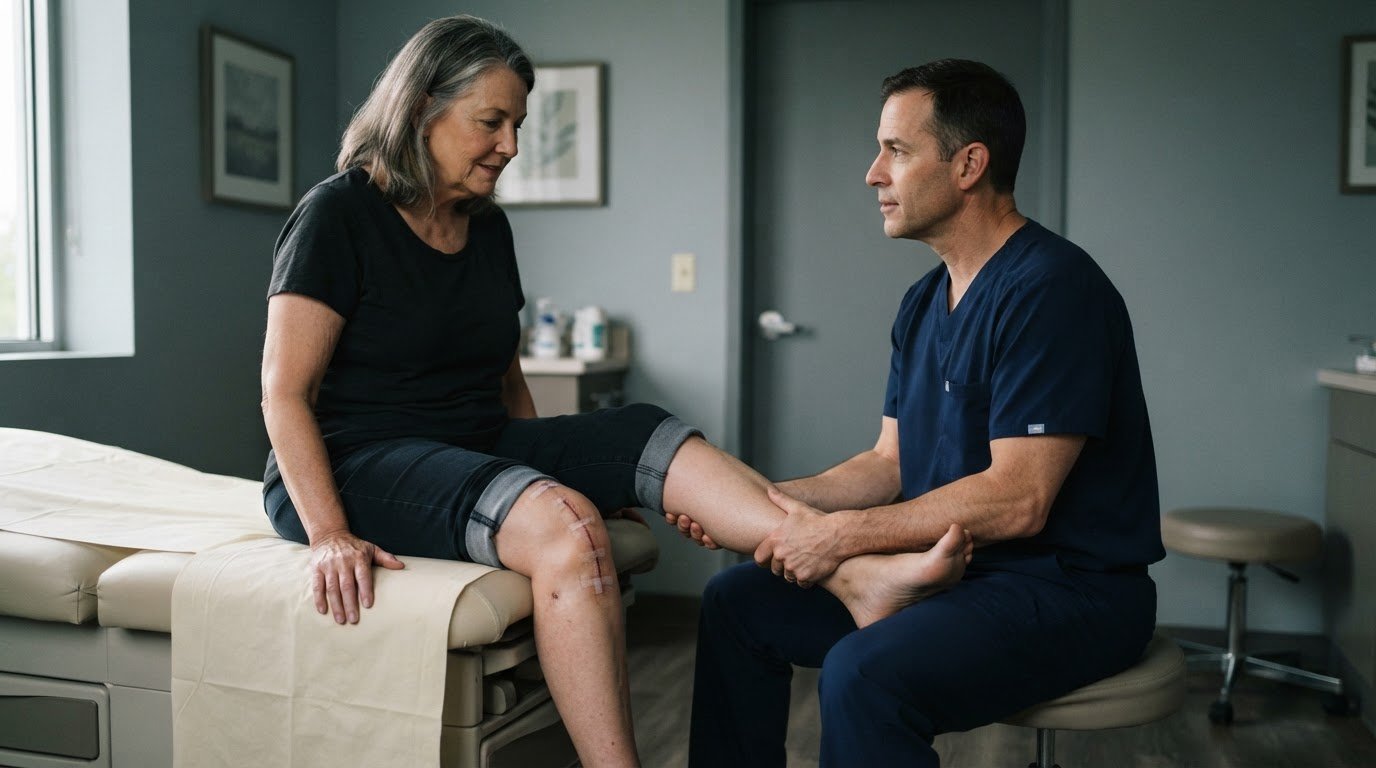
A useful conversation goes beyond asking whether you can go home the same day. Ask how the plan will be tailored to your health, recovery, and home situation. Your surgeon can best answer “is knee replacement surgery outpatient” after reviewing those details with you.
Questions to ask about your discharge plan
Use these questions to clarify what the care team will consider and what happens if your plan needs to change:
What criteria will you use to decide whether I’m ready for discharge, and who makes that decision?
What happens if pain, mobility, alertness, or another recovery check needs more attention?
If I need to stay longer than planned, where will I receive care and how will the plan be explained to me?
Who should I contact with routine questions after discharge, and where should I seek urgent care?
Share your medical history openly, including current health concerns and medications. Be equally candid about home support, transportation, and any worries about managing after discharge. These details help your surgeon and care team discuss a plan based on your circumstances rather than assumptions.
Questions to ask about personalized knee care
Ask which procedure your surgeon is considering and why it may suit your specific knee condition. If both total and partial knee replacement are possible options, ask what factors guide that choice and what information can help you prepare. Also ask what preparation and follow-up your surgeon recommends for your needs.
Before the conversation ends, make sure you understand the discharge plan, who to contact with routine concerns, and what the backup plan may involve. If an answer feels unclear, ask the surgeon to explain it another way. You deserve to understand the options and participate in decisions about your care.
For patients in Overland Park, Kansas City, Olathe, Lee’s Summit, Lenexa, Leawood, Blue Springs, and Independence, Swope Joint Replacement offers individualized orthopaedic consultations with direct physician access. You can discuss knee replacement questions with a physician and ask which care pathway may be appropriate for you.
Make a Knee Replacement Plan That Fits You
So, is knee replacement surgery outpatient? Some patients may be discharged the day of surgery, while others benefit from additional observation. The right plan depends on your health, your recovery, and the support available at home. A planned outpatient pathway is not a guarantee of same-day discharge.
Before surgery, clarify the care team’s discharge criteria, backup plan, and follow-up instructions. Discuss your health history and home arrangements openly, and make sure you understand what to expect after you leave. These conversations help you take an active role in planning care around your individual needs.
Swope Joint Replacement offers personalized orthopaedic consultations with direct physician access, along with total and partial knee replacement care. The practice serves patients in Overland Park, Kansas City, Olathe, Lee’s Summit, Lenexa, Leawood, Blue Springs, and Independence. If you’re considering surgery, contact Swope Joint Replacement to discuss your knee replacement questions.
Frequently Asked Questions
Is knee replacement surgery outpatient for everyone?
No. Whether knee replacement surgery is outpatient depends on your health, recovery needs, and discharge plan, so outpatient care isn’t appropriate for everyone. Your surgeon may consider your medical history, response after anesthesia, pain control, ability to move safely, and support at home. Age or one health factor alone doesn’t determine the plan. Ask which considerations apply to you and what alternative is planned if an overnight stay is recommended.
Can you go home the same day after total knee replacement?
Yes, some patients may go home on the day of total knee replacement after clinical evaluation. Same-day discharge depends on your recovery and the care team’s judgment, not just the type of surgery. The team will assess whether you’re ready to leave safely and have the instructions and support needed at home. A plan for outpatient care isn’t a guarantee that you’ll be discharged that day.
What factors determine whether knee replacement is outpatient?
Your surgeon considers your overall health and medical history, along with practical recovery needs. These may include how alert you are after anesthesia, whether pain is manageable, whether you can move safely, and whether you understand your discharge instructions. Transportation and home support may also factor into planning. There isn’t one universal checklist that determines eligibility, so ask your care team how it will assess your individual situation.
What happens if I am not ready to go home after knee replacement?
If you aren’t ready for discharge, the care team may recommend more observation or an overnight stay, depending on your needs and the facility’s care plan. This can allow time to address concerns such as pain, mobility, or recovery after anesthesia. Ask before surgery who makes the discharge decision and how you’ll be informed if the plan changes. Follow your clinicians’ instructions about urgent concerns after you leave.
Is outpatient knee replacement safe for older adults?
Older adults may be considered for outpatient knee replacement, but age alone doesn’t establish whether it’s appropriate. A surgeon evaluates overall health, medical conditions, recovery after surgery, safe mobility, and available support. The right setting is the one that meets your individual safety needs. Discuss your health history and home situation openly with your surgeon, and ask what circumstances would lead the team to recommend additional observation instead.
How long do you stay in the hospital after knee replacement?
There’s no single length of stay for every patient. Some are discharged the day of surgery, while others remain for observation or inpatient care based on their recovery and medical needs. The terms outpatient and observation can vary by facility, so confirm how your hospital or surgical facility uses them. Ask your surgeon what discharge plan is being considered and what factors could change the timing.
What should I have at home after outpatient knee replacement?
Follow your care team’s recommendations for transportation, a support person, any mobility equipment, and a safe recovery space. Keep frequently used items within reach and clear walkways of avoidable trip hazards. Confirm written instructions for medicines, wound care, activity, follow-up, and whom to contact with questions. Patients in Overland Park, Kansas City, Olathe, Lee’s Summit, Lenexa, Leawood, Blue Springs, and Independence can discuss personalized knee replacement planning with Swope Joint Replacement.
Comments