Orthopedic Fracture Treatment in Kansas City

ORIF is a surgical fracture treatment, not a type of cast. It stands for open reduction and internal fixation, a procedure used when non-surgical care is not adequate. Orthopedic fracture treatment in Kansas City may involve ORIF, a cast, a splint, or another approach, depending on the fracture.
A broken bone can bring pain, uncertainty, and practical questions about what happens next. The right plan begins with identifying where the bone is broken and how the injury affects its position and surrounding structures.
This guide explains how fractures are assessed, what ORIF involves, and how orthopedic care can help. You’ll also learn when casts, splints, or slings may support healing and what factors shape a treatment plan. This information can help you understand your options and prepare for the next steps in care.
Table of Contents
What is Fracture Management?
Fracture care involves assessing the broken bone, protecting the injured area, and guiding treatment toward healing. For orthopedic fracture treatment in Kansas City, the care setting and plan depend on the injury’s severity, location, and effect on movement.
Orthopedic Trauma and Emergency Care
Orthopedic trauma care treats fractures caused by falls, sports injuries, and vehicle collisions. It includes examining the injured limb, identifying damage, and supporting the bone with immobilization or surgery when needed. An open fracture, in which the break penetrates the skin, needs prompt medical attention. Sudden swelling, deep pain, difficulty moving or bearing weight, and visible deformity can also accompany a closed fracture.
Orthopedics NOW! at the Overland Park clinic is open Monday through Friday from 8:30 AM to 5:30 PM. Sharp, intense pain after an injury that doesn’t improve with rest or ice calls for medical attention as soon as possible.
Urgent Orthopedic Care Versus ER Care
Urgent orthopedic care assesses injuries that need timely attention, including suspected fractures with pain or swelling. A serious injury or symptoms requiring emergency evaluation should be assessed in an emergency department. Visible deformity, inability to bear weight, or intense pain can signal a significant fracture; an open injury also needs prompt attention. Let the injury’s severity, not convenience alone, guide where you seek care.
Fracture Treatment Providers in Kansas City
Orthopedic clinics, urgent orthopedic centers, and hospital emergency departments provide fracture assessment and treatment. Orthopedics NOW! is a named urgent orthopedic option in the area; hospital emergency departments provide another setting for urgent injuries. Without insurance, treatment cost depends on the fracture, imaging, and whether care involves a cast or surgery; the price is given after a quote request.
Orthopedic oncology and sarcoma care address suspected bone or soft-tissue tumors, which require a different assessment from an injury-related fracture. Vertebral compression fractures can impair mobility and contribute to complications, including pneumonia, falls, and loss of bone and muscle mass, according to the Centers for Medicare & Medicaid Services.
Fracture Diagnosis and Treatment Steps
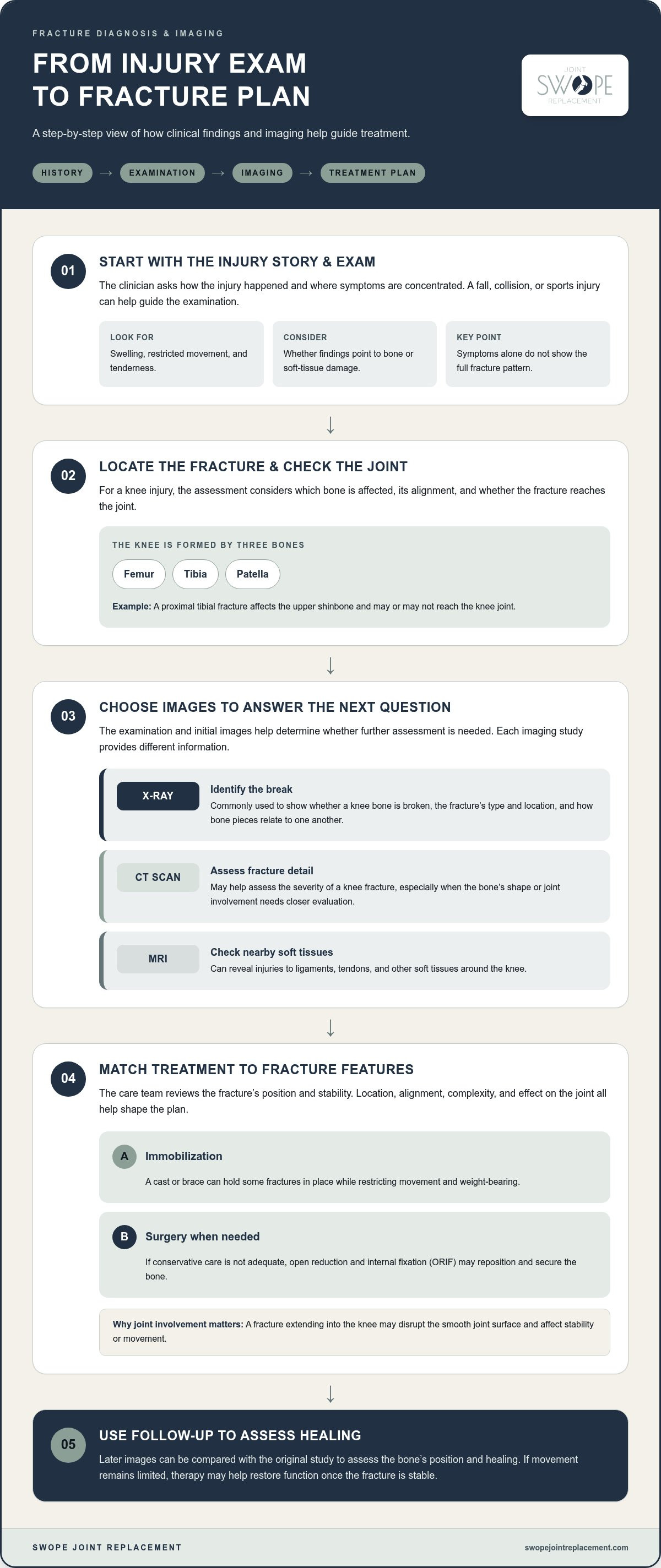
Diagnosis begins with a consultation and physical examination, followed by imaging when needed. X-rays can show whether a bone is broken and identify the fracture’s location and type. A CT scan may help assess the severity of a knee fracture, while an MRI can reveal nearby ligament, tendon, or soft-tissue injuries.
After reviewing the findings, the care team selects treatment based on the fracture’s position and stability. A cast or brace can hold some fractures in place while restricting movement and weight-bearing. If conservative care is not adequate, surgery such as open reduction and internal fixation may reposition and secure the bone.
Fracture diagnosis and imaging
A fracture assessment combines your injury history, a physical examination, and diagnostic imaging when needed. For a knee injury, imaging helps show the fracture’s location and pattern, while the examination considers movement, pain, and nearby tissues.
Clinical evaluation before imaging
Your clinician begins by asking how the injury happened and where symptoms are concentrated. A fall, collision, or sports injury can guide the examination, but symptoms alone do not reveal the full fracture pattern. The clinician examines the injured area and considers whether swelling, restricted movement, or tenderness points to bone or soft-tissue damage. These findings help determine which images can answer the next clinical question.
The knee is formed by three bones: the femur, tibia, and patella. A fracture may involve one bone or extend into the joint, so the assessment considers alignment and joint involvement. For example, a proximal tibial fracture affects the upper shinbone and may or may not reach the knee joint.
Knee fracture diagnosis and imaging
X-rays are commonly used to identify whether a knee bone is broken and determine the fracture’s type and location. The images help the clinician assess how the bone pieces relate to one another and whether the joint surface appears involved. This information supports decisions about immobilization, weight-bearing limits, and whether further imaging would clarify the injury.
A CT scan may be recommended to assess the severity of a knee fracture, especially when the bone’s shape or joint involvement needs closer evaluation. An MRI can identify injuries to ligaments, tendons, and other soft tissues around the knee. Each study answers a different question; the examination and initial images guide what needs further assessment.
How imaging informs the treatment plan
Imaging findings help distinguish fractures that can be managed without surgery from those that need surgical stabilization. The fracture’s location, alignment, complexity, and effect on the joint all matter. For example, a break extending into the knee may disrupt the smooth joint surface and affect stability or movement. These details help determine whether treatment involves immobilization, surgery, or both at different stages.
Images also give the care team a reference for follow-up. Comparing later images with the original study helps assess the bone’s position and healing. If movement remains limited, therapy may help restore function once the fracture is stable.
Insurance and clinic planning
Which Kansas City orthopedic clinics are in your insurance network depends on your specific plan. Out-of-network orthopedic care is another option, with coverage and your share of costs determined by your plan’s benefits.
Clear images and a focused examination make treatment discussions more specific. For care options related to an injury, explore orthopedic fracture care.
Board-certified or board-eligible physicians
Physician training matters because fracture care may involve assessment, immobilization, surgery, and rehabilitation. In Kansas City, orthopedic surgeons may be board-certified and fellowship-trained, bringing specialty training to complex injuries. Board-eligible describes a physician who has completed specialty training and is eligible to pursue board certification. These credentials provide context, while the treatment plan still depends on your fracture and its effect on movement.
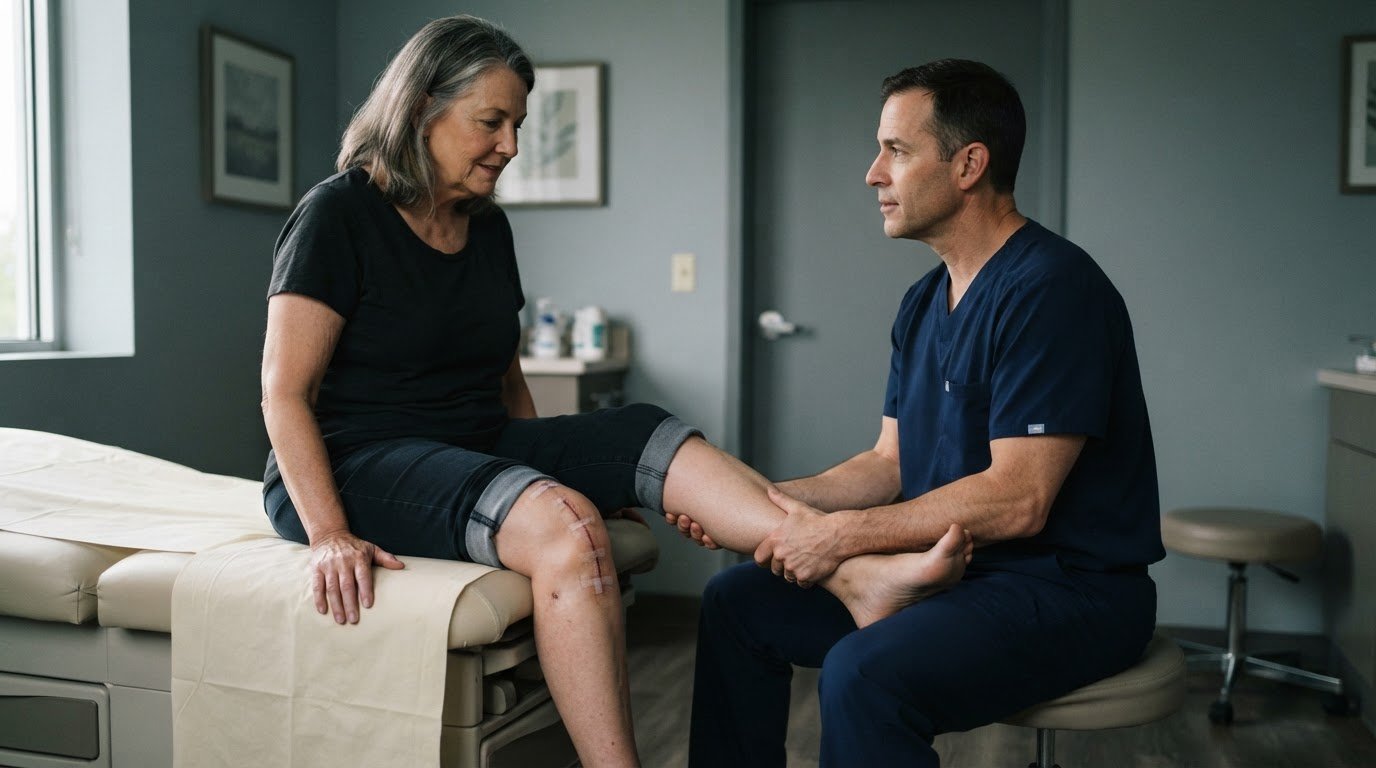
An orthopedic appointment typically includes a review of how the injury happened, a physical examination, and diagnostic imaging when needed. The physician considers the fracture’s location, alignment, and relationship to nearby joints and soft tissues. For example, a fracture involving the knee joint may require different planning from a break that does not affect the joint surface. The findings help determine whether immobilization, surgery, or follow-up imaging is appropriate.
Urgent injuries need prompt assessment, and follow-up matters too. If you first receive care at a hospital, the next steps may include an orthopedic review of your images and treatment plan. Clear communication between physicians helps align restrictions, healing checks, and rehabilitation. Bring existing imaging reports and discharge instructions to your appointment so the orthopedic team can see what has already been assessed.
Recovery time varies with the bone involved, the fracture pattern, treatment, and healing progress. Regaining normal elbow motion, strength, and function after a fracture may take several months. A clinician tracks recovery through symptoms, movement, and follow-up assessment rather than relying on a single date.
Physical therapy after knee open reduction and internal fixation (ORIF) can help restore range of motion and muscle strength. Therapy follows the surgeon’s restrictions, which may reflect how the fracture was repaired and how it is healing. A therapist can guide exercises and monitor movement, helping you work toward functional goals without assuming every fracture follows the same course.
Occupational therapy focuses on practical daily activities, while physical therapy addresses movement and strength. A knee injury may make walking or standing difficult; an arm fracture may affect dressing or household tasks. Your rehabilitation plan should connect these needs with the physician’s guidance. Joint replacement is a separate treatment from fracture rehabilitation, though previous fractures and joint condition can inform later orthopedic decisions.
After a fracture, report new or worsening symptoms to your care team. Increasing pain, swelling, reduced movement, or difficulty following prescribed restrictions can affect the recovery plan. Timely reassessment allows the physician to review healing and adjust care when needed.
At Swope Joint Replacement, specialists emphasize that most physicians require patients not to eat or drink after midnight before surgery the next day. After knee ORIF, follow your care team’s instructions about walking and positioning the knee.
Board-certified and fellowship-trained orthopedic surgeons
Fracture care can involve casting, surgical repair, and rehabilitation. Board certification indicates specialty certification, while fellowship training reflects additional focused training after residency. These credentials can help you understand an orthopedic surgeon’s background, especially when an injury affects a joint or requires complex repair. They are one part of choosing care; the fracture pattern and your functional needs also shape treatment.
During a consultation, an orthopedic specialist reviews your injury, examines the affected area, and considers imaging findings. For a knee fracture, the surgeon evaluates whether the break reaches the joint and whether the bone remains aligned. A simple, stable fracture may be managed without surgery. A severely displaced, open, or complex knee fracture may require open reduction and internal fixation, or ORIF.
ORIF involves repositioning bone fragments and securing them to support healing. Plate-and-screw fixation uses hardware placed along the bone’s outer surface. External fixation holds fragments with pins or screws attached to a frame outside the skin. The choice depends on the fracture’s location, pattern, and stability. A cast or brace may be appropriate when the fracture can remain aligned without surgical fixation.
Robotic orthopedic surgery is separate from fracture treatment. Technology does not determine whether a fracture needs surgery; the injury’s alignment, complexity, and joint involvement guide that decision. For example, a knee fracture extending into the joint requires attention to the joint surface and leg alignment. The treatment plan should address those findings, whether it involves immobilization or an operation.
Reconstructive surgery may be considered when a fracture leaves a complex structural problem. The goal is to address the specific bone and joint damage, rather than apply one method to every injury. A break in many pieces may require a plate or rod fixed at both ends to help maintain bone shape and length during healing. The surgeon weighs the fracture pattern and surrounding tissues when planning repair.
Sports medicine and orthopedic surgery can both address injuries from activities such as soccer or skiing. A tibial shaft fracture, for instance, affects the shinbone between the knee and ankle. After surgery, physical therapy can help restore movement and strength, with exercises guided by the injury and repair. A clear plan connects the surgical decision with safe rehabilitation and the demands of daily life.
For your appointment, bring prior imaging and treatment instructions when available. Discuss how the proposed approach addresses the fracture, what restrictions follow, and how progress will be assessed. These details clarify the roles of casting, surgery, and physical therapy in recovery.
Immobilization with casts, splints, or slings
Immobilization limits movement around a broken bone while it heals. The injury’s location, fracture stability, and weight-bearing needs help determine whether a cast, splint, brace, or sling fits the treatment plan.
Cast and Splint Immobilization
A cast surrounds the injured area to hold it steady, while a splint supports it without fully enclosing the limb. A clinician may choose between them based on the fracture’s position and the support needed. For example, a splint can accommodate changes in swelling, while a cast can maintain a stable position during healing. Proper fit and follow-up instructions matter.
Follow the care team’s directions while using either device. Changes in pain, swelling, or movement can affect how the injured area feels inside its support. Contact the treating team about new or worsening symptoms rather than adjusting the cast or splint yourself.
Non-Surgical Cast and Brace Treatment
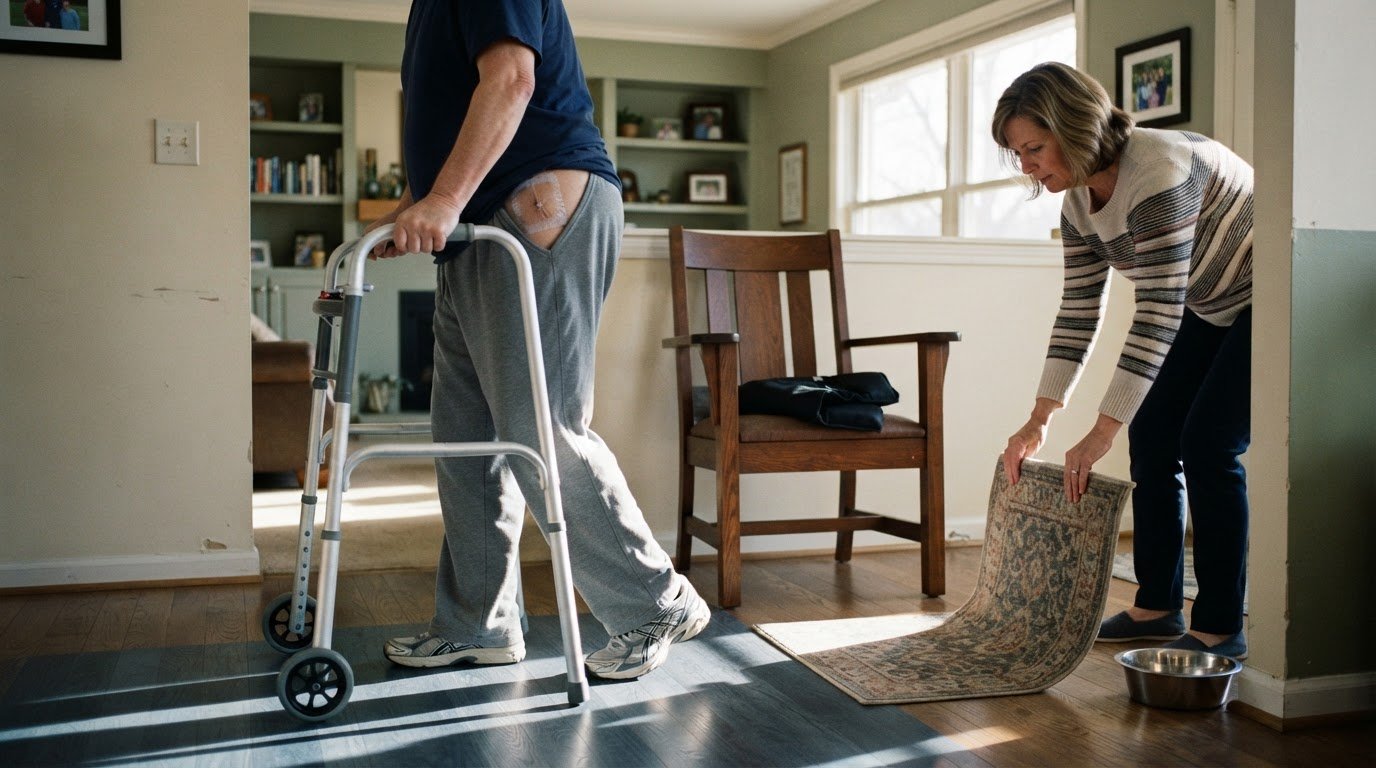
Some knee fractures can be managed without surgery using casts or braces. These devices hold the fracture in position while restricting movement and weight-bearing. The fracture’s alignment and stability help determine whether non-surgical care is suitable. A doctor also considers how the device affects daily tasks, such as standing or moving safely around the home.
Braces and casts do not replace follow-up. In a scenario described by the Centers for Medicare & Medicaid Services, a visit five weeks later included another X-ray, cast removal, and an order for physical therapy to restore mobility and strength. The example shows how imaging and rehabilitation can help guide the next step.
Sling-Based Immobilization
A sling supports an injured arm by keeping it close to the body and limiting unwanted movement. It may be used for an injury to an area such as the shoulder or arm as part of a clinician-directed plan. Unlike a cast, a sling supports the limb but does not surround and hold a fracture in place.
Use the sling as directed, including instructions about when to remove it and how to move the arm. The treating clinician considers the injury’s location, comfort, and need for support. If symptoms change or the sling causes new concerns, contact the care team for guidance.
Walking aids may help you move while a cast or brace limits weight-bearing on an injured leg. The device and restrictions should match the fracture and treatment plan, not convenience alone. Ask for clear instructions on safe movement, device use, and follow-up imaging.
For a care plan that considers non-surgical options, explore non-operative orthopedic treatment.
Swope Joint Replacement: Direct Anterior Hip Replacement
Swope Joint Replacement offers Direct Anterior Hip Replacement for people considering surgery for hip joint problems. Fracture treatment and joint replacement address different concerns, but an injury may raise questions about joint pain, mobility, or previous replacement surgery. For those concerns, Swope also provides Knee Replacement, Revision Hip Replacement, and Revision Knee Replacement.
A conversation about joint replacement can help you understand the procedure and how it relates to your symptoms, goals, and treatment history. If your immediate concern is a new or urgent fracture, seek timely medical assessment rather than treating it as a replacement decision. For information about hip replacement care, visit Swope Joint Replacement.
Choose a Clear Next Step for Your Joint Health
Let the problem you’re addressing now guide your next step. A new fracture calls for fracture-focused care, while ongoing joint pain or concerns about a previous replacement may call for a separate discussion about joint treatment. Keeping those needs distinct can help you focus your questions and consider options that fit your goals.
For orthopedic fracture treatment in Kansas City, let your assessment and care plan guide what you do next. If hip or knee joint concerns also affect your mobility, Swope Joint Replacement offers Direct Anterior Hip Replacement, Knee Replacement, and Revision Hip Replacement. Contact Swope to discuss your joint concerns and treatment options.
Contact Swope Joint Replacement to discuss your joint care needs. Taking a considered next step can help you move forward with greater clarity.
Frequently Asked Questions
What does ORIF mean?
ORIF means open reduction and internal fixation, a surgical method for treating a fracture. “Open reduction” refers to surgically accessing and repositioning the broken bone; “internal fixation” means securing it with hardware such as plates and screws. ORIF describes a treatment procedure, not a fracture type. The surgeon considers the fracture’s pattern and alignment when deciding whether this approach fits the injury.
What types of fractures can be treated by orthopedic specialists in Kansas City?
Orthopedic specialists treat fractures in different bones and locations, including elbow fractures and breaks in the femur or tibia. Examples include a distal femur fracture above the knee, a femoral shaft fracture, and a proximal tibial fracture near the knee. Fractures may be closed, with the skin intact, or open, with the bone breaking through the skin. The location and pattern help shape care.
How do I choose between the ER, urgent care, and an orthopedic clinic for a suspected fracture in Kansas City?
Choose emergency care for an open fracture, visible deformity, inability to bear weight, or sharp, intense pain that does not improve with rest or ice. For a less severe suspected injury, urgent orthopedic care or an orthopedic clinic can assess the affected area and arrange appropriate evaluation. If symptoms are severe or you are unsure where to go, prioritize emergency assessment rather than delaying care.
How can I get a same-day orthopedic appointment for a fracture in Kansas City?
Call an orthopedic clinic and request an appointment for a suspected fracture. Describe how the injury happened, where it hurts, and whether you can move or bear weight. Mention any X-rays or discharge instructions you already have so the team understands what has been assessed. For an open injury, severe pain, or visible deformity, seek emergency care instead of waiting for an office appointment.
Which Kansas City hospitals and urgent care centers offer fracture treatment?
Fracture care is available through orthopedic clinics, urgent orthopedic centers, and hospital emergency departments. Orthopedics NOW! at the Overland Park clinic is a named urgent orthopedic option.
Comments