Concierge Orthopedic Surgeon in Kansas City for Knee and Hip Care

The operation is only one part of a joint replacement decision. A concierge orthopedic surgeon in Kansas City can make the process more personal by focusing on direct communication, thoughtful procedure scheduling, and support through recovery, alongside the surgical care itself.
It’s reasonable to want clear answers, time to discuss your options, and a plan that fits your needs. This article explains what concierge orthopedics involves, how hip and knee replacement decisions are made, and what direct physician communication and follow-up can look like. You’ll also learn how to evaluate this approach and its payment structure in Kansas City, so you can decide whether it suits your care needs.
Table of Contents
Direct communication and follow-up calls
Concierge orthopedic care centers on clear communication with your physician, from the first evaluation through follow-up after treatment.
When choosing a surgeon, look for board certification in orthopaedic surgery and training relevant to your hip or knee concern. Ask how the surgeon evaluates your symptoms, explains non-operative options, and determines when surgery may be appropriate.
Direct Surgeon Communication
Direct communication means discussing your concerns with the surgeon rather than relying only on messages passed through staff. At Swope Joint Replacement, you have direct access to Dr. Ryan W. Swope, DO, FAAOS, for your care. Unhurried appointments give you time to discuss symptoms, imaging, previous treatment, and goals. Notice whether the explanations address your specific questions.
Communication During Recovery
Communication continues after visits, procedures, and surgeries through follow-up phone calls. These conversations give you a way to raise concerns about recovery and discuss how your care plan is progressing. Ask how therapy and other specialists fit into the plan. Coordination matters when your next step depends on activity, symptoms, or guidance from another clinician.
Concierge Care Options
For concierge orthopedic care in Kansas City, compare how each practice handles communication, follow-up questions, and care coordination, not just the concierge label. At Swope Joint Replacement, care is delivered directly by the physician, with unhurried appointments and personalized treatment planning. Clarify how your questions and next steps will be addressed throughout care.
Good communication also makes treatment choices easier to understand. For knee or hip arthritis, a surgeon may discuss conservative care before considering replacement. For some conditions, non-surgical options can include therapy, injections, bracing, or changes to training. A shoulder concern, for example, may call for a different evaluation than painful hip arthritis. The reason for each recommendation should be clear.
Useful follow-up includes more than a call. Patients in the described program receive copies of scans and medical records at the end of each visit. That gives you a record of what the imaging showed and what the surgeon recommended. When care involves physical therapists or other specialists, coordination helps keep the next steps connected to the treatment plan.
Before deciding, note whether the surgeon listens, explains options in plain language, and addresses your priorities. A recommendation for conservative treatment, therapy, or a second opinion can be part of a careful discussion, not a rushed decision. Direct access is most useful when you understand how to raise concerns and receive guidance throughout the care process.
Joint replacement
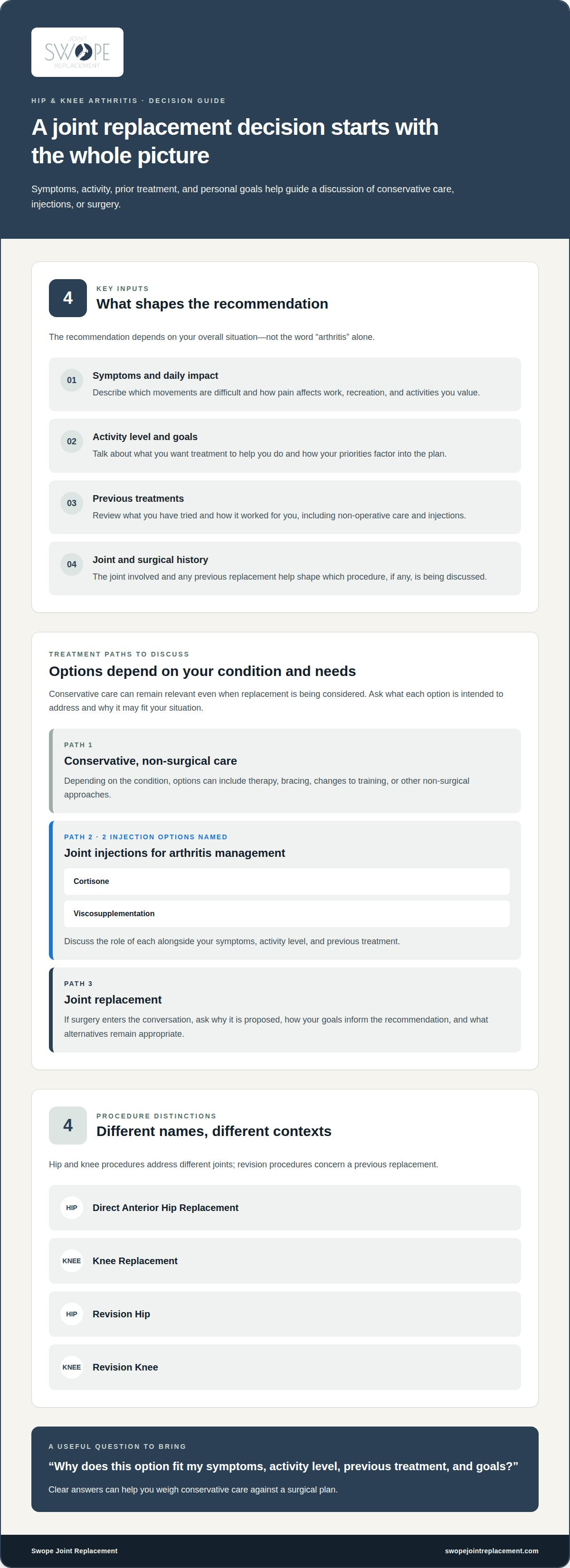
Hip and knee arthritis can cause persistent pain and limit activities you value. Orthopedic care considers your symptoms, activity level, previous treatments, and goals before weighing conservative options, injections, or replacement. Because a hip or knee replacement can be a long-term decision, discuss its potential benefits, trade-offs, and how it fits your priorities.
Start by describing how symptoms affect daily life: which movements are difficult, how pain affects work or recreation, and what treatments you’ve tried. These details help an orthopaedic surgeon understand your concerns and assess whether non-operative care or surgery merits further discussion. The recommendation depends on your overall situation, not the word “arthritis” alone.
Joint injections are one non-surgical option for arthritis management. Options include cortisone and viscosupplementation injections. Discuss their role alongside your symptoms, activity level, and previous treatment. Ask what each option is intended to address, how it fits into the broader plan, and what the next step could be if symptoms continue. This helps you understand the choices without treating an injection as a substitute for an individualized assessment.
If joint replacement enters the conversation, make sure the plan reflects the joint involved and your surgical history. Direct Anterior Hip Replacement and Knee Replacement address different joints; revision hip and revision knee procedures concern a previous replacement. Discuss why a procedure is proposed, how your goals factor into the recommendation, and what alternatives remain appropriate. A careful review makes the decision easier to understand.
For chronic joint pain, the treatment path may change as symptoms and priorities change. Conservative care can remain relevant even while replacement is discussed. Injections may be considered as part of arthritis management, while surgery may be appropriate when supported by the overall assessment. The key is understanding why an option fits your condition, rather than treating one symptom or imaging result as the whole decision.
Use these discussion points to make the appointment more productive:
Describe how arthritis affects specific daily activities.
Review prior treatments and how they worked for you.
Discuss cortisone and viscosupplementation injections as options.
Ask how your goals and surgical history shape a replacement recommendation.
Clear answers can help you weigh conservative care against a surgical plan. Explore hip and knee replacement care as you consider which questions to raise about your treatment options.
Your history, symptoms, activity level, previous treatments, and goals shape the recommendation. Concierge orthopedic care may include conservative treatment, joint injections, other non-surgical options, or surgery, depending on your condition and needs. Ask how those factors inform the options being considered and what each option is intended to address.
Swope Joint Replacement offers cortisone and viscosupplementation injections for arthritis management. Discuss whether either may be appropriate for your condition and how injections fit with other possible approaches. Understanding why a treatment is being considered can help you weigh the plan against your priorities and take part in the decision.
Concierge surgery scheduling for knee and hip procedures
Concierge scheduling connects the orthopedic evaluation, treatment decision, and procedure planning. For hip or knee surgery, timing depends on clinical readiness, the chosen treatment, and the practical arrangements needed before the operation.
Patient reviews can describe communication and scheduling, but they can’t establish an individual surgical outcome. Use your consultation to understand the surgeon’s reasoning, the proposed procedure, and how the care plan relates to your condition.
Concierge orthopedic care in Kansas City can include evaluations, conservative treatment, joint injections, and surgery. The appropriate path depends on your symptoms, activity level, previous treatment, and goals. Non-operative care may be discussed before surgery when it fits your needs.
Choose a surgeon whose practice matches the joint and procedure under consideration. For hip or knee concerns, look for relevant experience in evaluation and treatment, including replacement or revision when appropriate. Shoulder and spine care are distinct areas, so the specialist and procedure should match the concern being treated.
Insurance arrangements also matter. The practice offers out-of-network insurance options and cash pricing, rather than in-network billing. Those arrangements don’t establish Medicare participation or coverage for a specific procedure, so don’t treat the terms as interchangeable.
Appointment timing can be faster in a concierge model. Same-week or next-day orthopedic appointments are described as a feature, while traditional waits may be reduced from weeks to days or hours. The actual schedule still depends on the evaluation and the care required.
Procedure scheduling follows a separate sequence. After the surgeon recommends an operation, the team coordinates a suitable date and the steps needed to prepare. A surgical concierge program may arrange surgery within a couple of weeks. That timing gives you a clear planning window, while the treatment decision remains central.
The planned procedure and the hospital or accredited surgical center are part of the scheduling plan, along with the date and preparation arrangements. A hip replacement and a knee procedure may involve different logistical considerations. Discuss what you need to do before surgery and how the location fits into the plan.
To understand how the schedule is built, focus on these practical points:
Clarify whether the next step is evaluation, conservative care, or surgery.
Understand how the proposed procedure affects timing and preparation.
Include the planned operating facility in the procedure schedule.
A well-organized timeline links the treatment decision to the operation without letting scheduling replace careful clinical planning.
Plan for transportation, home support, and instructions from the care team. Swope Joint Replacement’s concierge approach centers on unhurried evaluations and direct physician access. Use the appointment to discuss the recommendation, what needs to happen before a date is set, and how to prepare for the next step.
Dr. Van den Berghe may recommend that a patient get a second opinion before scheduling surgery. You can use that opportunity to review the proposed procedure and timing before committing to a date. Dr. Van den Berghe also examines and treats knee injuries such as meniscus and ACL tears, so a knee injury evaluation may be part of the discussion when relevant to your care.
Postoperative check-ins and recovery support
Recovery support continues after the operation, not just through the final pre-surgery appointment. Postoperative communication gives you a way to share your progress, raise concerns, and understand the next steps in your care. Follow-up with your surgeon helps keep the care plan connected to your experience after surgery.
Before the procedure, plan for practical help at home. Patients are advised to arrange assistance with daily activities for the first 7-10 days after surgery. That support can help with ordinary tasks while you focus on the recovery plan. Consider who can help with meals, household needs, or transportation to a follow-up appointment.
Recovery involves more than the surgical site. Your care team may coordinate with physical therapists and other specialists, connecting orthopedic care with support during rehabilitation. For example, a therapist’s input can inform discussions about activity and progress. Coordination keeps communication focused on the same treatment goals.
Postoperative calls also create a dedicated moment to discuss changes since surgery. You can describe what feels different, what activities remain difficult, and which questions have come up. Specific examples help the doctor understand your experience. A clear account of your recovery can guide the next conversation or appointment.
Keep communication practical. Share relevant updates, ask what the next planned step involves, and make sure you understand who is coordinating each part of care. If your recovery includes physical therapy, discuss how those visits relate to the surgeon’s plan. Injuries and joint procedures differ, so the details should reflect your procedure and care needs.
Arrange help with daily activities for the first 7-10 days after surgery.
Use follow-up calls to share recovery updates and discuss concerns.
Understand how physical therapy and specialist coordination fit the plan.
A follow-up appointment gives you another chance to review progress with your doctor and discuss the plan ahead. Bring concrete examples, such as a household task that remains difficult or a question about therapy. This keeps the discussion tied to your actual recovery rather than assumptions about how you should feel.
Concierge orthopedic care emphasizes direct communication through recovery. Follow-up complements appointments and coordination with physical therapists; it doesn’t replace the treatment plan. A clear sequence of conversations, visits, and therapy discussions helps you understand how each part supports the next stage of recovery.
Which orthopedic surgeons in Kansas City offer concierge or direct-pay care?
In Kansas City, concierge and direct-pay orthopedic care differ in how a practice structures access, communication, and payment. Start by identifying whether your concern involves a hip or knee, then look for a care model that treats that joint and explains its process and costs clearly.
When choosing a concierge orthopedic surgeon in Kansas City, consider how the service shapes your care experience. Swope Joint Replacement offers direct access to the physician, unhurried appointments, and personalized treatment planning. Direct pay describes the payment arrangement, while concierge care describes aspects of access and service. The terms can overlap, but they don’t mean precisely the same thing.
Patient reviews can offer perspective on communication, scheduling, and the office experience. They can’t establish that another patient’s surgical outcome predicts yours. Outcomes depend on the individual condition and treatment plan. Read reviews as context, then focus on whether the surgeon can explain your diagnosis, options, and reasoning in a way you understand.
Specialization matters. A surgeon who treats hip and knee conditions may be a good fit for joint replacement questions. The procedure matters too: a first-time replacement differs from revision surgery, which addresses a previous joint replacement. Matching your clinical question to the surgeon’s practice keeps the discussion relevant.
Payment clarity is another practical distinction. Swope Joint Replacement is out of network with all insurance carriers by design, and does not provide in-network billing. Office visits and in-office procedures have transparent cash pricing. Surgeries at a hospital or accredited surgical center are billed out of network; under the federal No Surprises Act, insurers must apply the same deductible and cost-sharing structure as if the provider were in network when out-of-network benefits exist.
Compare the care model using concrete criteria:
Joint focus: Does the practice address your hip or knee concern?
Treatment range: Can the discussion include conservative care as well as surgery?
Payment approach: Is the model direct-pay, out-of-network, or another arrangement?
Decision process: Does the surgeon explain why a proposed treatment fits your condition?
These distinctions help separate the service model from the clinical decision. Concierge access does not determine whether surgery is appropriate; your symptoms, previous treatment, activity level, and goals inform that decision. A careful conversation should connect each recommendation to those factors, whether the next step is continued conservative care or discussing a procedure.
If you’re considering a hip-focused surgical option, explore concierge orthopedic care as a next step in understanding the available care model and treatment discussion.
For hip or knee care, consider a surgeon whose practice treats the joint involved and whose experience matches the procedure, including revision surgery when relevant. Swope Joint Replacement focuses on hip and knee care, including primary and revision replacement.
Swope Joint Replacement
Swope Joint Replacement provides concierge orthopaedic care for people considering hip or knee treatment. If you’re weighing surgery, need care for a previous joint replacement, or want to understand your options, you can discuss your concerns and treatment goals directly with Dr. Ryan W. Swope.
Care includes Direct Anterior Hip Replacement, Knee Replacement, Revision Hip Replacement, and Revision Knee Replacement. A useful discussion starts with your symptoms, previous treatment, and what you hope to do more comfortably. You can explore the options relevant to your situation and understand how concierge care fits into the process.
If you’re considering hip or knee care in the Kansas City area, contact Swope Joint Replacement to discuss your needs and next steps.
Choose a Care Plan That Fits Your Next Step
The right orthopedic plan should make sense for your symptoms, priorities, and daily life. As you consider a concierge orthopedic surgeon in Kansas City, focus your next conversation on the decision you need to make: whether to continue non-surgical care, discuss a first joint replacement, or address a previous procedure. Clear priorities can help keep the conversation centered on what matters to you.
Swope Joint Replacement offers Direct Anterior Hip Replacement, Knee Replacement, Revision Hip Replacement, and Revision Knee Replacement. These options address different needs, so start with your concern and the outcome you hope to work toward. Discuss your situation and the questions that matter before making a treatment decision.
Contact Swope Joint Replacement to discuss your orthopedic care and next steps. A thoughtful conversation can help you move forward with greater clarity and confidence.
Frequently Asked Questions
What Is Concierge Orthopedics?
Concierge orthopedics is a care model built around direct physician access and an individualized treatment plan. It describes how care is delivered, not a specific operation or a guaranteed result. For example, someone weighing hip replacement can discuss their goals, health, and previous treatment directly with the orthopaedic surgeon. That conversation helps clarify how the options relate to their needs.
How does a private orthopedic clinic add value?
Swope Joint Replacement provides personalized hip and knee care in Overland Park and the greater Kansas City area, including Olathe, Lee’s Summit, Lenexa, Leawood, Blue Springs, and Independence. Office visits and in-office procedures have transparent cash pricing. Please note we are out of network with all insurance carriers by design so we can place patient care first. Surgeries at a hospital or accredited surgical center are billed out of network; under the federal No Surprises Act, insurers must apply the same deductible and cost-sharing structure as if the provider were in network when out-of-network benefits exist.
What should I ask before choosing a concierge orthopedic surgeon in Kansas City?
Ask how the surgeon’s training relates to your condition, which treatment options fit your goals, and how the recommendation will be explained. Dr. Ryan W. Swope, DO, FAAOS, is board-certified in orthopaedic surgery and fellowship-trained in adult reconstruction at the University of Pittsburgh Medical Center. You can also discuss how your proposed procedure, previous joint surgery, and recovery priorities shape the care plan.
How do concierge orthopedic surgeons in Kansas City compare on patient reviews and outcomes?
Patient reviews can describe communication and scheduling, but they cannot establish an individual surgical outcome.
How do I verify a Kansas City orthopedic surgeon’s board certification and credentials?
Look for board certification in orthopaedic surgery and training relevant to your hip or knee concern.



Comments