Orthopedic Second Opinions for Joint Replacement Decisions

You don't have to commit to joint replacement before getting another orthopedic perspective. An orthopedic second opinion for joint replacement can help clarify whether the diagnosis and proposed plan fit your symptoms, daily limitations, and treatment goals. You can seek one when you're uncertain about surgery, want to understand nonsurgical options, or still have problems after a previous replacement.
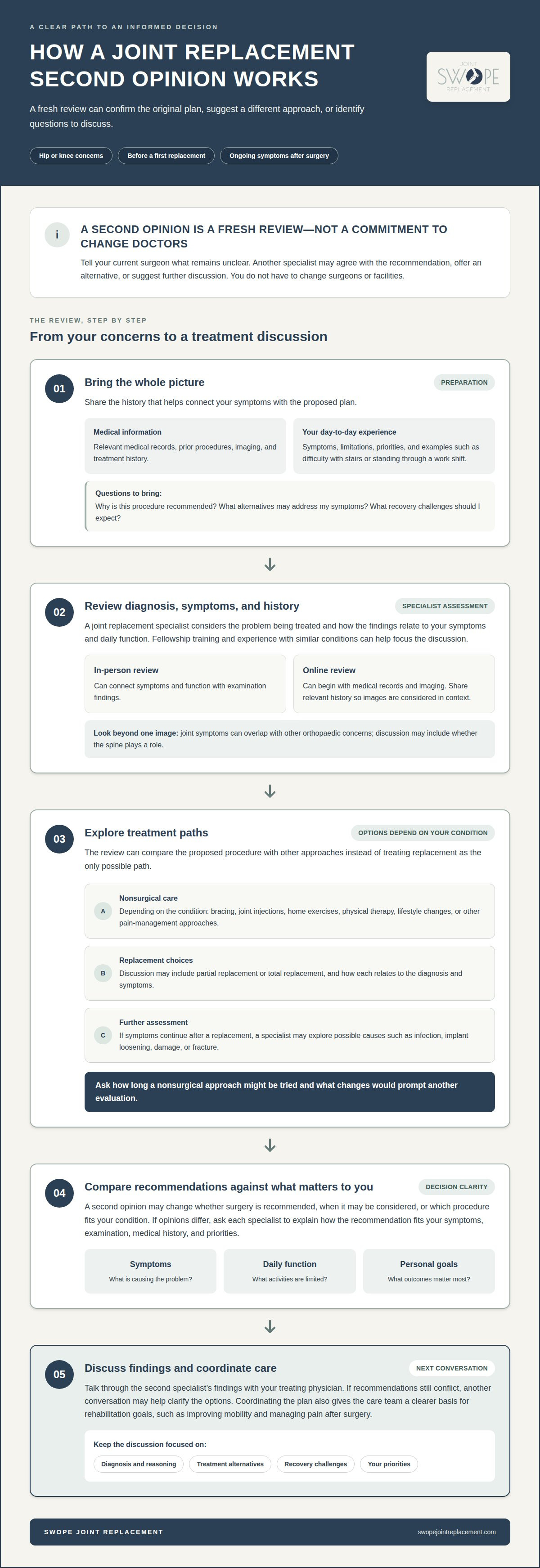
It’s reasonable to want clarity before a major procedure. An orthopedic second opinion for joint replacement may confirm the original recommendation, offer a different approach, or identify questions that need further discussion. Seeking one doesn’t mean you must change surgeons or facilities.
This article explains when a second opinion may help, what a specialist reviews, and how to prepare for an evaluation. You’ll also learn how in-person and online reviews differ, including the role of medical records and imaging, so you can choose the format that best supports an informed decision.
Table of Contents
Will asking for a second opinion upset my orthopedic surgeon?
Seeking another evaluation is a reasonable step before deciding on joint replacement. Tell your current doctor directly that you want a second opinion and explain what remains unclear. A new specialist can review your diagnosis and treatment plan, then confirm it or recommend an alternative. The second opinion may support the original recommendation, so it doesn’t automatically mean changing physicians or facilities.
Prepare for the appointment by writing down your priorities, such as walking comfortably, returning to work, or managing pain without surgery. Ask which procedure is proposed and why, what alternatives could address your symptoms, and what recovery challenges to expect. Give concrete examples of daily limitations, such as difficulty climbing stairs or standing through a work shift. These details help the surgeon connect treatment choices with the outcomes that matter to you.
Ask whether nonsurgical options could still help before committing to an operation. Depending on your condition, the discussion may include bracing, joint injections, home exercises, physical therapy, lifestyle changes, or other pain-management approaches. Ask how long a nonsurgical approach might be tried and what changes would prompt another evaluation. A second opinion can compare these options with surgery rather than treating replacement as the only possible path.
How much does an orthopedic second opinion cost in the United States? The cost depends on the practice’s fee, your insurance coverage, and whether the physician is in your network. Insurance coverage varies, so review your benefits with your insurer before the visit.
What questions should you ask during a joint replacement second-opinion appointment? Ask about the diagnosis, why the procedure is recommended, nonsurgical alternatives, realistic goals, and recovery challenges. If two surgeons disagree, ask each to explain how their recommendation fits your symptoms, examination, medical history, and priorities.
A second opinion can change whether surgery is recommended, when it may be considered, or which procedure best fits your condition. For example, an evaluation may discuss continued nonsurgical care, partial replacement, total replacement, or further assessment. It may also clarify whether symptoms could involve another source, such as the spine, as well as the joint.
Keep communication with your treating physician direct and respectful. Explain that you’re seeking clarity, then discuss the second specialist’s findings together. If the recommendations still conflict, another conversation with your original physician or a specialist may help clarify the options. Coordinating the treatment plan also gives your care team a clearer basis for rehabilitation goals, such as improving mobility and managing pain after surgery.
What is a Second Opinion on Joint Replacement and Complex Revisions?
A second opinion is a fresh review of your diagnosis, symptoms, and proposed treatment. For hip or knee concerns, the physician’s specialty and experience with similar conditions can shape the questions addressed.
Generalists and Joint Replacement Specialists
A general orthopedist evaluates a broad range of musculoskeletal problems, including injuries and joint pain. A joint replacement specialist focuses on hip and knee reconstruction, bringing condition-specific knowledge to decisions about surgery, implants, and recovery. That focus can be useful when you’re weighing a first replacement or facing ongoing symptoms after surgery.
For example, someone with knee arthritis might ask whether the findings support continued nonsurgical care, partial replacement, or total replacement. A specialist can explain how each option relates to the diagnosis and symptoms. During the appointment, look for clear reasoning tied to your case, not simply a repeated procedure recommendation.
Specialist Review of the Patient’s Condition
A useful review starts with the problem being treated. A hip specialist can discuss the surgical approach, implant selection, and rehabilitation plan for hip replacement. If symptoms continue after surgery, the review may explore possible causes such as infection, implant loosening, damage, or fracture.
Joint problems can overlap with other orthopaedic concerns. For instance, pain attributed to a joint may warrant discussion of whether the spine plays a role. Share prior procedures, imaging, and treatment history so the physician can consider the full picture rather than viewing one image in isolation.
How a joint replacement specialist and specialty program support a second opinion
When choosing a specialist, focus on advanced fellowship training in joint replacement and experience treating conditions like yours. For a revision case, ask how the physician evaluates why the original replacement may not be functioning well. A revision review can involve questions about implant loosening, soft-tissue balance, or postoperative restrictions.
Hospital physician profiles and unbiased medical listings can help you identify specialists and understand their training. In an appointment, ask the specialist to explain the diagnosis, the reasoning behind each treatment option, and the goals of rehabilitation. A focused discussion should connect the proposed plan to your symptoms and daily function.
Insurance Coverage for a Second Opinion
Does Medicare or private insurance cover a second opinion for joint replacement? Coverage varies by insurer and plan, so confirm your benefits before the appointment. Check whether the physician is in network and how your plan handles a second-opinion visit.
If you’re considering a hip or knee evaluation, the discussion can include hip and knee replacement care alongside the specialist’s review. Ask about coverage for the consultation itself, since benefits for an evaluation may differ from coverage for later treatment. Knowing those details can help you plan the next step without confusing the consultation with a decision to proceed with surgery.
When to seek a second opinion before joint replacement or other major surgery
Consider another evaluation when you doubt the diagnosis, feel unsure about surgery, or want to understand alternatives before deciding. It can also help when a previous replacement isn’t working well.
Reasons to Seek Another Orthopedic Opinion
A second opinion may be valuable before a significant or irreversible procedure, especially when the diagnosis is unclear or treatment goals haven’t been addressed. The Joint Effort Second Opinion Program says nearly 1 in 4 knee and hip replacements in the United States are classified as inappropriate based on established criteria. It also states that more than 400,000 total knee and total hip replacements may be done earlier than recommended every year.
These factors aren’t a verdict on your individual case. Instead, use the appointment to discuss how your symptoms, examination, functional limits, overall health, and previous treatment shape the recommendation. An X-ray alone doesn’t determine whether knee replacement is appropriate. Ask how your condition may progress if surgery is delayed and which treatment options remain reasonable now.
Complex Cases and Revision Surgery
Another opinion can be especially useful when symptoms continue after a joint replacement or a surgeon raises revision surgery. The review can help clarify the underlying cause and whether the proposed next step addresses it. Possible causes of replacement failure include infection, implant damage or fracture, improper soft-tissue balancing, and implant loosening.
Bring the history of the original operation, later treatments, and current symptoms into the discussion. For example, describe when pain began, what activities worsen it, and whether your function has changed. Ask what findings support revision, what alternatives could be considered, and what may happen if you wait. Those details keep the decision focused on your particular problem, not simply on the fact that an earlier operation occurred.
Seeking an Opinion After Scheduling Surgery
A scheduled procedure doesn’t prevent you from seeking another opinion. If you still have questions about the diagnosis, proposed operation, or timing, tell the second specialist the planned surgery date and share your records and imaging. Ask whether the recommendation fits your condition and what factors affect the timing. This context helps the specialist review the plan.
Use the appointment to resolve specific uncertainties, such as why a particular procedure was chosen or whether another approach fits your needs. Ask how your symptoms and function factor into the decision, and what risks or challenges matter in your case. If recommendations differ, discuss the reasoning with your treating surgeon before making changes. You don’t need a second opinion before every orthopaedic surgery, but it may help when uncertainty remains about a major procedure.
In-person evaluations and finding a local surgeon
An in-person evaluation adds a physical examination to the review of your symptoms, medical records, and imaging. It helps the orthopaedic surgeon connect test findings with your function and treatment history.
Reasons for Another Orthopedic Evaluation
Consider another evaluation if your diagnosis remains unclear, your symptoms don’t match the explanation, or you want a fresh review before surgery. For example, persistent pain that limits walking deserves discussion alongside imaging, not in place of it. A second surgeon can assess whether the recommended procedure addresses the problem you’re experiencing.
Friends or relatives who have dealt with the same condition may suggest physicians to consider. At the appointment, explain what you hope to clarify, such as whether surgery is appropriate or which other treatment options fit your goals. Bring your medical records and relevant images so the surgeon can review the original findings and treatment course.
Additional Evaluation for Knee Pain
A knee replacement decision should account for symptoms, examination findings, functional limitations, overall health, and response to previous treatment. Imaging matters, but an X-ray alone doesn’t show how pain affects daily activities or whether earlier care helped. Describe specific examples, such as difficulty standing, walking, or using stairs.
The evaluation can consider continued nonsurgical care, partial knee replacement, total knee replacement, or further assessment. The orthopaedic surgeon weighs the full clinical picture, including how symptoms relate to examination findings. Ask how each option addresses your limitations and what additional information would clarify the recommendation. This makes the discussion specific to your knee, not the image alone.
Finding a Surgeon at Another Health System
How does a surgeon at a different hospital or health system conduct a second opinion? The surgeon reviews your medical records and relevant images, then assesses your symptoms and examination findings during an in-person visit. The physician uses that information to offer an independent diagnosis and treatment recommendation.
Before the appointment, request copies of your records and imaging from your current doctor and share them with the reviewing specialist. Include previous treatments, test results, and a concise account of how pain affects your function. Ask the surgeon to explain why the procedure is recommended, which alternatives were considered, and what findings support the opinion. A clear explanation gives you a practical basis for discussing next steps with your treating team.
How an orthopedic surgeon conducts an online second-opinion review
An online review lets an orthopaedic surgeon assess your diagnosis and recommendations using medical records, imaging, and your account of symptoms. The process works best when the materials arrive in advance and clearly explain the decision you want help understanding.
Start by requesting your records and relevant images from your current doctor. Send them to the reviewing specialist before the appointment so the surgeon can assess the case and identify questions for discussion. Include imaging reports as well as the images themselves when available. A report alone may not show the details the surgeon needs to review.
Include a concise medical history with prior procedures, reactions to anesthesia, and current medications. Add summaries of previous treatments and relevant test results. For example, note whether physical therapy, bracing, or injections changed your pain or mobility. Describe what activities are difficult now, such as walking, climbing stairs, or standing at work. These specifics help connect the images and diagnosis to your daily function.
Written questions give the appointment a clear focus. You might ask why replacement surgery is recommended, which alternatives remain, and how the proposed procedure addresses your symptoms. If the review concerns a previous replacement, explain when symptoms began and what has changed since surgery. The surgeon can use those details alongside imaging and treatment history when considering possible causes and recommendations.
Medical history, including prior procedures and current medications.
Relevant imaging, test results, and treatment summaries.
A short timeline of symptoms and previous care.
Written questions about diagnosis, options, and the proposed plan.
After reviewing the materials, the specialist discusses the findings and recommendations with you. The opinion may support the initial plan, suggest an alternative, or identify information that needs further evaluation. If the records don’t clearly explain a concern, the appointment can help identify what additional details matter. A review can also clarify whether your question concerns timing, procedure choice, or why surgery is being considered.
Some appointments may be scheduled within a week or two, depending on the practice, physician availability, and urgency. That timing makes it useful to send records and imaging early, especially if you’re weighing a planned procedure. Insurance coverage for a second-opinion visit varies, so review your benefits before arranging the appointment.
For a focused review of hip or knee replacement decisions, request an online second opinion from Swope Joint Replacement and share the records relevant to your decision.
Swope Joint Replacement
Swope Joint Replacement can help you discuss a hip or knee diagnosis, a proposed operation, or concerns after an earlier replacement. If you’re weighing surgery, an evaluation can clarify treatment options and how they relate to your symptoms and goals. Care includes Direct Anterior Hip Replacement, Knee Replacement, and revision procedures for patients whose previous hip or knee replacement needs attention.
The practice’s concierge orthopaedic model provides direct physician access and individualized care. This can be a useful next step when you want a focused conversation about your joint replacement decision rather than making the choice with unresolved questions. You remain central to the discussion, including whether the proposed plan fits your priorities.
For a thoughtful discussion of your joint replacement questions, contact Swope Joint Replacement.
Move Forward With a Clearer Decision
Your next step is to turn the specialist’s recommendations into a decision that reflects your health, daily life, and priorities. An orthopedic second opinion for joint replacement can help you understand the reasoning behind a proposed plan, but your goals should guide the conversation. Consider what you most need to clarify before choosing a direction, whether that’s the timing, the procedure, or how treatment may affect activities that matter to you.
Write down the remaining questions you want answered and keep the discussion focused on what would help you feel informed. Take time to consider the options and discuss the findings with your treating physician. The aim isn’t to collect opinions indefinitely. It’s to reach a plan you understand and can move forward with thoughtfully.
When you’re ready to discuss your situation and possible next steps, start a conversation with Swope Joint Replacement. A clear, considered decision begins with understanding what matters most to you.
Frequently Asked Questions
When should I get a second opinion?
Seek one when your diagnosis is unclear, you’re uncertain about a recommended operation, or you want another view before a major procedure. An orthopedic second opinion for joint replacement can also help when symptoms continue after surgery or you’re considering revision. Use the appointment to focus on one unresolved decision, such as whether the proposed treatment matches your daily limitations and priorities.
What medical records and imaging does the surgeon need for a second opinion?
Share records and images related to the affected joint and the decision being reviewed. Useful materials include imaging, test results, and summaries of previous treatment. For a prior replacement, include information about the original procedure and later care. These details help the reviewing surgeon understand what has already been tried and how the condition has changed, rather than assessing the current recommendation in isolation.
Is Total Knee Replacement Really the Right Next Step?
Not necessarily; the decision depends on more than an X-ray. The evaluation considers your symptoms, examination findings, functional limitations, overall health, and response to earlier treatment. For example, knee pain that limits walking should be discussed alongside physical findings and imaging. Depending on the full picture, options may include continued nonsurgical care, partial replacement, total replacement, or further evaluation.
What should you provide for a joint replacement second opinion?
Give the reviewing surgeon a clear account of your medical history and the question you want answered. Include prior procedures, relevant test results, imaging, and previous treatment summaries. A concise description of your current symptoms can help focus the review. For example, explain whether pain affects walking, sleep, or work, and what has changed since the original diagnosis or treatment recommendation.
When should you get a second opinion before joint replacement surgery?
Get another opinion while you’re still weighing whether to proceed, especially if you’re unsure about the diagnosis, timing, or proposed procedure. You can seek one even after surgery has been scheduled. Share the planned date and ask the reviewing surgeon to address the specific concern behind your hesitation. A second opinion isn’t required before every operation, but it can help when uncertainty remains about a major decision.
What medical records and imaging should you provide for a second opinion?
Along with joint-related records and images, provide medical history that could affect the decision, including current medications, previous procedures, and any reactions to anesthesia. Write down your main concerns and describe pain triggers or functional limits. For instance, noting which movement worsens symptoms can give the surgeon useful context. Organize these details around the question you want the evaluation to resolve.



Comments