Failing Hip Implant? How a Revision Surgeon Evaluates Your Options

What if new hip pain doesn’t mean your implant has failed? Pain, stiffness, or a sense that your hip may give way can raise real concerns, but symptoms alone can’t identify the cause. A failing hip implant revision surgeon considers the full picture before recommending a next step, including whether another condition could be contributing.
If discomfort has returned or your mobility has changed, it’s reasonable to want clear answers. Worsening pain in the groin or thigh, reduced range of motion, instability, or new clicking and grinding sounds warrant a clinical evaluation. They don’t automatically mean you need another operation. Revision surgery is one possible pathway, considered only after careful investigation.
This article explains how a revision surgeon evaluates your symptoms, surgical history, imaging, and any additional tests that may help identify the problem. You’ll also learn what questions to discuss when considering revision hip replacement in the Kansas City area. Swope Joint Replacement provides personalized orthopaedic care for patients in Overland Park and surrounding communities. The goal is to help you approach the conversation with a clearer understanding of your options.
Table of Contents
Could Your Hip Implant Be Failing? Symptoms That Deserve an Evaluation
New or returning pain after hip replacement can be unsettling, especially if you had been moving comfortably for a time. But pain alone doesn’t establish that an implant has failed. Symptoms can come from the implant, the surrounding bone or soft tissues, or another condition affecting your hip, back, or leg. A careful evaluation helps distinguish among these possibilities before treatment decisions are made.
Pay attention to changes from your usual baseline. Worsening pain, reduced range of motion, stiffness, a feeling that your hip is unstable or giving way, and new difficulty bearing weight are all reasons to discuss your symptoms with a clinician. A new clicking or grinding sensation may also be worth mentioning, particularly if it occurs with pain or reduced function. These signs deserve attention, but none confirms a specific problem by itself.
Implants and the ways they can wear or loosen vary. The overview of hip replacement describes several implant types and potential issues, including wear and loosening. This background helps explain why an assessment needs to consider your particular implant and medical history rather than relying on symptoms alone.
Which changes after hip replacement should prompt a conversation?
Consider how symptoms affect your daily life. Are you walking less, waking at night, avoiding stairs, or needing more support to stand? Note when the change began, whether it is constant or intermittent, what activities make it worse, and how your mobility has shifted. These details help a clinician understand the pattern and decide what evaluation is appropriate.
Record where you feel discomfort, such as the groin, thigh, or outer hip.
Note any change in walking distance, balance, or ability to bear weight.
Describe new stiffness, instability, or sounds, including when they occur.
A symptom is a signal to investigate, not proof of an implant problem. A failing hip implant revision surgeon considers the whole clinical picture before deciding whether the implant is involved.
When could symptoms need urgent attention?
Some changes call for prompt medical assessment rather than a planned revision consultation. Sudden, severe pain or an inability to bear weight should be assessed urgently. Fever or chills together with increasing pain, redness, warmth, swelling, or drainage near the hip can also be signs of a serious infection and warrant urgent attention.
If symptoms are severe or you believe you’re facing an emergency, contact local emergency services or seek emergency care. This is separate from arranging a scheduled evaluation to understand ongoing pain or reduced function. Getting urgent symptoms assessed promptly doesn’t mean revision surgery is inevitable; it helps ensure the immediate concern is addressed and informs what should happen next.
How a Failing Hip Implant Revision Surgeon Looks for the Cause
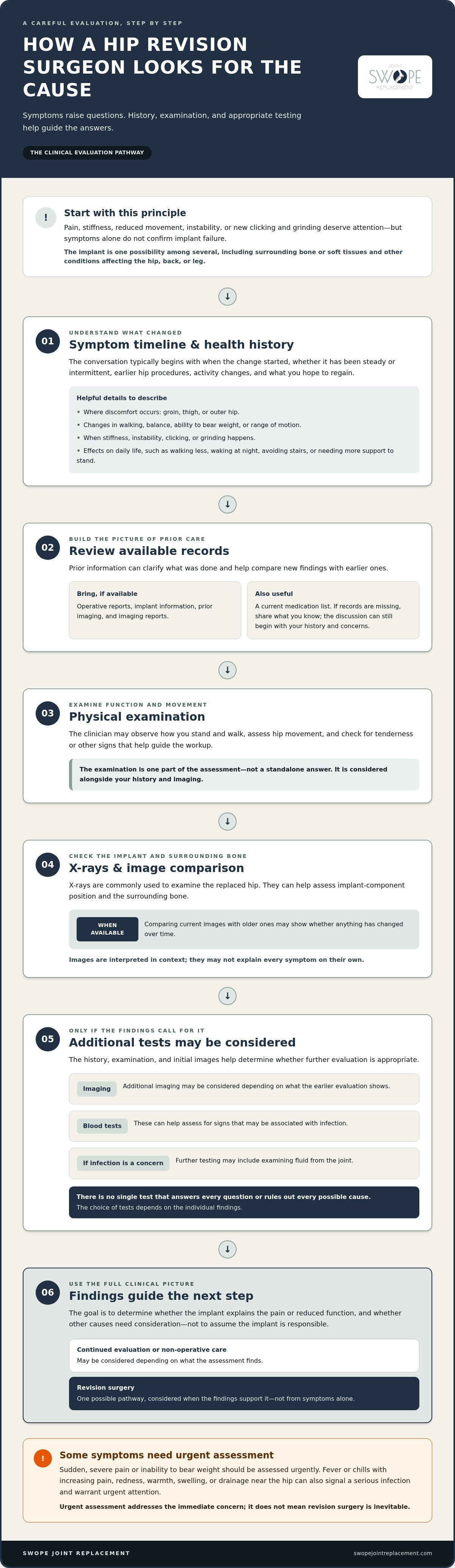
A careful evaluation is built step by step. A failing hip implant revision surgeon starts by understanding what has changed, then considers the examination, the implant’s history, and findings from appropriate tests. The goal is to determine whether the implant explains your pain or reduced function and whether other causes need consideration, not to assume the implant is responsible.
What happens during the first revision consultation?
The conversation usually begins with your symptom timeline and health history. When did the change start? Has it been steady or come and gone? The clinician may ask about earlier hip procedures, changes in activity, and what you hope to regain. Your priorities matter, whether that means walking more comfortably, sleeping better, or returning to particular daily activities.
Bring any records you have, including operative reports, implant information, and prior imaging or reports. A current medication list is useful, too. These details can clarify what was done previously and provide a basis for comparing new findings with earlier ones. If records are missing, share what you know; the discussion can still begin with your history and current concerns.
During the physical examination, the clinician may observe how you stand and walk, assess hip movement, and check for tenderness or other signs that help guide the workup. The examination is one part of the assessment, not a standalone answer. Findings are considered alongside your history and available imaging, and further evaluation may be needed before the cause is clear.
How imaging and other tests inform the evaluation
X-rays are commonly used to examine the replaced hip. They can help the clinician assess the position of implant components and look at the surrounding bone. Comparing current images with older ones, when available, may show whether anything has changed over time. An image is interpreted in context, since it may not explain every symptom on its own.
Depending on what the history, examination, and initial images show, additional imaging or laboratory tests may be considered. Blood tests can help assess for signs that may be associated with infection. If infection is a concern, the clinician may consider further testing, which can include examining fluid from the joint. The choice depends on the individual findings; no single test answers every question or rules out every possible cause.
The assessment also considers whether pain might be related to nearby muscles or tendons, the spine, or another source rather than a problem with the implant itself. This broader view helps avoid treating an assumption instead of the condition affecting you.
Revision planning depends on identifying the specific problem, not simply responding to pain.Swope Joint Replacement’s revision hip care includes direct physician access and an unhurried approach for patients in the Kansas City region.
Revision Surgery or Another Approach? How Options Depend on the Findings
A concerning symptom doesn’t automatically lead to another operation. Once the evaluation clarifies what may be causing your pain or reduced function, your clinician can discuss options that fit the findings. The decision depends on the suspected cause, the condition of the implant and surrounding bone, your overall health, and what matters most in your daily life.
When might observation or non-operative care be discussed?
If the findings don’t show a problem that calls for revision, your clinician may discuss continued observation or non-operative care. The appropriate approach depends on what the evaluation suggests; there isn’t one plan that applies to everyone. Ask what changes to watch for, how follow-up will be handled, and when to report a new or worsening symptom. Clear guidance helps you understand what happens next without assuming surgery is required.
What makes revision planning specific to the implant problem?
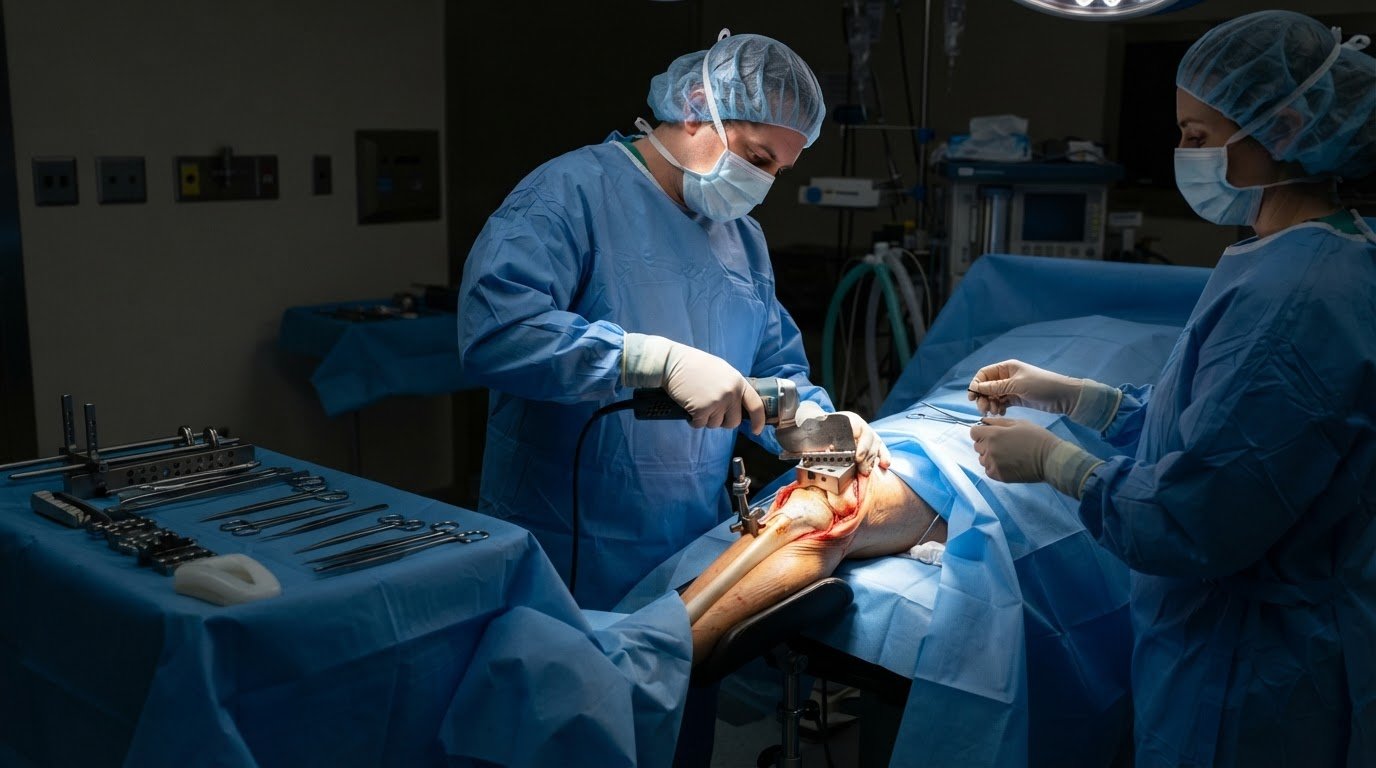
Revision planning begins with the diagnosis. Infection, loosening, instability, and wear are different concerns, and each calls for individual assessment. The surgeon also considers the condition of existing components and the bone around them. Depending on the findings, a revision may involve addressing or replacing one or more components. The precise plan can’t be determined from symptoms alone.
This differs from planning a primary hip replacement, which addresses the joint before an implant is in place. Revision surgery must account for the existing implant and the circumstances that led to considering another procedure. That makes a clear understanding of the problem especially important. A failing hip implant revision surgeon should be able to explain what the findings suggest, which options are reasonable, and what remains uncertain.
Your priorities belong in the conversation, too. Your activity needs, general health, and comfort with the potential benefits and risks all help shape a shared decision. Ask why revision is being considered, what other approaches remain reasonable, and what follow-up would involve if surgery isn’t recommended now.
For more context on the considerations involved in complex revision care, see this complex joint revision surgeon guide. The aim is to match the next step to the specific findings and your needs, not to make revision the default.
Preparing for a Hip Revision Consultation in the Kansas City Area
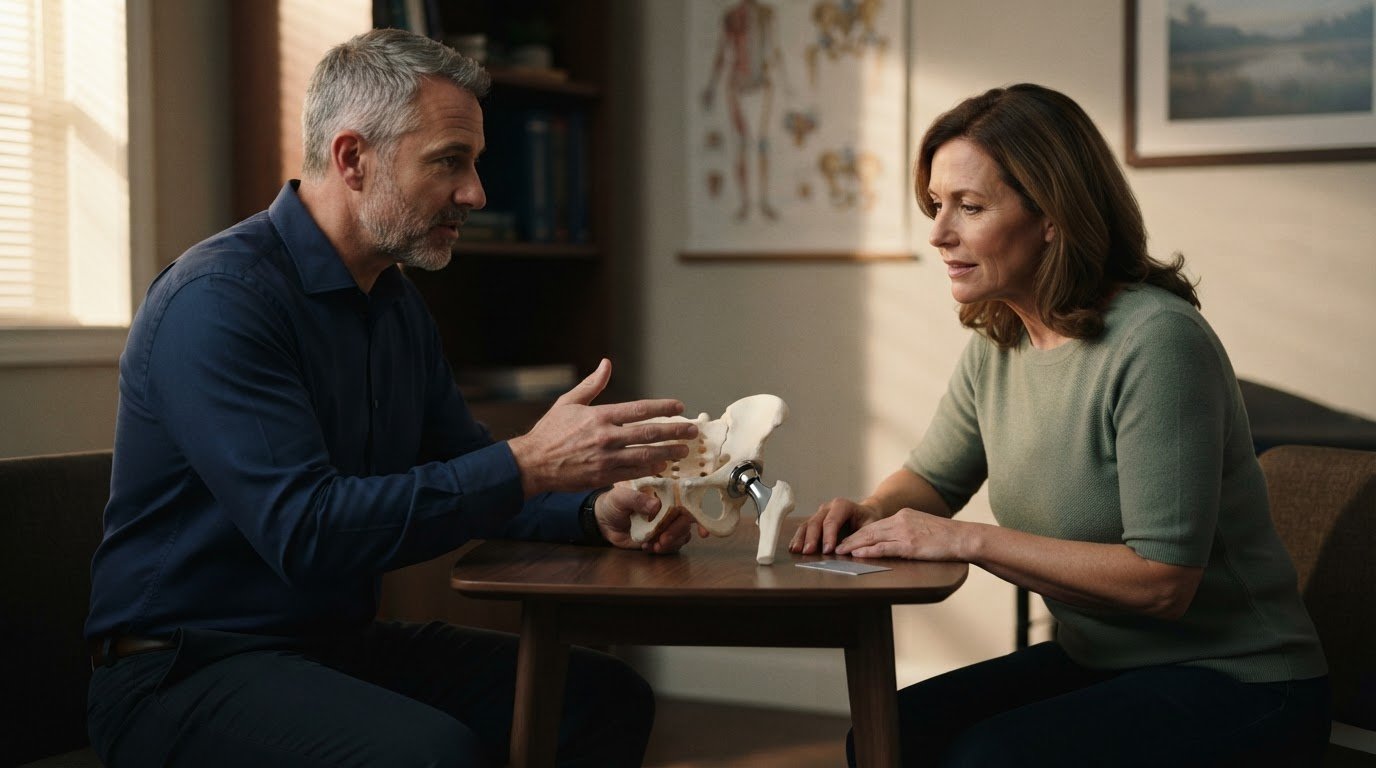
A revision consultation is a chance to put the details together and understand what they may mean for you. A little preparation can make the conversation more focused, especially if you’ve had more than one procedure or your symptoms have changed over time. Bring what you have, and don’t worry if some older records are missing.
What records and questions can make the visit more useful?
Gather prior operative notes, implant cards if available, imaging and reports, and relevant test results. Bring a current medication list, too. Write down when symptoms began, what has changed, and how walking, sleep, or other daily activities are affected. Include mobility concerns and what you hope to do more comfortably.
It may help to bring a family member or take notes, particularly if you’re weighing a complex decision. Your questions can guide a shared discussion, but they don’t replace an assessment tailored to your health and findings.
What do the evaluation findings suggest is causing my symptoms?
What alternatives to revision may be appropriate, and why?
What risks should I understand if revision is considered?
What might recovery and follow-up involve in my situation?
What remains uncertain, and what additional information could clarify it?
Be candid about concerns you have regarding another operation, including your support at home and the activities you want to return to. A failing hip implant revision surgeon can use this context, alongside your records and examination, to explain options in terms that connect to your priorities.
How to understand care and payment arrangements
Swope Joint Replacement serves patients from its Overland Park practice and the wider Kansas City area. Its care model is out of network, rather than in network. Cash pricing and out-of-network insurance options are available. Before moving forward with care, clarify the payment arrangement, what it includes, and how any insurance option applies to your circumstances.
Understanding the care model is also part of preparing for a meaningful consultation. Swope Joint Replacement emphasizes direct physician access and unhurried, personalized care. The concierge orthopaedic care guide offers more context about this approach and what a more individualized care experience can involve.
Bring your questions about the clinical plan and logistics together. You deserve a clear explanation of the diagnosis, possible next steps, and practical arrangements, with room to discuss what matters to you before making a decision.
Revision Hip Replacement Care with Swope Joint Replacement
Considering another hip operation can bring a new set of questions. What is causing the change? Is the implant involved? Could another approach help? At Swope Joint Replacement, revision hip replacement is considered in the context of a careful evaluation, not as an automatic response to pain. The discussion begins with your experience and the clinical findings, then turns to options that make sense for your situation.
What patients can expect from a personalized revision discussion
Your history, examination, and test findings help frame the conversation. So do your concerns and goals. You might want to understand why pain has returned, what the evidence says about your implant, or how possible treatment paths could affect everyday movement. A failing hip implant revision surgeon can explain the reasoning behind the assessment and make space for your questions, including where uncertainty remains.
Swope Joint Replacement’s concierge orthopaedic model emphasizes direct physician access and unhurried, personalized care. You can discuss your concerns with the physician and understand how the findings relate to possible next steps. A consultation is a conversation, not a presumption that surgery is necessary. Depending on the evaluation, revision may be discussed as one option alongside other appropriate approaches.
A considered next step for patients near Overland Park
For patients in Overland Park and the wider Kansas City region, Swope Joint Replacement provides revision hip replacement care through an individualized approach. A consultation can help clarify what the evaluation suggests and which options may be appropriate. It can also help identify what further information is needed before a decision is made. The focus is on understanding your particular situation, rather than making a one-size-fits-all recommendation.
Before a discussion, consider what you most want answered. You may want to talk about:
How the findings relate to your symptoms and implant history.
Which treatment options fit the diagnosis and your priorities.
What is known, what is still uncertain, and what further assessment may be needed.
These questions can help keep the conversation centered on your needs. No consultation can guarantee a particular treatment, result, or recovery course, but a thoughtful explanation can help you make a more informed decision about what comes next.
If you’re ready to discuss your hip symptoms, evaluation findings, and possible next steps, Discuss your hip revision options with Swope Joint Replacement.
Take the Next Step at Your Own Pace
You don’t have to settle every question before seeking an evaluation. A useful next step is to bring forward what has changed and what you still need to understand. The right conversation can help turn uncertainty into a clearer set of choices, without asking you to commit to surgery before you’re ready.
As you consider your options, look for explanations that connect the findings to your individual situation. A failing hip implant revision surgeon should help you understand the reasoning behind a recommendation, discuss alternatives, and be candid about what remains uncertain. You deserve time to consider that information and make a decision that reflects your health and priorities.
Swope Joint Replacement provides revision hip replacement care in the Overland Park and Kansas City area. A discussion can help you understand what your symptoms and evaluation may mean.
Seeking clarity is a meaningful step forward. You can move at a thoughtful pace, ask the questions that matter to you, and make decisions with a better understanding of the path ahead.
Frequently Asked Questions
Can a hip implant fail many years after replacement?
Yes. An implant can develop problems years after surgery, including wear or loosening, though the timing and likelihood vary from person to person. A long period of comfortable movement doesn’t rule out a later issue, and new symptoms still need an individual assessment. If discomfort develops after years of stability, note what has changed and share your implant and surgical history during a clinical evaluation.
Is hip pain always a sign that an implant is failing?
No. Pain near a replaced hip can come from several sources, including surrounding muscles or tendons, the back, or another health condition. For example, pain that changes with a particular movement may give the clinician useful context, but it can’t identify the cause by itself. A clinical assessment helps determine whether the implant is involved or whether another explanation should be considered.
How is a failing hip implant diagnosed?
A failing hip implant revision surgeon considers your symptoms and medical history alongside an examination and available records. X-rays may be compared with older images to look for changes in the implant or nearby bone. Depending on the findings, the clinician may recommend further imaging or laboratory tests, including tests to assess for infection. Results are interpreted together, since one test may not explain every possible cause.
Is revision hip replacement more complicated than primary hip replacement?
Revision surgery can be more complex because the surgeon must work around an existing implant and account for the condition of surrounding bone and tissue. The degree of complexity depends on the specific problem and your health. A revision plan may differ substantially from a primary replacement, so ask which parts of your case add complexity and how those factors shape the proposed procedure and recovery planning.
What should I bring to a hip revision consultation?
Bring prior surgical records, implant information or an implant card if you have one, imaging and reports, relevant test results, and a current medication list. A short written timeline can help you recall when symptoms began and how they affect your activities. If you have several questions, write them down in advance. You may also bring someone you trust to listen and help take notes.
Does every painful hip implant need revision surgery?
No. Revision is considered when the evaluation identifies a problem for which another operation may be appropriate. If findings point to another source of pain, or do not support revision, the clinician may discuss continued evaluation or non-operative treatment. Ask what the recommended approach is intended to address, what alternatives are reasonable, and what changes would prompt reassessment. The decision should reflect both clinical findings and your priorities.
Does Swope Joint Replacement accept in-network insurance for hip revision?
No. Swope Joint Replacement operates outside in-network insurance arrangements. The practice offers out-of-network insurance options and cash pricing; coverage and payment responsibilities depend on your individual plan and circumstances. The practice serves patients in Overland Park and the wider Kansas City region, including Olathe, Lees Summit, Lenexa, Leawood, Blue Springs, and Independence. Clarify the financial arrangements before proceeding with care.

Comments