Hip Pointer Injury: Symptoms, Treatment and Recovery

A hard blow to the upper, outer hip can deeply bruise the iliac crest, the top of the hip bone, causing a hip pointer injury. Pain, tenderness, swelling, and bruising are common, and walking or moving the leg may become difficult. The bruise often improves with nonsurgical care, but an impact can also cause a fracture or another injury, so symptoms deserve careful attention.
It’s understandable to wonder whether soreness after a fall or sports collision is something you can simply rest through. This guide explains how to recognize a hip pointer, what may ease pain and swelling, how recovery can vary, and when persistent or worsening symptoms need medical assessment. It also covers complications and associated injuries that can resemble a straightforward bruise, helping you understand what your body may be telling you as healing progresses.
Table of Contents
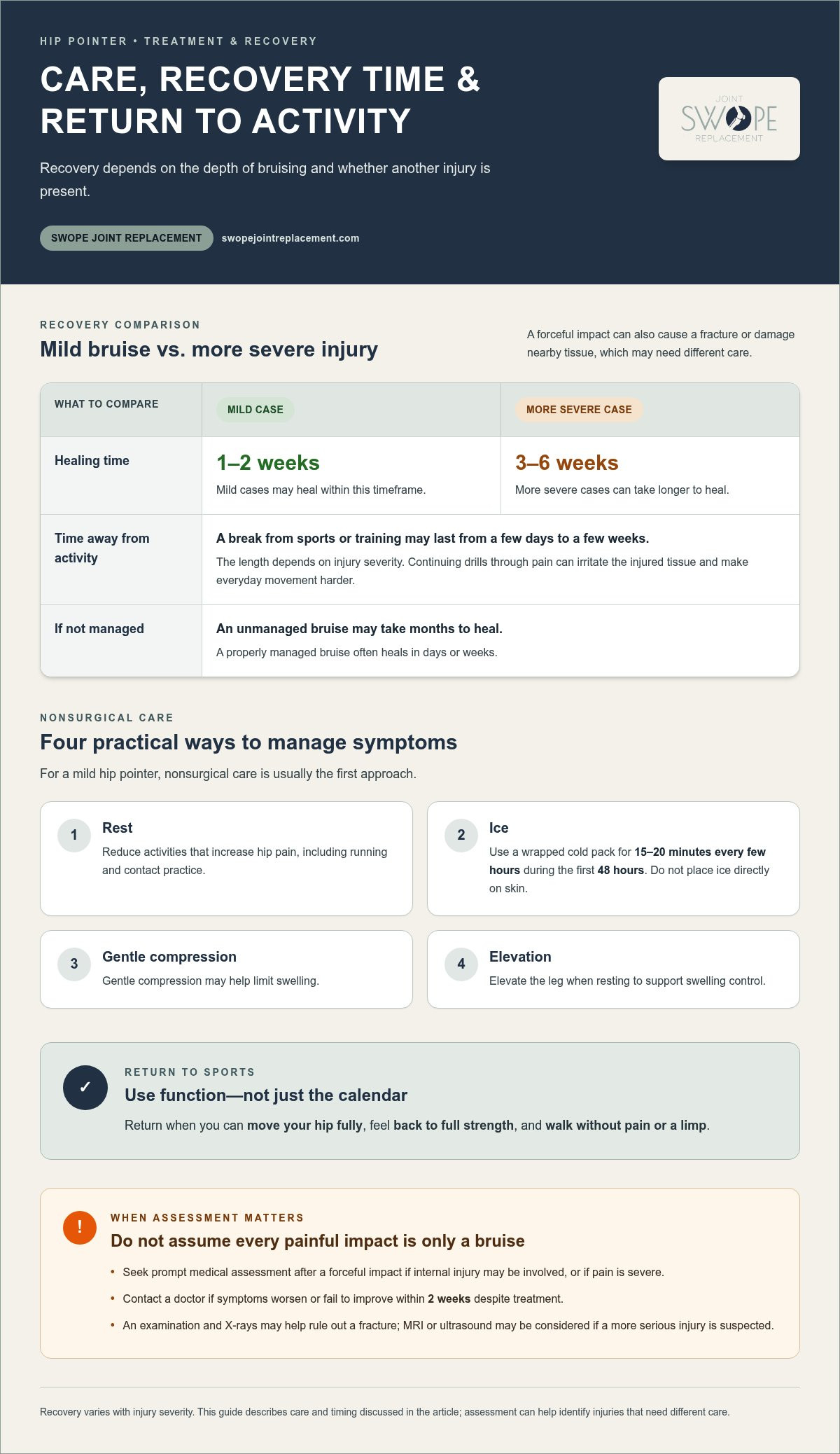
What Are The Appropriate Treatments To Minimize Hip Pointer Recovery Time?
A hip pointer is a deep bruise to the iliac crest, the upper, outer edge of the hip bone. A direct blow or hard fall compresses soft tissue against this bony ridge, causing pain and tenderness. The bone may remain unbroken, but a forceful impact can also cause a fracture or damage nearby tissue.
Diagnosis usually starts with your medical history and a physical examination. X-rays may help rule out a fracture or another cause of hip pain; MRI or ultrasound may be considered if a more serious injury is suspected.
Seek medical assessment promptly after a forceful impact if internal injury may be involved, or if pain is severe. Contact a doctor if symptoms worsen or fail to improve within 2 weeks despite treatment.
Contact sports create frequent opportunities for a direct collision with the iliac crest. A football player may take a blow from another player, while a hockey player may fall against the boards. Soccer, downhill skiing, skating, cycling, and car accidents can also cause this injury. The cause is impact, not a particular sport.
Athletes with less fat and other tissue cushioning the hip bone may be at greater risk. Hip pads can reduce the chance of injury in sports such as football or hockey, but they cannot prevent every impact. A bruise can also follow an ordinary fall, so you don’t need to play a contact sport to experience one.
For a mild hip pointer injury, nonsurgical care is usually the first approach. Rest from sports or training gives the bruised area time to settle. The break from activity may last from a few days to a few weeks, depending on severity. Continuing drills through pain can irritate the injured tissue and make everyday movement harder.
Rest: Reduce activities that increase hip pain, including running and contact practice.
Ice: Apply a wrapped cold pack for 15-20 minutes every few hours during the first 48 hours. Avoid placing ice directly on skin.
Compression and elevation: Gentle compression may help limit swelling. Elevate the leg when resting to support swelling control.
Recovery depends on the depth of bruising and whether another injury is present. Mild cases may heal within 1-2 weeks; more severe cases can take 3-6 weeks. A properly managed bruise often heals in days or weeks, while an unmanaged one may take months. Return to sports when you can move your hip fully, feel back to full strength, and walk without pain or a limp. Nonsurgical treatment addresses the bruise; imaging and examination help identify injuries that need different care.
What Are the Signs & Symptoms?
A hip pointer injury can cause sudden, sharp pain after a blow to the upper, outer hip. The sore spot is over the iliac crest, the upper edge of the pelvis. Tenderness, swelling, or bruising may develop around it. Athletes may notice discomfort immediately, then find the area more painful the day after impact.
Symptoms often emerge within 24 to 48 hours. Pain may spread from the front of the iliac crest around the hip, especially when pressure touches the bruise. The pattern can make everyday movements difficult. Walking, bending, or moving the affected leg may hurt, while stiffness or muscle spasms can make the hip feel guarded.
Localized tenderness: Pressure over the top-front edge of the hip bone can sharply increase soreness.
Visible bruising and swelling: Discoloration or puffiness may appear around the impact site after a collision or fall.
Restricted movement: Lifting the leg, turning the hip, or taking a long stride may feel painful or limited.
Weakness or spasms: Nearby muscles may feel weak or tighten as you protect the sore area.
Numbness or tingling: These sensations can affect the leg and deserve attention, particularly after a hard impact.
A hip pointer and a hip fracture can both follow a forceful blow and cause pain with movement. Symptoms alone cannot reliably distinguish a deep bruise from a fracture or another hip injury. A clinical examination and, when a fracture is suspected, imaging such as an X-ray can help identify the cause.
Pay attention to how symptoms affect function, not just how the bruise looks. For example, an athlete who can walk but cannot lift the leg comfortably still has meaningful movement limits. A patient with increasing pain, new tingling, or worsening swelling should arrange an appointment for assessment. Symptoms that worsen or fail to improve within 2 weeks despite treatment also warrant medical review.
Severe pain after a collision does not prove that you have a simple bruise. An impact can injure bone or nearby structures, and a fracture may need different care. Orthopaedic trauma and fracture care can assess a suspected bone injury when pain, tenderness, or difficulty moving the hip raises concern. Physical therapy may help later if a clinician recommends it for movement limitations.
Before an appointment, note when the impact happened, where the pain is strongest, and which movements bring it on. Mention bruising, swelling, weakness, or tingling, and whether each symptom is improving or worsening. These details help the clinician assess the injury and decide whether further evaluation is appropriate for a hip pointer injury.
Anti-inflammatory and pain-relief medicines
Medicine may ease pain and swelling while a bruised hip heals. The right choice depends on the medicine and the timing after impact.
Medicines for Pain and Swelling
Nonsteroidal anti-inflammatory drugs, or NSAIDs, may reduce pain and swelling around the bruise. Corticosteroids may also help reduce hip pain and swelling. These medicines target symptoms, not the impact that caused the injury. Timing matters: Nationwide Children's Hospital advises not taking anti-inflammatory medicines during the first 3 days after injury. Keep that early period in mind before considering an anti-inflammatory option.
Over-the-Counter Pain Relief
Over-the-counter medicines can help manage discomfort from a bruised hip. Ibuprofen is an example of an anti-inflammatory pain medicine used for hip pointer pain; acetaminophen may also help with pain. They are different types of medicine, so don’t assume their effects or timing are interchangeable. When discussing an option with a healthcare professional, consider the symptom you want to ease, such as pain or swelling.
Managing Hip Tenderness
Hip tenderness means pain increases when pressure touches the bruised area. Even a waistband, a seat edge, or lying on the affected side may make the spot uncomfortable. Reducing direct pressure can make resting easier while the bruise heals. If tenderness makes walking difficult, a clinician may recommend crutches for a few days to reduce weight bearing.
Pain relief works best as part of a broader recovery plan. Rest limits activities that aggravate the sore area, while ice, compression, and elevation may help manage swelling. Medicine can make movement more comfortable, but it doesn’t mean your hip is ready for sports or training. Pay attention to what your body can do instead of using temporary relief as a reason to push through pain.
Keep track of how pain and swelling change after taking a medicine. For example, note whether tenderness eases during ordinary activities, or whether walking remains difficult. That information helps describe your symptoms clearly during a medical appointment. If pain worsens or fails to improve within 2 weeks despite treatment, contact a doctor for assessment.
Severe tenderness after a direct blow can make even light pressure uncomfortable. Avoid repeatedly pressing the bruise to test it. If you use a cold pack or compression alongside medicine, keep each measure comfortable and stop if it increases pain. Pain relief may ease symptoms, but worsening pain or ongoing difficulty moving still deserves attention.
Choosing pain relief should account for the type of symptom and the injury’s timing. Anti-inflammatory medicines address pain and swelling, while acetaminophen may help with pain. For instance, the first 3 days after impact matter when considering anti-inflammatory medicine. Follow the medicine’s label and discuss questions about its use with a healthcare professional, especially if the pain remains difficult to manage.
Physical therapy
Physical therapy can help restore hip movement and strengthen muscles after a more severe bruise. Timing matters: exercises should build on reduced pain and swelling, not push irritated tissue.
Physical Therapy and Stretching
A clinician may recommend physical therapy if the injury is severe or interferes with normal movement. Therapy may include gentle stretches and strengthening exercises for the hip and abdominal muscles. Once pain and swelling decrease, range-of-motion exercises may begin gradually. This progression helps you work toward comfortable movement and strength without rushing the injured area.
For example, a person who still struggles to move the leg may need a different approach from someone whose hip moves comfortably but feels weak. A therapist can focus exercises on restoring range of motion and supporting the muscles around the hip. Follow the prescribed progression; increasing a stretch or exercise while pain remains can aggravate the tissue.
Crutches may help reduce weight on the injured side for a few days if walking is difficult. They’re a temporary way to reduce weight bearing, not a substitute for assessing movement limitations. As walking becomes more comfortable, a clinician can guide your next steps, including when to add stretching or strengthening. The goal is functional recovery, not simply completing exercises.
Physical therapy does not diagnose a fracture or other injury. A medical assessment helps identify the cause of pain and whether imaging is needed. Once a hip pointer is diagnosed, exercise choices can reflect the bruise’s severity, swelling, and movement limitations. Severe pain or difficulty walking should not be managed by forcing exercises through discomfort.
Cold and Heat Therapy
Cold therapy uses a wrapped cold pack to soothe the area and help manage swelling; heat is used later to prepare muscles for prescribed exercises. Nationwide Children’s Hospital advises applying cold for 10 to 15 minutes every 2 to 3 hours. It describes starting cold and heat therapy 2 days after injury, with heat applied for 10 to 15 minutes before stretching and strengthening activities.
Heat is generally used once initial swelling subsides, typically after 48 hours. The timing matters because the sore area may still be swollen during the initial stages. A cold pack should not rest directly against skin. If either temperature increases discomfort, stop that application and discuss the response with a clinician.
Cold and heat can support comfort, while exercises address movement and strength. Keep those roles distinct during recovery. For example, cold may help manage swelling, while brief heat may precede a prescribed stretch once initial swelling has settled. Gradual range-of-motion work follows reduced pain and swelling; strengthening follows the plan set for your injury.
Track practical changes as therapy progresses: whether you can walk more comfortably, move your hip farther, or perform a prescribed exercise with less difficulty. These observations help show whether function is returning. If movement remains limited or symptoms worsen, seek reassessment instead of increasing exercise intensity on your own.
Complications and associated injuries
A hip pointer is usually a bruise, but a direct blow can cause more than bruised tissue. A fracture can rarely accompany the injury, and impact may also harm internal organs. The key is whether symptoms fit a localized bruise or suggest a more serious injury. Persistent pain, reduced range of motion, or difficulty walking deserves attention rather than an assumption that every symptom comes from the bruise.
A clinician assesses the impact and examines the hip to understand what hurts and how movement is affected. A physical exam and medical history typically guide diagnosis. If the force or symptoms raise concern about damage beyond bruising, X-rays or MRI can help look for other injuries. X-rays can also help rule out a hip fracture as the cause of pain. Imaging decisions depend on the injury being assessed.
Internal organ damage is an important concern after a forceful impact, even when the most visible sign is bruising over the hip bone. Prompt assessment helps evaluate possible harm from the blow. Don’t judge the impact by the bruise’s appearance alone. A clinician needs to consider the full event and symptoms, especially if pain is severe or function changes after the collision.
Possible fracture: A fracture is rare, but X-rays can help identify or rule out a broken hip bone.
Damage beyond bruising: MRI may help assess internal injury when a more severe problem is suspected.
Fluid buildup: A doctor may need to drain fluid that collects near the injured area.
Another injury: The hip pointer itself rarely needs further intervention unless an associated injury is present.
These distinctions matter because treatment depends on what the impact injured. A straightforward bruise is generally managed without surgery, while a fracture or other associated injury needs its own assessment. Surgery is rarely needed for a hip pointer. Fluid collection is a separate concern, and drainage may be considered if it builds up. The key is to identify the source of ongoing pain before increasing activity or stretching sore muscles.
Arrange medical assessment if symptoms worsen or fail to improve within 2 weeks despite treatment. Severe pain that persists after a couple of weeks of rest and ice also warrants orthopaedic evaluation. A doctor can examine the hip and decide whether X-rays or MRI are appropriate. This is especially relevant when pain continues to restrict range of motion or normal walking.
Until an associated injury is assessed, avoid forcing a painful stretch or returning to activities that aggravate symptoms. For example, worsening pain during ordinary walking is a reason to pause training and seek evaluation. A hip pointer rarely requires further intervention on its own, but an accompanying fracture or other injury changes the situation. Careful assessment distinguishes these cases and guides the next step.
Swope Joint Replacement: Direct Anterior Hip Replacement
Swope Joint Replacement offers Direct Anterior Hip Replacement for people whose hip problems call for joint replacement, not treatment for a simple bruise. A hip pointer alone rarely requires further intervention. If persistent hip symptoms lead to evaluation for an underlying joint problem, an orthopaedic discussion can help clarify whether replacement is relevant to your situation.
The distinction matters: care for a bruised hip differs from treatment for a joint condition. Swope Joint Replacement also offers Revision Hip Replacement, Knee Replacement, and Revision Knee Replacement. If you’re considering hip care beyond an injury assessment, contact Swope Joint Replacement to discuss your next step.
Choose a Clear Next Step for Your Hip
A hip pointer injury is not, by itself, a reason to consider joint replacement. If ongoing hip symptoms raise a separate concern about the joint, an orthopaedic evaluation can help you understand the issue and consider appropriate options. The next step should match the cause of your symptoms, not simply the fact that an impact occurred.
Swope Joint Replacement offers Direct Anterior Hip Replacement, Knee Replacement, and Revision Hip Replacement. These services address joint replacement needs, not a straightforward bruise. If you’re considering care for a hip joint concern, you can contact Swope Joint Replacement to discuss a thoughtful next step. Take your time, ask questions, and move forward with clarity.
Frequently Asked Questions
What Is a Hip Pointer?
A hip pointer injury is a deep bruise involving the iliac crest, the upper edge of the pelvis. The impact injures soft tissue over the bone, producing a tender, localized area without necessarily breaking the bone itself. The term describes the injury at the impact site. A clinician can assess whether symptoms fit a bruise or suggest an associated injury.
What Happens Next?
After an impact, note where the pain is centered and whether walking or moving your leg becomes difficult. If pain is severe, worsening, or not improving, arrange medical assessment; an examination and medical history help guide next steps. For orthopaedic concerns in Overland Park, Kansas City, Olathe, Lenexa, Leawood, Lees Summit, Blue Springs, or Independence, Swope Joint Replacement offers trauma and fracture care, with transparent cash pricing for office visits and in-office procedures.
When can I get back to my normal activities?
Resume everyday activities as comfort and movement return, rather than following a fixed date. For example, walking around your home without pain is different from climbing stairs, carrying a heavy bag, or completing a full work shift. Increase activity gradually and notice whether pain returns during or afterward. If ordinary tasks remain difficult or symptoms worsen, pause the increase and seek medical advice.
What is a hip pointer injury, and what causes it?
A hip pointer is a deep bruise caused when an impact strikes the iliac crest, or upper edge of the pelvis. A direct collision during football or hockey, a fall onto the hip, and car accidents are possible causes. The force compresses tissue against bone. People with less cushioning tissue over the iliac crest may face greater risk during high-impact activities.
What are the symptoms of a hip pointer injury?
Symptoms can include pain and tenderness over the upper, outer hip, with swelling or visible bruising around the impact area. Walking, moving your leg, or bending may also feel uncomfortable. Some people experience stiffness, muscle spasms, weakness, or tingling in the affected leg. Pay attention to changes over time, especially increasing pain or new difficulty with normal movement.
What is the best first aid and home treatment for a hip pointer?
Rest the hip and use a wrapped ice pack for 15-20 minutes every few hours during the first 48 hours. Compression and elevation may also help manage swelling. Nationwide Children’s Hospital advises against anti-inflammatory medicines during the first 3 days after injury. Avoid placing ice directly on your skin, and seek assessment if symptoms worsen or fail to improve within 2 weeks.
How long does a hip pointer take to heal?
Healing time depends on the severity of the bruise and whether another injury is present. Mild cases may settle within 1-2 weeks, while more severe cases can take 3-6 weeks. Most people heal within a few weeks, but ongoing symptoms can take longer. If pain or movement limits are worsening, or don’t improve within 2 weeks despite treatment, contact a doctor.
When can you return to sports or exercise after a hip pointer?
After a hip pointer injury, return to sports when you can walk without limping or pain, feel back to full strength, and move your hip through its full range. Start with lower-intensity activity before returning to drills or contact play. For example, test comfortable movement before attempting a sprint or tackle. If pain returns or your hip feels weak, stop and allow more recovery before trying again.


Comments