Hip Replacement Implant Loosening: Symptoms and Diagnosis

A painful hip replacement doesn’t automatically mean the implant is loose, but persistent or returning pain deserves attention. Hip revision surgery removes or replaces some or all of the original implant when loosening or another problem affects the joint. A hip replacement implant loosening specialist can assess the cause of your symptoms and whether revision is appropriate.
You may notice pain in your groin, thigh, or hip, especially during activity. Difficulty walking or a feeling that the joint might give way can also signal a problem. Because these symptoms can have different causes, an examination and imaging are important for understanding what’s happening.
This article explains what revision surgery involves, how a surgeon evaluates possible loosening, and which symptoms warrant care. You’ll also learn why X-rays are often part of the assessment, when blood tests or other imaging may help, and why fever, redness, warmth, or drainage around the surgical site call for prompt medical attention. Clear information can help you decide what to do next without jumping to conclusions.
Table of Contents
What is hip revision surgery?
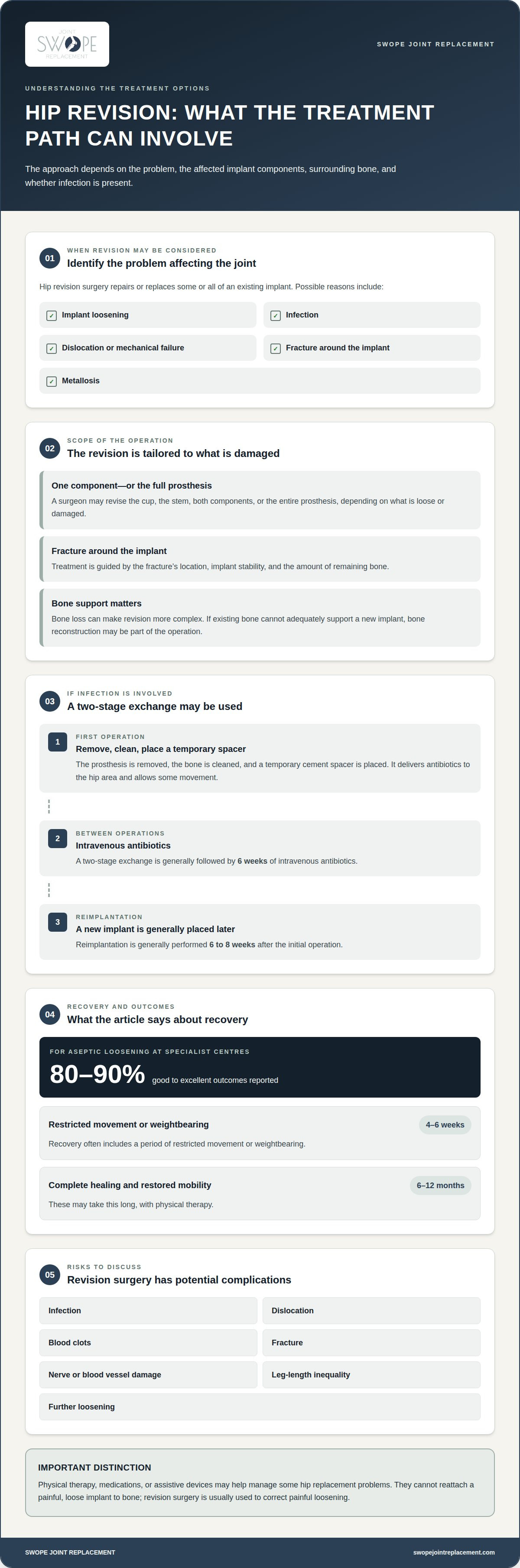
Hip revision surgery replaces or repairs some or all of an existing hip implant. It may be considered when loosening, infection, dislocation, mechanical failure, a fracture around the implant, or metallosis affects the joint.
Revision Procedures and Infection Treatment
The operation may replace a single damaged component or the entire prosthesis. Depending on which part is loose or damaged, a surgeon may revise the cup, the stem, or both. If a fracture surrounds the implant, its location, implant stability, and remaining bone help guide treatment.
Bone loss can make revision more complex because new components need stable support. If the existing bone cannot adequately support the implant, bone reconstruction may be part of the operation. The approach depends on the damaged components, surrounding bone, and whether infection is present.
When infection causes a loose implant, treatment may involve two separate surgeries. During the first operation, the prosthesis is removed, the bone is cleaned, and a temporary cement spacer is placed. The spacer delivers antibiotics to the hip area and allows some movement. A two-stage exchange is generally followed by six weeks of intravenous antibiotics, with reimplantation generally performed 6 to 8 weeks after the initial operation.
Other treatments depend on the cause and severity of the problem. Physical therapy, medications, or assistive devices may help manage some problems with a hip replacement. They cannot reattach a painful, loose implant to bone, so revision surgery is usually used to correct painful loosening.
Specialist Care, Costs, and Outcomes
An orthopaedic surgeon specializing in joint replacement and revision surgery diagnoses and treats hip implant loosening. A hip replacement implant loosening specialist considers your symptoms, implant condition, bone support, and possible infection. The evaluation helps determine whether further testing, monitoring, or surgery is appropriate.
Swope Joint Replacement offers transparent cash pricing for office visits and in-office procedures. Please note we are out of network with all insurance carriers by design so we can place patient care first. Surgeries performed at a hospital or accredited surgical center are billed out of network. Under the federal No Surprises Act, insurers must apply the same deductible and cost-sharing structure as if the provider were in network. The appropriate next step depends on your evaluation and treatment needs.
Revision surgery risks include infection, dislocation, blood clots, fracture, nerve or blood vessel damage, leg-length inequality, and further loosening. For aseptic loosening, revision achieves good to excellent outcomes in approximately 80 to 90 per cent of patients at specialist centres. Recovery often includes 4 to 6 weeks of restricted movement or weightbearing; complete healing and restored mobility may take 6 to 12 months with physical therapy.
Can a loose hip replacement cause no symptoms at all?
Yes. A hip implant can loosen without obvious symptoms at first, and aseptic loosening may develop gradually. Aseptic means loosening without infection. Some patients feel well for years before pain or reduced function returns, so a pain-free period doesn’t rule out a later implant problem.
Aseptic loosening occurs when the bond between bone and implant weakens. One possible cause is wear: tiny particles from the ball and cup liner can trigger an immune response. The resulting bone loss around the implant is called osteolysis. As bone support decreases, the component may shift, causing pain or instability. Modern plastic liners wear less than older plastics, but wear-related bone loss remains a consideration, especially with older implants placed before approximately 2000.
The cause isn’t always clear. Implant positioning during the original operation can contribute to failure, while a fall may damage the implant or surrounding bone. Materials can also degrade over time and with activity. Weight gain and obesity add stress to the implant and increase the risk of complications. These factors don’t prove that loosening has occurred; they help explain why a surgeon considers your history alongside examination and imaging.
Aseptic loosening is one possible reason for revision, not the only one. Infection, repeated dislocation, mechanical failure, a fracture around the implant, and metallosis can also affect a replacement. In a 2024 review of seven national registries, aseptic loosening accounted for about 35 percent of hip replacement revisions. That figure describes revisions in the reviewed data, not an individual patient’s likelihood of loosening.
Changes in daily activities may appear before pain becomes severe. You might notice discomfort returning after a period of easier movement, less confidence when walking, or a sense that the hip is less stable. A walker or other assistive device may help you get around if symptoms affect walking, but it doesn’t establish the cause. A specialist uses your symptom pattern and imaging findings to distinguish loosening from other problems.
At an appointment, ask: “What findings suggest loosening rather than another cause of pain?” and “Which tests can clarify whether infection or bone loss is present?” You can also ask which component appears affected, how changes compare with earlier images, and which treatment options fit your symptoms and activity needs.
If symptoms are returning or changing, an evaluation focused on hip implant concerns can help clarify the next step.
Diagnostic tests, including X-rays, CT, blood tests, and bone scans
Diagnosis combines your symptoms, physical examination, and imaging rather than relying on one test. These findings help distinguish loosening from infection, wear, dislocation, or fracture around a total hip arthroplasty.
Imaging for Implant Assessment
X-rays are the first and most important imaging test for a suspected loose hip replacement. They show implant position and may reveal changes at the bone-implant interface. A gap or radiolucent line at least 2 mm wide, especially if it grows on later images, can be significant. Comparing current X-rays with earlier images helps show whether the finding is changing.
CT can provide a closer view of bone loss around the implant, which may affect revision surgery planning. MRI or a bone scan may help assess surrounding soft tissue or structural damage. Bone-scan uptake around implant components can persist for up to 2 years after primary surgery, so timing matters when interpreting results.
Blood Tests and Aspiration
ESR and CRP blood tests can screen for infection when a hip implant appears loose. They look for signs that may prompt further investigation, but don’t identify the cause on their own. If infection remains a concern, hip aspiration uses a small needle to draw joint fluid for testing for bacteria.
Technetium-99m bone scintigraphy is another imaging test used to evaluate possible loosening. No single image or blood result answers every question. The surgeon interprets results alongside your symptoms, examination, implant history, and other findings.
The testing sequence depends on what the initial examination suggests. X-rays can show visible changes, while CT may clarify the amount and location of bone loss. If blood tests raise concern for infection, aspiration can help assess joint fluid. This distinction matters because infection-related loosening may require a different treatment plan from aseptic loosening.
For a total hip replacement, imaging can also help assess whether a component has shifted or a fracture affects the surrounding bone. These details guide decisions about surgery and any bone reconstruction. They also help explain why two people with similar walking discomfort may need different evaluations.
Blood clots and pulmonary embolism are recognized complications of revision surgery. Discuss clot prevention as part of the surgical plan, particularly if revision is being considered. Tests used to assess loosening do not determine a prevention approach; the surgeon considers your operation and health circumstances.
If results are mild or uncertain, surveillance X-rays may be repeated every 6-12 months to look for change. This can help distinguish a stable finding from progressive loosening. For some patients, that comparison informs whether continued monitoring or further treatment should be considered.
Symptoms of a loose hip replacement
Pain is a common warning sign of hip replacement failure. You may feel persistent discomfort in your groin, thigh, or hip, especially during activity. For example, pain that builds while walking or climbing stairs can interfere with everyday movement. Note where it occurs and what makes it worse, then share that pattern during an orthopaedic assessment.
Changes in walking can also matter. You might feel unstable, struggle to walk as far, or worry that your hip could give way. Reduced range of motion may make dressing, standing from a chair, or getting into a car more difficult. These details are useful to a surgeon, even when pain remains mild.
Some patients notice clicking, popping, or grinding from the replaced joint. These sounds can be associated with implant wear, loosening, or misalignment, but sound alone cannot identify the cause. Note when it happens, such as during a step or when rising from a seat, and mention any recent change in how the joint feels during everyday activities.
Symptoms may also include slower progress during rehabilitation or discomfort that returns after recovery seemed to be going well. For example, someone who previously walked comfortably may develop increasing thigh pain during routine walks. Reduced motion or unexplained discomfort can also point to an underlying problem. Your symptom pattern helps guide evaluation, but examination and imaging are needed to assess the implant.
If symptoms begin or worsen, reduce strenuous activity and rest your hip rather than pushing through pain. Avoid movements that clearly aggravate discomfort, and use an assistive device if it helps you walk safely. Arrange an evaluation with an orthopaedic surgeon, and describe when symptoms began, how they affect walking, and whether your motion or stability has changed.
Before your appointment, keep a brief record of where you feel pain, which activities trigger it, and how it changes over time. Include examples such as difficulty standing from a chair or a new feeling of instability. Bring older hip X-rays or information about the original procedure, if available. Comparing earlier images can help assess changes around the implant.
Symptoms don’t prove that bone loss or implant loosening has occurred. Infection, dislocation, and other complications can also affect a replaced hip. A timely assessment helps distinguish these possibilities and determine whether further tests or treatment are appropriate.
When to seek evaluation from a joint replacement surgeon
Arrange an evaluation if pain returns after a comfortable period, walking becomes harder, or your hip feels unstable. A hip replacement implant loosening specialist can assess whether symptoms relate to loosening, infection, dislocation, or another cause. Changes in your ability to bear weight or complete routine activities also deserve attention. An assessment connects your symptoms with examination findings and imaging, rather than relying on pain alone.
Some signs call for prompt action. After hip replacement, call your surgeon the same day if you have fever, warmth, redness, wound drainage, or pain at rest or during the night. Fever, swelling, redness, and warmth around the surgical site can signal infection requiring immediate medical attention. Don’t wait for several symptoms to appear together before reporting a concerning change.
Clicking, popping, or grinding from a replaced hip can be associated with wear, loosening, or misalignment. A sound alone doesn’t establish a diagnosis, but a new noise combined with pain or reduced motion warrants evaluation. Report a sudden change after a fall, too, since an injury can damage the implant or fracture the surrounding bone. Your surgeon can decide whether imaging or other tests are needed.
At an appointment, describe when symptoms began and how they affect walking, sleep, and daily movement. Explain whether pain occurs during activity, at rest, or at night. Bring earlier imaging when available, because comparison can show whether implant position or surrounding bone has changed. Ask what the findings suggest, whether more tests are needed, and which treatment options suit your circumstances.
Evaluation matters even when symptoms are mild. Osteolysis, or bone loss around an implant, can weaken support before the hip feels dramatically different. X-rays and, when appropriate, CT help assess the component and surrounding bone. If a fracture or substantial bone loss is found, implant position and stability help guide decisions about arthroplasty, reconstruction, or a bone graft. These findings inform treatment; they don’t automatically mean another operation is needed.
A hip replacement implant loosening specialist can also help interpret changes over time, including symptoms that fluctuate rather than steadily worsen. Share which activities have become harder and whether you’ve changed how you walk or rest. This context helps the surgeon understand how the problem affects your daily life and what further evaluation may help.
Seek an assessment when symptoms persist, change, or limit your usual activities. If you’re concerned about a replaced hip, request an evaluation to discuss your symptoms and appropriate next steps.
Swope Joint Replacement
Swope Joint Replacement evaluates concerns about a painful or possibly loose hip implant and discusses appropriate next steps. If examination and imaging indicate implant failure, Revision Hip Replacement may be considered. The decision depends on the cause of the problem, implant condition, and surrounding bone. A consultation can help you understand the findings and whether further testing, monitoring, or surgery is appropriate.
Bring your symptom history and any previous hip imaging to support a focused discussion. You can talk through how pain or instability affects your movement, what the evaluation may involve, and which treatment options suit your circumstances. The aim is to give you clear information for an informed decision, without assuming every concern requires an operation.
Contact Swope Joint Replacement to discuss an evaluation.
Take the Next Step Toward Clarity
Uncertainty about a replaced hip can make everyday decisions feel harder. A focused conversation can help you understand what your symptoms mean, which findings need attention, and what choices fit your priorities. You deserve time to discuss your concerns and take part in decisions about your care.
When you meet with a hip replacement implant loosening specialist, bring your questions and explain how the hip affects your daily life. Swope Joint Replacement provides Revision Hip Replacement, Direct Anterior Hip Replacement, and Knee Replacement. The appropriate care depends on your needs and evaluation.
Take the next step at a pace that feels right for you. Contact Swope Joint Replacement to discuss your hip concerns and possible evaluation.
Frequently Asked Questions
How do doctors diagnose a loose hip replacement?
Doctors combine your symptom history, a physical examination, and imaging to assess a possible loose implant. They may compare current X-rays with older images to look for changes in component position or surrounding bone. If infection is a concern, blood tests and joint-fluid testing can provide additional evidence. The diagnosis depends on how these findings fit together, not on one symptom or test alone.
What is the difference between aseptic and septic loosening?
Aseptic loosening happens without infection, while septic loosening is associated with infection around the implant. The distinction matters because infection can change the treatment plan and timing of revision. Doctors may use blood tests and a joint-fluid sample to investigate infection. If infection is found, the bacteria and severity help guide care. Pain alone cannot reliably distinguish the two causes.
Can bearing surface choice affect my risk of loosening?
Yes. Wear between the ball and cup liner can release particles that contribute to bone loss around an implant, and bearing materials differ in how they wear. Modern plastic liners wear less than older plastics, making wear-related loosening less common today. Material choice is only one part of implant performance; component fit, position, bone support, and activity also matter.
Can loosening be detected on regular follow-up visits?
Yes. A follow-up examination and comparison of radiographs can reveal changes before symptoms become pronounced. Clinical and radiographic follow-up is recommended at 1 year, 2 years, and every 2-5 years thereafter. If a finding is mild or uncertain, repeat X-rays may help show whether it is stable or progressing. Keep follow-up appointments even when your hip feels comfortable.
How do I know if my joint replacement is loosening?
You can’t confirm loosening from symptoms alone. Returning groin, thigh, or hip pain, reduced walking ability, or a new sense of instability are reasons to arrange an assessment. For example, pain that repeatedly limits your usual walk deserves attention, especially if it is worsening. A surgeon can assess the joint and determine whether imaging or other tests are appropriate.
What are the Indications for Correction of a Loose Hip Replacement?
Revision may be considered when a loose implant causes persistent pain or limits function, or when infection, dislocation, mechanical failure, or fracture affects the replacement. The surgeon weighs implant stability, remaining bone, infection status, and how symptoms affect daily activities. An X-ray finding does not automatically mean surgery; the decision depends on how the problem progresses and affects your hip.
What are the signs and symptoms of a loosening hip replacement implant?
Possible signs include recurring pain in the groin, thigh, or hip; difficulty walking; reduced movement; and a feeling that the joint may give way. Some people notice clicking or grinding, though sounds alone don’t establish loosening. Track whether discomfort occurs during particular activities or has changed over time. Discuss new or worsening symptoms with a joint replacement surgeon.
How is a loose hip replacement diagnosed, including imaging and lab tests?
Evaluation commonly begins with X-rays, a physical examination, and a review of your hip’s history. CT can clarify bone loss, while ESR and CRP blood tests can screen for infection. If infection remains a concern, doctors may sample joint fluid and test it for bacteria. A bone scan may also be considered, but its results need to be interpreted alongside other findings and the timing of surgery.


Comments