Hip Tendons: A Guide to Pain, Injuries, and Long-Term Joint Health

What if pain on the outside of your hip isn’t coming from the joint itself? Hip tendons help stabilize the joint and transfer force as you move. When they’re irritated or damaged, even lying on your side can become uncomfortable. If you’ve heard explanations such as bursitis, tendinopathy, or a tendon tear, it’s reasonable to want a clearer picture before deciding what to do next.
This guide explains how the tendons around your hip work, how common tendon problems can differ, and how clinicians use your symptoms, an examination, and imaging to investigate the cause. You’ll also learn why treatment depends on the diagnosis and why the surrounding muscles matter if hip replacement is appropriate.
For complex hip and tendon concerns, an unhurried conversation can help connect the diagnosis to your goals and daily life. Swope Joint Replacement provides care through an out-of-network, cash-pay model for patients in Overland Park, Kansas City, Olathe, Lee’s Summit, Lenexa, Leawood, Blue Springs, and Independence. The sections ahead cover anatomy, common injuries, and treatment considerations so you can prepare for a more focused discussion with a clinician.
Table of Contents
Understanding Hip Tendons: The Support System of Your Joint
Your hip moves smoothly because muscles and connective tissues work together around the joint. Tendons attach muscles to bones, including the pelvis and femur. They transfer the force your muscles create, helping you lift your leg, take a step, and keep your pelvis steady. Think of them as part of a pulley system: muscles pull through tendons to guide movement and support your body’s weight.
The main muscle groups have different jobs. The gluteal muscles support the outer hip, the iliopsoas helps flex the hip at the front, and the adductors draw the leg inward. Together, they help control everyday movements such as walking and climbing stairs. This overview of hip joint anatomy shows how muscles, bones, ligaments, and tendons relate to one another.
One distinction makes the anatomy easier to understand: ligaments connect bone to bone, helping stabilize a joint, while tendons connect muscle to bone, transferring muscular force. Both contribute to hip stability, but tendon pain can affect how you move and bear weight. Knowing which tissue may be involved can inform treatment discussions and, if surgery is considered, how the surrounding muscles are approached.
The Gluteal Tendons: Your Hip’s Lateral Stabilizers
The gluteus medius and minimus muscles sit along the side of the pelvis. Their tendons attach to the greater trochanter, the bony prominence you can feel at the outer upper thigh. These tendons help move the leg outward and keep the pelvis level when you stand on one leg, as you do during each step. If they’re painful or weak, the pelvis may dip on the opposite side. This movement pattern is called a Trendelenburg gait and can appear as a limp. Because the greater trochanter is a high-demand attachment point, pain there deserves an assessment rather than a diagnosis based on location alone.
The Iliopsoas Tendon: The Primary Hip Flexor
The iliopsoas is a deep muscle group at the front of the hip, formed by the psoas and iliacus. Its tendon passes close to the hip socket, or acetabulum, before attaching to the femur. It helps lift your leg, as when stepping onto a curb, and contributes to control of the hip and trunk. As the tendon moves near the joint, it can sometimes produce a snapping sensation. A snap doesn’t identify the cause by itself, but noting when it occurs can help a clinician assess the hip.
Common Hip Tendon Injuries: From Tendonitis to Tears
Hip tendon pain can begin suddenly or build over time. An acute injury may follow a fall, a sudden change of direction, or an awkward movement that overloads a tendon. Chronic pain is more often linked to repeated stress that outpaces the tissue’s ability to adapt. The American Academy of Orthopaedic Surgeons describes different causes of hip tendon injuries, including sudden injury and overuse.
Tendinopathy is a broad term for tendon pain and impaired function. “Tendonitis” suggests inflammation, but persistent symptoms may involve changes in the tendon’s structure. Tendinosis describes degeneration within the tendon rather than inflammation alone. Age can affect tendon elasticity and the tissue’s capacity to repair itself; training volume and recovery also matter. For example, a runner who quickly increases distance may put more repeated load on a tendon than it can comfortably tolerate.
Pain from a tendon and pain from a nearby bursa can occur in the same area. Greater trochanteric pain syndrome (GTPS) is an umbrella term for outer-hip pain that can involve the gluteal tendons, the bursae, or both. Calling all lateral hip pain “bursitis” may overlook tendon involvement. A careful history and examination help clarify which structures may be contributing.
Gluteal Tendon Tears and Greater Trochanteric Pain Syndrome
Repeated strain can gradually weaken the gluteal tendons where they attach to the outer hip. A tendon may develop small areas of damage, progress to a partial tear, or, less commonly, sustain a full-thickness tear. Outer-hip pain that worsens with walking, stairs, or lying on that side can occur with GTPS, but symptoms alone can’t confirm a tear. The condition is especially recognized in women over 50 and in active runners, whose tendons may face age-related changes or repeated loading.
Iliopsoas Tendonitis and Snapping Hip Syndrome
A snapping sensation at the front of the hip can occur as the iliopsoas tendon moves over nearby bone during hip motion. Repetitive flexion, common in some athletic activities, may irritate the tendon. Hip impingement can also contribute. A noticeable snap doesn’t automatically mean there’s serious damage, and iliopsoas symptoms can coexist with an internal problem such as a labral tear. A focused assessment can help distinguish these possibilities.
If pain persists or the diagnosis remains unclear, an unhurried orthopaedic evaluation can help connect your symptoms with possible next steps. Swope Joint Replacement uses an out-of-network, cash-pay model. Learn more about orthopaedic care at Swope Joint Replacement.
Tendon Pain vs. Arthritis: How to Tell the Difference
Pain location is a useful first clue, not a diagnosis. Arthritis inside the hip joint often causes pain in the groin, sometimes with discomfort that travels into the thigh. People may describe deep joint pain by making a “C” with their hand around the front and side of the hip. Pain from tendons around the joint is often felt on the outer hip, especially near the bony prominence. Both problems can occur together, so location is only one part of the picture.
Arthritis may cause stiffness after rest and pain with weight-bearing, such as walking or standing. Tendon pain may be more noticeable during a specific action, such as climbing stairs, standing on one leg, or lying on the affected side. Morning stiffness can occur with joint disease, while pain after prolonged sitting isn’t exclusive to tendon problems. The pattern, triggers, and examination findings matter more than any single symptom.
Symptoms Comparison: Joint vs. Soft Tissue
“Start-up” pain: Discomfort with the first steps after sitting or resting may ease as you move, but it can occur with different hip conditions.
Fatigue-related pain: Pain that builds during repeated activity may suggest a load-sensitive tendon, though it doesn’t confirm one.
Stiffness: Reduced motion after rest can be associated with arthritis, but an examination is needed to interpret it.
A clinician may recommend imaging or, in selected cases, a diagnostic injection. If numbing medicine placed inside the joint temporarily reduces your familiar pain, that can help identify the joint as a source. It’s one piece of evidence, not a stand-alone answer. A thorough physical exam can assess hip motion, strength, gait, and tenderness, then relate those findings to your experience.
The Overlap: When Tendon Issues Mask Joint Damage
When an arthritic joint hurts, you may shorten your stride or shift your weight to avoid discomfort. Over time, those changes can place extra demand on surrounding soft tissues. Tendon irritation or pain around a bursa may then accompany joint symptoms. This overlap can make it difficult to identify the main source of pain from location alone. Treating the joint may not resolve every symptom if a tendon problem is also present.
The right plan depends on what an assessment finds. A review of conservative treatment for hip tendinopathies discusses non-surgical care options, but a clinician can help determine which approaches fit your diagnosis. For complex symptoms, Swope Joint Replacement offers an unhurried orthopaedic evaluation through an out-of-network, cash-pay model. Learn more about orthopaedic care at Swope Joint Replacement.
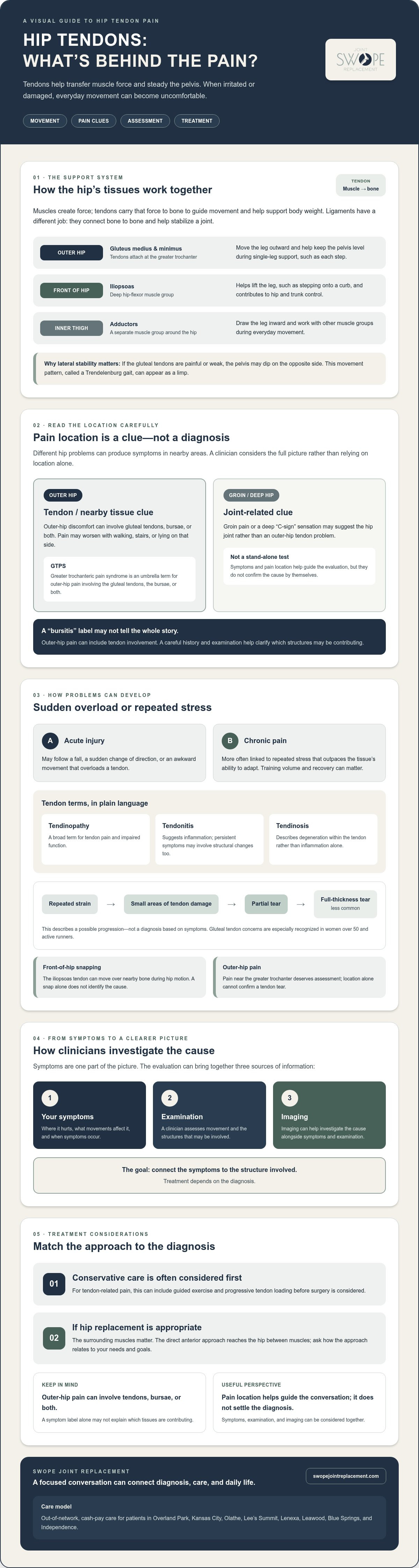
Treatment Pathways: Restoring Hip Function in Kansas City
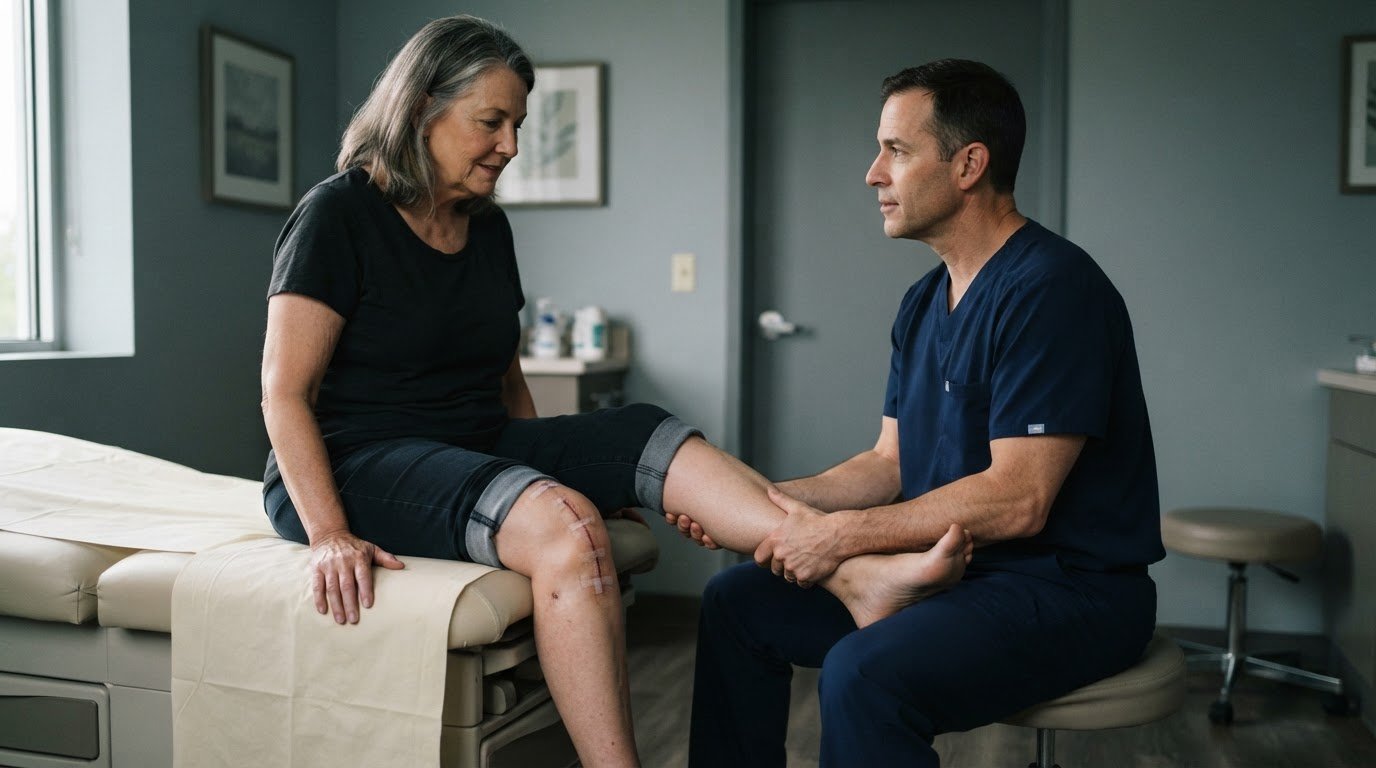
Most tendon-related hip pain is approached conservatively first. The goal is to calm irritation, restore strength, and help you return to activity without unnecessarily immobilizing the leg. Because pain around the hip can come from tendons, the joint, or both, treatment should follow a clear diagnosis rather than a one-size-fits-all plan. For people in Kansas City, Overland Park, Olathe, Lee’s Summit, Lenexa, Leawood, Blue Springs, and Independence, an orthopaedic evaluation can help connect local care options with the findings and goals specific to their case.
Conservative Management and Rehabilitation
Activity modification means temporarily reducing movements that reliably aggravate symptoms, not stopping all movement. A physical therapist may guide progressive strengthening, including eccentric loading, where a muscle works as it lengthens under control. The exercise and load should match your diagnosis and tolerance. Tendon problems can involve tissue changes beyond simple inflammation, so anti-inflammatory medicines or injections may not address every cause of pain. A clinician can discuss their potential role, benefits, and limitations for your situation.
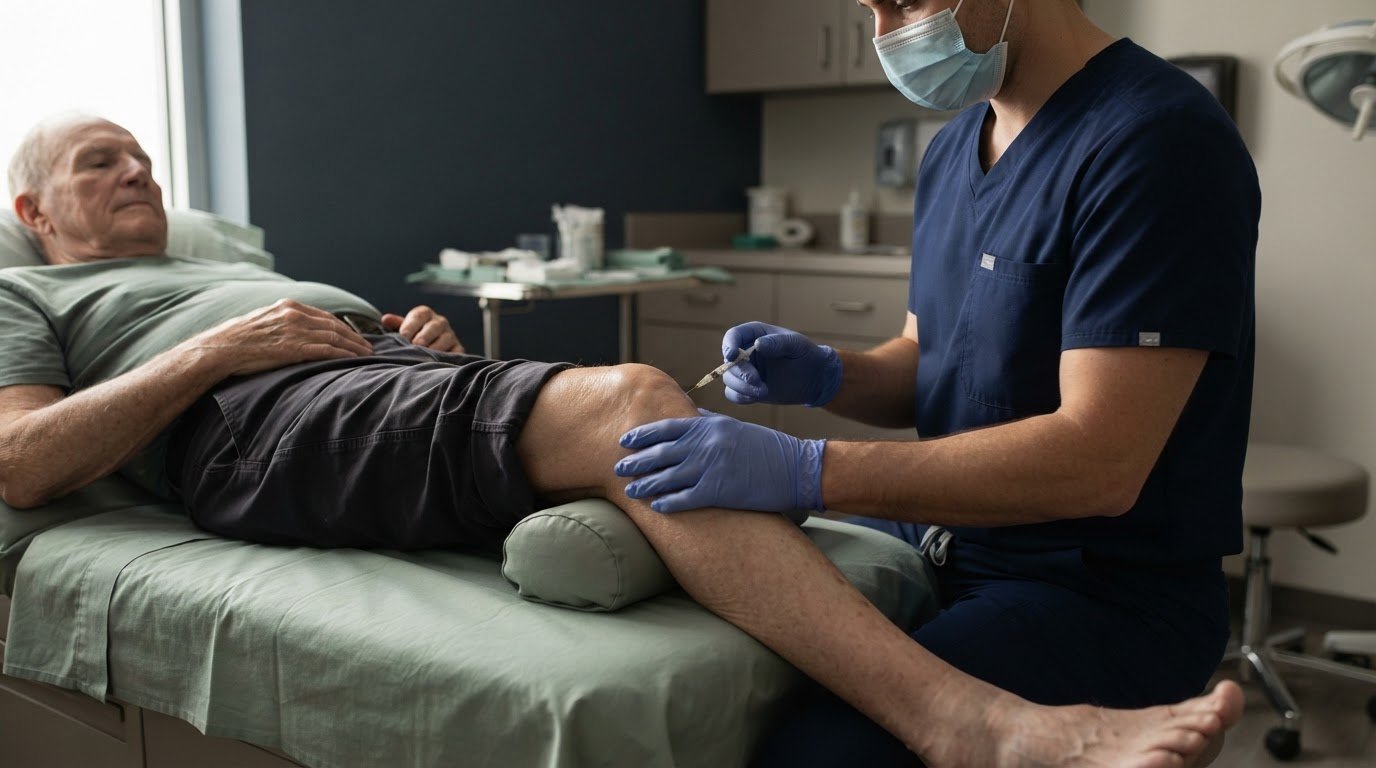
Targeted injections may be considered in selected cases to help manage symptoms or clarify a pain source. They aren’t a universal solution, and the appropriate type depends on the structure involved. At Swope Joint Replacement, treatment discussions are individualized. A clinician can explain possible non-operative options and what to ask about a rehabilitation plan, including how progress will be assessed.
When to Consider a Surgical Consultation
Conservative care may not be enough when pain continues to limit daily activities despite an appropriate, consistent treatment plan, or when examination and imaging identify a substantial tendon tear. There is no single timeline that defines failure for everyone. The important question is whether the diagnosis and treatment plan have been revisited as symptoms and function evolve.
For a chronic gluteal tendon tear, one possible procedure in orthopaedic practice is endoscopic repair. The surgeon uses small instruments and a camera to access and repair the tendon. Whether this is appropriate depends on the tear and the individual patient; it isn’t the same as hip replacement. Replacement may be considered when advanced arthritis is the principal source of pain and disability. Relieving joint-driven pain may reduce stress on surrounding tissues, but a coexisting tendon problem may still need attention.
Surgical decisions deserve an unhurried discussion of the diagnosis, alternatives, and recovery priorities. Swope Joint Replacement specializes in direct anterior hip replacement and complex revisions, and Dr. Ryan Swope provides direct physician access for critical care discussions. The practice operates on an out-of-network, cash-pay model. If persistent hip pain is disrupting your routine, discuss your hip concerns with Swope Joint Replacement.
The Muscle-Sparing Advantage: Protecting Tendons During Surgery
Hip tendons and the joint they support are connected parts of the same movement system. If hip replacement is appropriate, the surgical approach matters because the path to the joint can affect nearby muscles and soft tissues. The direct anterior approach reaches the hip through an interval between muscles rather than intentionally cutting through major muscles to access the joint. It’s a muscle-sparing option, though no approach can remove every surgical risk or guarantee a particular recovery.
At Swope Joint Replacement, Dr. Ryan Swope specializes in Direct Anterior Hip Replacement and complex revisions. The approach may suit some patients, but it isn’t automatically the right choice for everyone. Your anatomy, diagnosis, prior procedures, and goals all deserve consideration.
Why Technique Matters More Than Technology
The anterior interval requires careful surgical handling. The lateral femoral cutaneous nerve runs near this approach and can be irritated or injured, so protecting nearby structures is part of the technical challenge. Preserving the gluteal muscles and their tendons can help maintain tissues that stabilize the pelvis during walking. By contrast, a traditional posterior approach generally involves releasing and repairing the short external rotator tendons to reach the joint. Each approach has considerations, and surgeon experience and the individual case matter more than a technology claim alone.
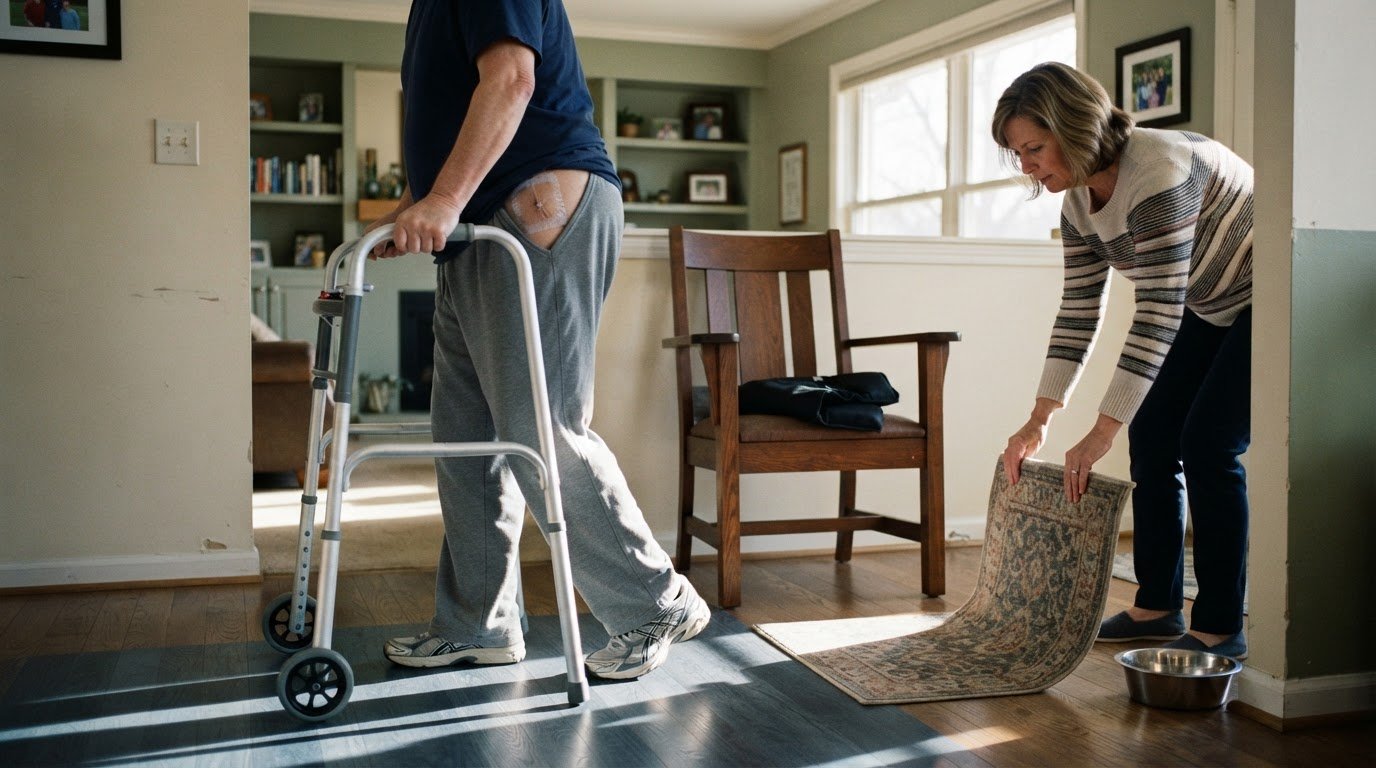
Muscle preservation may support a more natural-feeling recovery, but pain levels, activity timelines, and post-operative instructions vary. Some patients may not need the same movement restrictions used with other approaches; “no hip precautions” shouldn’t be assumed as a universal promise. Ask your surgeon which precautions apply to your procedure and how your return to daily activity will be guided.
Concierge Care: A Bespoke Recovery Experience in Kansas City
Revision surgery can involve scar tissue, altered anatomy, and previously operated soft tissues. In that setting, understanding what has already been done and planning how to protect remaining structures is especially important. Dr. Swope’s focus on complex revisions gives patients a chance to discuss these considerations directly with the physician responsible for their care.
Swope Joint Replacement provides concierge orthopaedic care through an out-of-network, cash-pay model. Transparent financial discussions can help you understand the practice’s payment approach; they don’t determine which surgery is right for you. An unhurried consultation can also clarify realistic expectations, including how the joint and surrounding tendons may influence recovery. If you live in Overland Park, Kansas City, Olathe, Lee’s Summit, Lenexa, Leawood, Blue Springs, or Independence and chronic hip pain has left you uncertain about your options, a second opinion may help you make a more informed decision.
Take the Next Step Toward Clearer Hip Answers
Hip pain isn’t always caused by the joint itself. Tendon irritation, arthritis, or a combination can affect how you walk, climb stairs, and rest. Understanding how hip tendons support movement, and how symptoms may differ, can help you ask more focused questions and consider care that fits your diagnosis.
If surgery is appropriate, the approach deserves careful discussion. Swope Joint Replacement is a veteran-owned private practice in Overland Park specializing in muscle-sparing Direct Anterior Hip Replacement. Dr. Ryan Swope provides direct surgeon access in an unhurried setting, without delegation for critical care discussions. The practice operates on an out-of-network, cash-pay model, so you can ask directly about the financial arrangements as well as your treatment options.
You deserve a clear explanation of what may be causing your pain and what choices are available. Schedule a Private Consultation with Dr. Swope to discuss your concerns and next steps.
Frequently Asked Questions
Can a torn hip tendon heal on its own without surgery?
Some hip tendon tears can be managed without surgery, but healing depends on the tear’s size, location, cause, and your symptoms. A smaller or partial tear may improve with activity adjustments and clinician-guided rehabilitation, though improvement doesn’t always mean the tendon has fully healed. A substantial tear or persistent weakness may need further assessment. A clinician can review your examination and imaging, then discuss what non-operative care or surgical consultation may be appropriate.
What does hip tendonitis feel like compared to a labral tear?
Hip tendon irritation often causes localized pain that increases when you load or repeatedly use the affected muscles, such as during stairs or standing on one leg. A labral tear may cause deeper groin pain, sometimes with catching, clicking, or discomfort during hip rotation. These patterns can overlap, and neither symptom alone confirms a diagnosis. A clinical examination and, when appropriate, imaging can help distinguish tendon symptoms from a problem inside the joint.
Is walking good for hip tendonitis, or should I rest completely?
Complete rest usually isn’t necessary, but continuing activities that sharply increase pain can keep an irritated tendon under stress. Try reducing the distance, pace, or hills, then adjust based on how symptoms respond during and after walking. Gentle movement may help you stay active while the tendon settles. If pain persists, worsens, or changes your gait, seek clinical guidance to identify the cause and plan a safe return to activity.
How long is the recovery for a gluteus medius tendon repair?
Recovery varies with the tear, repair technique, overall health, and the surgeon’s rehabilitation protocol. It typically involves a period of protecting the repair, followed by gradual work on mobility, strength, and walking. Returning to demanding activities can take longer than resuming basic daily tasks. Your surgeon should explain weight-bearing instructions, milestones, and factors that could affect healing before surgery, since there isn’t one timeline that applies to every patient.
Does the direct anterior hip approach protect my tendons?
The direct anterior approach reaches the hip between muscles and is considered muscle-sparing, which can help preserve important surrounding soft tissues. It doesn’t guarantee that every tendon is untouched or eliminate surgical risks. The best approach depends on your anatomy, diagnosis, prior procedures, and surgeon’s judgment. Ask which muscles and tendons are relevant in your case, what precautions you’ll need, and how your recovery plan will account for your individual needs.
Why does my hip tendon pain get worse at night when I'm sleeping?
Outer-hip tendon pain may become more noticeable when you lie directly on the sore side, because that position compresses sensitive tissues. Staying in one position for a long time can also make discomfort more apparent. Try sleeping on the other side with a pillow between your knees, or on your back if comfortable. Night pain can have other causes too, so persistent or worsening symptoms deserve an evaluation.
Can hip tendon issues cause pain that radiates down my leg like sciatica?
Hip tendon problems can cause pain that spreads into the outer thigh, but pain traveling down the leg may also come from the back, nerves, or other structures. Tingling, numbness, or weakness can be especially important to mention during an assessment. Describe where the pain begins, how far it travels, and what movements change it. A clinician can evaluate the hip and consider other possible sources rather than assuming it’s sciatica.
What are the best exercises to strengthen hip tendons for seniors?
There’s no single best exercise for every older adult. Depending on your symptoms and balance, a clinician or physical therapist may recommend controlled standing hip abduction, sit-to-stands, or other gradual strengthening exercises. Begin with a level of effort that doesn’t sharply increase pain, and use support if needed to reduce fall risk. Swope Joint Replacement serves patients in Overland Park, Kansas City, Olathe, Lee’s Summit, Lenexa, Leawood, Blue Springs, and Independence, with non-operative care through an out-of-network, cash-pay model.
Comments