Non-Operative Joint Care in Kansas City: A Guide to Nonsurgical Options

If joint pain is making it harder to walk, work, or enjoy familiar activities, it’s understandable to want relief while feeling unsure which options fit. Non operative joint care in Kansas City can start with a focused evaluation of your symptoms, daily priorities, and movement needs. Exploring conservative care doesn’t mean surgery is inevitable.
The right next step depends on what may be contributing to your discomfort and what you hope to do more comfortably. A plan may include medication management, targeted injections, or personalized rehabilitation planning. These options serve different purposes, and no single treatment is right for everyone.
This guide explains how conservative joint care works, what treatment may involve, and how symptoms and everyday goals can inform a personalized plan. You’ll also learn how direct physician access can support a focused evaluation and follow-up. The aim is a clearer next step, whether you’re beginning to explore care or weighing options already discussed with you.
Table of Contents
Non-Operative Joint Care in Kansas City: Can and Cannot Do
Non-operative care addresses joint symptoms without surgery. It isn’t one procedure, a fixed package, or a promise that pain will disappear. It begins by understanding what is bothering you, how it affects movement and daily activities, and what matters most to you. Goals may include improving comfort, supporting mobility, and making everyday tasks easier to manage. Results vary, and no treatment can guarantee a particular outcome.
A joint-focused orthopaedic evaluation considers your concern as a whole rather than starting with a single treatment. A clinician may consider your diagnosis, symptoms, overall health, previous care, and priorities before discussing possible next steps. You might, for example, want to walk more comfortably, return to a familiar routine, or understand why a joint feels stiff. Those goals help guide the discussion, but they don’t determine a diagnosis on their own.
Joint structures and possible treatments can be complex. For background on cartilage and approaches to its repair, the overview of Articular Cartilage Repair offers additional context. It isn’t a substitute for an individual evaluation or a guide to which treatment is right for you. An assessment connects your symptoms and health history with a considered care plan, rather than assuming one procedure fits everyone.
Which joint problems may lead someone to explore conservative care?
Arthritis and joint pain are common reasons to seek an orthopaedic evaluation, but discomfort alone doesn’t reveal its cause. Pain, stiffness, or reduced function may become more noticeable during everyday activities, such as getting up from a chair or walking through the day. If a joint concern is affecting what you can comfortably do, an evaluation can help clarify the issue and discuss possible options without presuming a diagnosis.
Does considering joint care mean surgery is inevitable?
No. An evaluation doesn’t commit you to surgery. It gives you a chance to describe your concerns, understand the clinician’s assessment, and discuss options. When appropriate, care can begin with non-operative approaches. Surgery may be discussed separately if it becomes relevant to your condition and goals, but considering conservative care doesn’t settle that question in advance.
Non-operative treatment may help manage symptoms, but it can’t guarantee that you’ll avoid an operation in the future. A personalized plan can clarify what each recommended option is intended to address, how it relates to your priorities, and what the next step may involve. For non operative joint care kansas city, the focus is a thoughtful evaluation and a plan grounded in your needs, not pressure toward a predetermined outcome.
How Non-Surgical Joint Treatment Options Address Pain and Function
Conservative joint care can include several treatment categories rather than relying on one intervention. At Swope Joint Replacement, non-operative care may include targeted injections, medication management, and personalized rehabilitation planning. Each option has a different role. A clinician considers your symptoms, how they affect movement and daily activities, your health, and your preferences before discussing what may fit. The aim is a considered plan, not a guaranteed result.
Think of these options as parts of a conversation, not a checklist everyone must complete. One person may want to understand an injection, while another may prefer to discuss medication or ways to support a particular activity. The right approach depends on an individual clinical evaluation.
What role can targeted joint injections play?
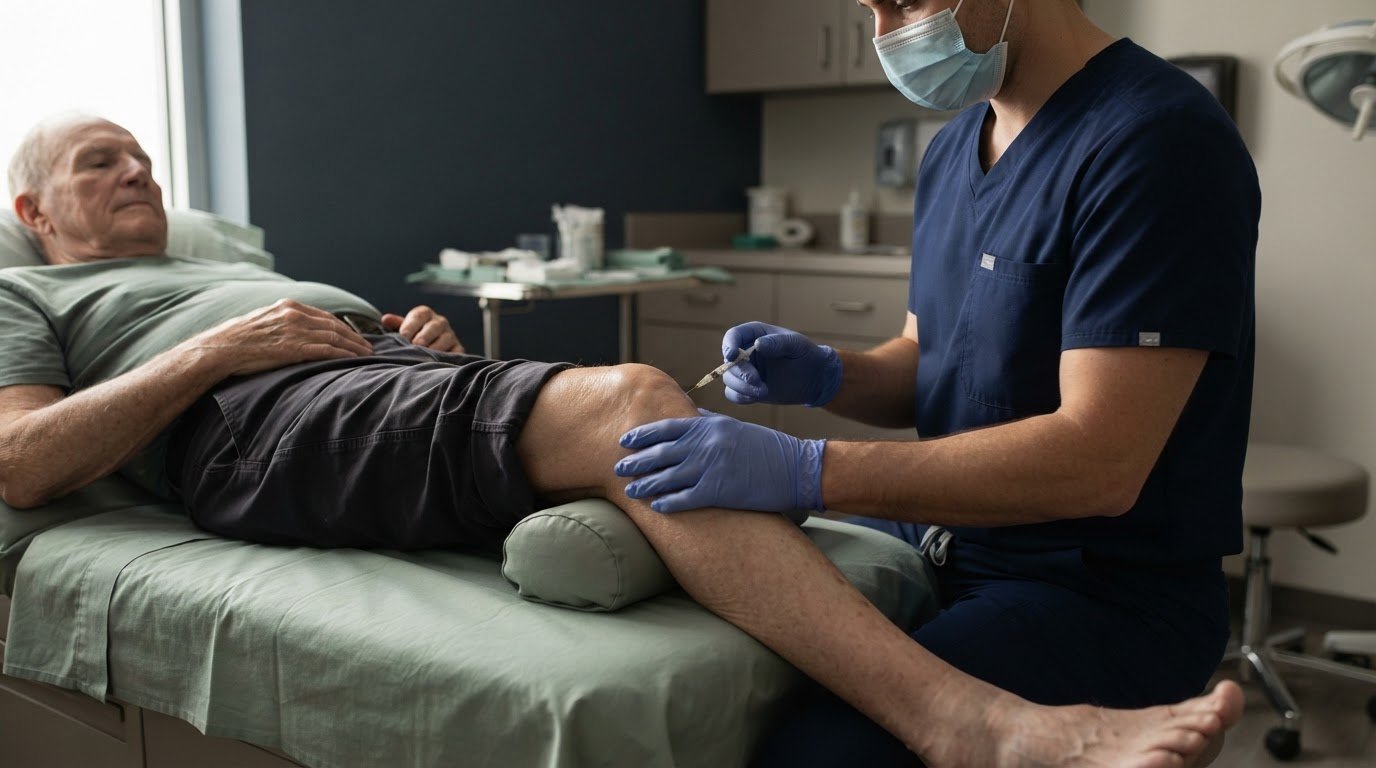
A targeted injection may be considered as one part of conservative care when a clinician determines it is appropriate for your joint concern. Its role depends on the clinical picture and the goals of the overall plan. An injection isn’t automatically suitable for every person or every source of pain.
Your clinician should assess whether an injection may be appropriate and discuss potential risks as part of the decision. Share what you hope to address and raise concerns before deciding whether this option belongs in your plan.
How do medication management and rehabilitation planning fit?
Medication management means discussing symptom-care options in light of your health and circumstances. It isn’t a one-size-fits-all recommendation. Your clinician can consider your concerns and treatment preferences when discussing whether medication has a role in your care.
Rehabilitation planning connects care to how you want to move and function. You might want to make a daily activity more manageable or maintain movement that matters to you. A personalized plan can clarify functional priorities and guide discussion of appropriate next steps. Rehabilitation planning does not, by itself, mean a separate physical therapy service is being provided.
Together, these categories can be considered in relation to your symptoms and priorities. The clinician’s assessment helps determine which options are relevant, whether they may be considered alone or alongside one another, and what follow-up discussion makes sense. You can share your preferences and ask how a proposed option relates to the activities you want to support.
If joint symptoms are affecting your routine, you can discuss non-operative joint care with Swope Joint Replacement. A focused conversation can help clarify which treatment categories may be appropriate for your situation, without assuming that one option fits everyone.
Choosing a Kansas City Joint Care Plan Without Assuming Surgery
A joint care plan should reflect your clinical findings and what you want to be able to do, not a preset sequence of treatments. With non operative joint care kansas city, conservative options can be considered for their purpose, fit with your health, and alignment with your preferences. They aren’t automatic steps on a path to surgery, and none guarantees a particular result.
It helps to distinguish managing symptoms from deciding whether surgery is appropriate. A discussion about injections, medication management, or rehabilitation planning addresses possible ways to support comfort and function. A surgical decision is separate and depends on an individual assessment, including relevant findings and your goals. You can discuss non-operative care without agreeing to an operation.
The table summarizes the kinds of questions each category may raise. It isn’t a recommendation or treatment sequence. Your clinician can explain which options are relevant to your situation and why. Some may be discussed together; others may not fit your needs. Understanding an option’s purpose can help you weigh it without treating a possible outcome as a promise.
What should shape a treatment discussion?
Bring the details that make your joint concern specific: where symptoms occur, which activities are affected, relevant health history, and care you’ve already tried. Share the movements or routines you hope to maintain or return to. These details help you and your physician weigh options together, ask focused questions, and make decisions that reflect both clinical judgment and your priorities.
When might surgery enter the conversation?
Surgery may enter the conversation when clinical findings and your goals make it relevant, but there’s no universal threshold or fixed order of treatments. You and your physician can discuss its potential role separately from symptom management. If you’re exploring hip replacement, this direct anterior hip replacement guide provides more information about that approach.
A clear plan leaves room for questions and thoughtful choices. Ask what an option is intended to address, how it relates to your daily goals, and what considerations matter before deciding. That conversation keeps your care centered on your needs rather than an assumption that conservative treatment must end in surgery.
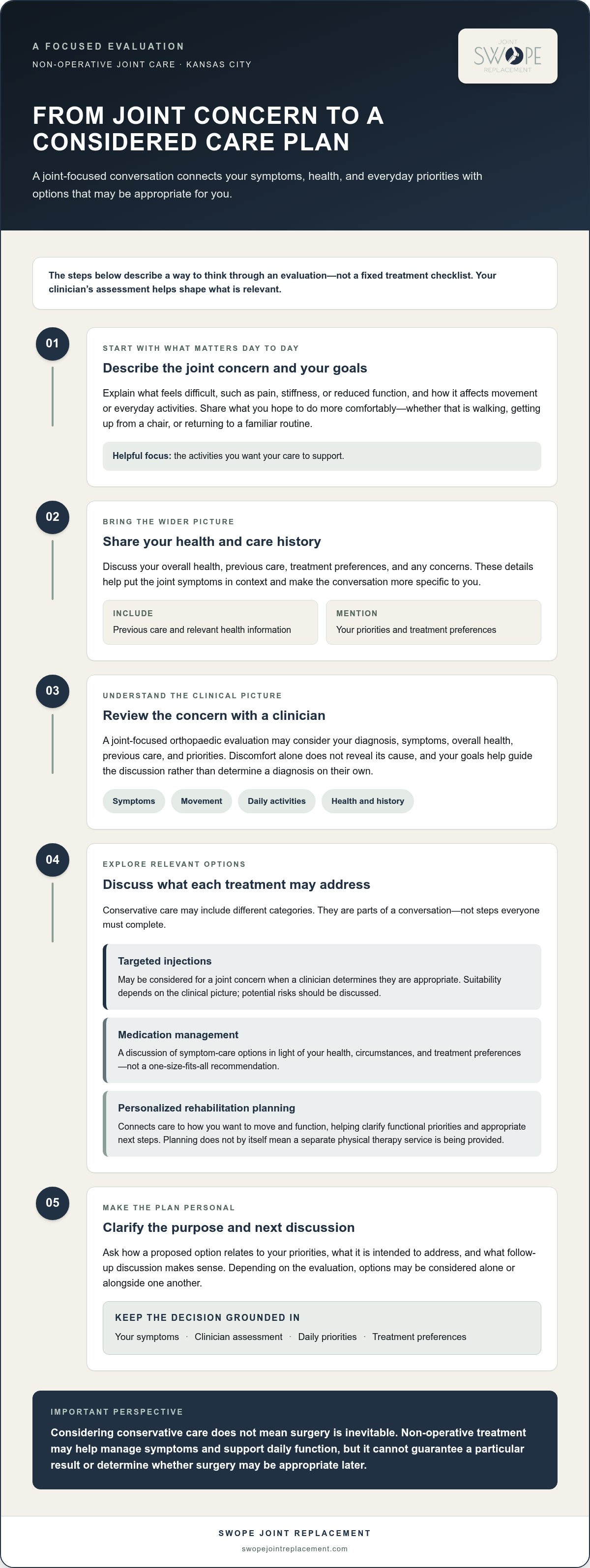
Preparing for a Non-Operative Joint Care Evaluation in Kansas City
A little preparation can help you use an evaluation well. You don’t need to arrive with a diagnosis or preferred treatment in mind. Describe what you’re experiencing and what you hope to do more comfortably. The clinician can consider those details alongside your health history and evaluation findings when discussing appropriate options for non operative joint care kansas city.
Before the visit, organize a few details in a short note:
Describe your symptoms. Note where you feel discomfort, when it began, and whether it changes with particular movements or routines.
Explain the daily impact. Think about what has become harder, such as walking, getting up from a chair, or completing a familiar activity.
Summarize previous care. List treatments you’ve tried and what you noticed, including whether something helped, made no difference, or raised concerns.
Gather useful health information. Bring relevant medical history and a current medication list, and write down questions you want answered.
What information helps make the visit useful?
Specific examples can make it easier to explain your experience. Rather than saying only that your joint hurts, describe which movement brings on symptoms and how that changes your routine. Include previous care and your experience with it. Prepare questions about the purpose, limitations, and follow-up for any option discussed. This gives you and your physician a clearer starting point.
How can patients define a meaningful care goal?
Choose a goal that matters in your life. You might hope to walk more comfortably, manage a daily activity, or maintain movement that’s important to you. Keep it specific enough to discuss and revisit, while recognizing that progress and treatment response vary. Your goal can guide the conversation and be reviewed over time as your needs or circumstances change.
Sharing a goal doesn’t mean you’re asking for a guaranteed outcome. It gives the clinician context for discussing which options may be appropriate and how they relate to your priorities. A plan is more useful when you understand what a proposed step is intended to address and have space to raise questions or express preferences.
Evaluation findings guide the discussion; they don’t require you to select a treatment before you understand it. Swope Joint Replacement’s concierge model emphasizes individualized evaluation and direct physician access. Learn more about concierge orthopaedic care and how a focused, personal approach can support a thoughtful conversation about joint concerns.
If you have sudden, severe symptoms or a serious injury, seek urgent medical attention. If you believe you’re experiencing an emergency, contact local emergency services rather than waiting for a scheduled evaluation.
To discuss your joint concerns and prepare a personalized next step, connect with Swope Joint Replacement.
Personalized Non-Operative Joint Care with Swope in Kansas City
Joint symptoms affect more than a single movement. They can change how you manage work, errands, exercise, or time with family. Swope Joint Replacement provides non-operative musculoskeletal care, beginning with your individual concerns before discussing possible next steps. The approach is personal, not a standard menu of treatments applied the same way to every patient.
Care may include targeted injections, medication management, and personalized rehabilitation planning. These options have different purposes, and none guarantees a particular result. An evaluation connects your symptoms and goals with a thoughtful discussion of what may be appropriate. For people exploring non operative joint care kansas city, that means having space to understand the options without assuming surgery is the goal.
What does an individualized approach look like?
Your evaluation can account for where you experience symptoms, how they affect function, relevant medical history, and the activities you hope to maintain or make more comfortable. Direct physician access supports a focused conversation about those details and the treatment categories that may fit your situation. You can discuss an option’s purpose, its limitations, and your preferences before considering a next step.
Individualized care also means recommendations may differ from one patient to another. A treatment that makes sense for one person may not suit someone with different symptoms, health considerations, or priorities. Clear discussion helps you understand the reasoning behind a proposed plan and identify remaining questions. The aim is an informed decision together, not pressure to choose a particular treatment.
Conservative care may be considered before or alongside a conversation about surgery, depending on the clinical assessment and your goals. Discussing non-operative options doesn’t commit you to an operation, and trying them can’t guarantee that surgery will never be appropriate. If surgery becomes part of the conversation, it is a separate decision based on your individual circumstances.
How can Kansas City-area patients take the next step?
Swope Joint Replacement serves patients in the Kansas City area, including Overland Park, Kansas City, Olathe, Lee’s Summit, Lenexa, Leawood, Blue Springs, and Independence. Its concierge model emphasizes individualized evaluation and direct physician access, so you can discuss your joint concerns and possible options with the physician. Bring your questions and describe what you’d like to do more comfortably. That gives the conversation a practical starting point.
The practice operates outside in-network insurance arrangements. Its care model includes transparent cash pricing and out-of-network insurance options, rather than in-network insurance billing. Understanding this structure can help you consider the financial side of care as you decide what next step feels right.
If you’re ready to have a focused conversation about your joint concerns and possible next steps, discuss your joint care with Swope Joint Replacement.
Take Your Next Step with Clarity
Your next step doesn’t need to settle every question. Begin with one clear priority: what would you like to do with greater comfort or ease? Bring that goal into a conversation about non operative joint care kansas city, and let it guide the questions you ask. You remain an active part of deciding what makes sense for your circumstances.
Consider what you want clarified: what a proposed option is intended to address, how it may fit your health and routine, and what choices remain open. A useful discussion should leave you with a clearer understanding, not pressure to commit before you’re ready. You don’t need to arrive knowing which treatment you want. Start with what matters in your day.
To begin a thoughtful conversation, Discuss your joint care options with Swope. Bring your questions and take the next step at a pace that feels right. A more informed decision starts with being heard, so you can move forward with greater confidence.
Frequently Asked Questions
What is non-operative joint care?
Non-operative joint care addresses joint symptoms without an operation. A clinician considers what you’re experiencing and how it affects your movement, then discusses care options that may fit your situation. For instance, you can explain whether discomfort affects work, recreation, or household routines. The evaluation guides the conversation; it doesn’t guarantee a result or determine that surgery will never be considered.
Can joint pain improve without surgery?
Some people explore conservative care to manage symptoms and support everyday function without an operation, but individual responses vary. The cause of pain, your health history, and your priorities all matter. If you’re considering a treatment, ask what it is intended to address and how you and your clinician might review whether it’s meeting your goals. Conservative care cannot promise improvement or rule out surgery later.
What non-surgical treatments may be considered for joint pain?
Depending on your evaluation, options may include targeted injections, medication management, or personalized rehabilitation planning. These categories have different purposes, and a clinician can explain which may be relevant to your symptoms and health. Ask how an option fits your daily goals and what limitations to understand. This general information can help you prepare, but it isn’t a diagnosis or individualized medical advice.
Does non-operative joint care mean I will not need surgery?
No. Considering non-operative care doesn’t guarantee you’ll never need surgery, just as arranging an evaluation doesn’t commit you to an operation. If your symptoms, clinical findings, or priorities change, you and your physician can revisit the discussion. Ask what signs or circumstances would prompt another assessment, so you understand how the plan may be reviewed without assuming a fixed sequence of treatments.
How do I prepare for an appointment about joint pain?
Make a brief record of when symptoms began, where you notice them, and which activities bring them on or make them harder. Bring relevant medical history and a current medication list, including any changes you want to discuss. If you’ve tried treatment before, note your experience with it. A specific example, such as difficulty with a regular walk, can help explain what you hope to address.
Is non-operative joint care available in Kansas City?
Yes. Swope Joint Replacement provides non-operative musculoskeletal care for patients in Kansas City and nearby communities, including Overland Park, Olathe, Lee’s Summit, Lenexa, Leawood, Blue Springs, and Independence. If you’re researching non operative joint care kansas city, note that the practice operates outside in-network insurance arrangements. Its care model includes transparent cash pricing and out-of-network insurance options. Treatment planning depends on your individual clinical situation.
When should I seek urgent help for joint pain?
Seek urgent medical attention if joint symptoms are sudden, severe, or concerning, especially after an injury or alongside other alarming changes. If you believe you may be experiencing an emergency, contact local emergency services rather than waiting for a routine appointment. This guide can’t assess the cause or urgency of your symptoms. Swope Joint Replacement does not provide 24/7 emergency orthopaedic care.

Comments