Preparing Your Home for Knee Surgery Recovery: A Practical Checklist

What if the first challenge after knee surgery is simply getting from the front door to a comfortable place to rest? Preparing your home for knee surgery recovery means planning those everyday routes before your mobility is limited, not gathering supplies at the last minute.
It’s natural to wonder which rooms to focus on, what to move, and how you’ll manage meals, bathing, and other daily tasks. Start with your likely routines and your home’s layout, then adapt the plan to the instructions you receive from your surgical team.
This checklist helps you prioritize what to prepare, reduce obstacles on frequently used routes, organize everyday supplies, and arrange help for essential tasks. It also explains what to discuss with your surgeon and care team, since recommendations can vary with your procedure and individual needs. With a plan in place, you can focus on recovery with fewer household details left unresolved.
Table of Contents
Preparing Your Home for Knee Surgery Recovery: Start With the Essentials
Getting your home ready can feel like a long list of decisions when you’re also preparing for surgery. A short, prioritized checklist makes the work more manageable. You don’t need to change every room. Start with the spaces you expect to use most, and let your surgical team’s discharge instructions take priority over general home-preparation advice.
Your plan should fit your procedure, home layout, and care instructions. For a broad overview of knee replacement surgery and recovery, you can read about how surgery may affect mobility. Your care team can help you translate your own needs into practical steps for home.
Which areas should you prepare first?
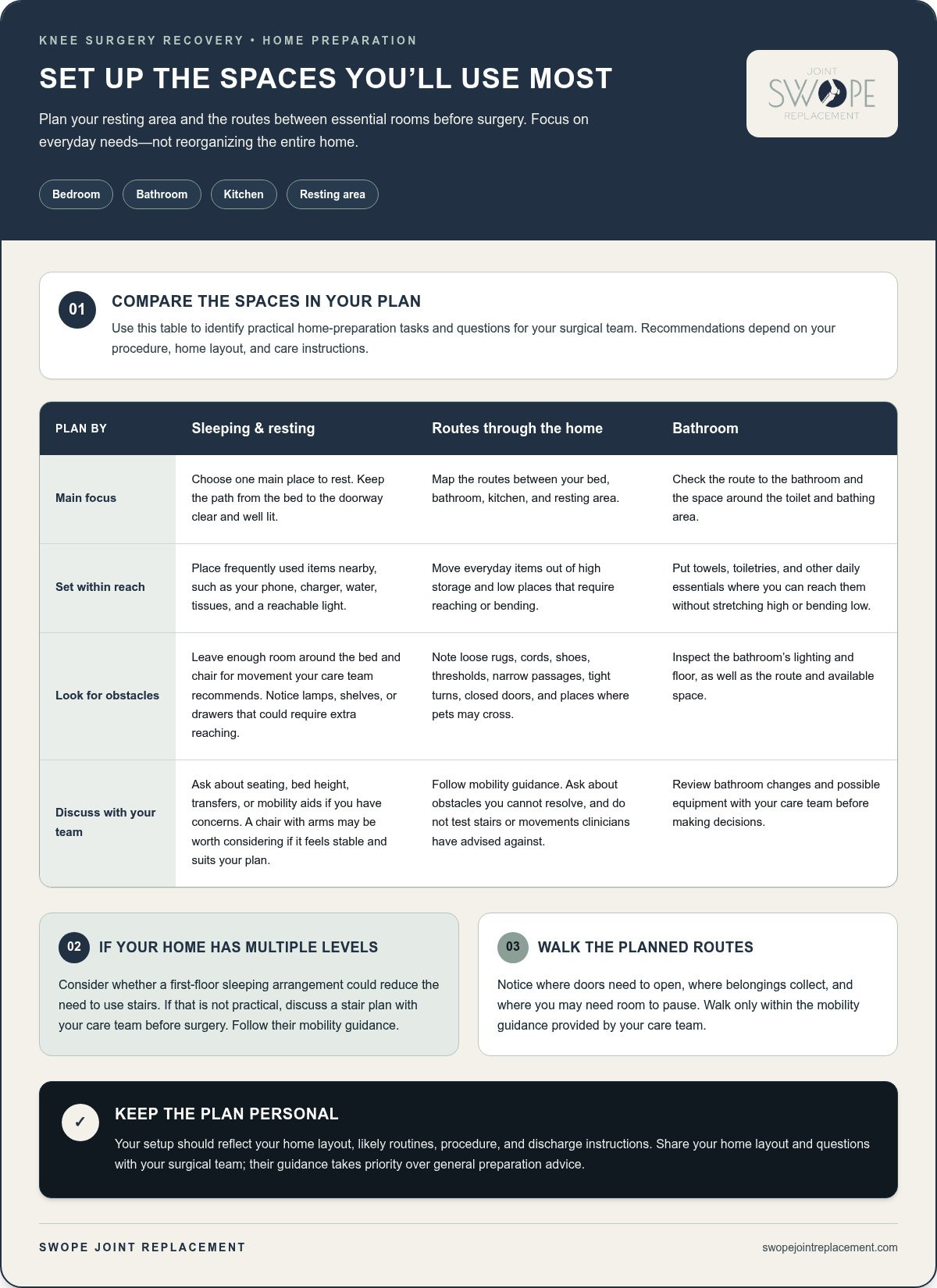
Start with the rooms you expect to use regularly: your bedroom, bathroom, kitchen, and a comfortable place to sit and rest. Map the routes between them. Note narrow hallways, thresholds, stairs, and doors that are often closed. These details help you identify changes to make and questions to raise with your care team.
A practical setup puts essential rooms and frequently used items within planned reach, with clear routes connecting the places you’ll use most.
Choose a stable seat where you can rest comfortably.
Map the route between your bed, bathroom, kitchen, and resting area.
Mark stairs, tight passages, raised thresholds, and doors that could affect movement.
How can you make the plan fit your home?
In a multilevel home, consider whether a first-floor sleeping arrangement could reduce the need to use stairs. If that isn’t practical, discuss a stair plan with your care team before surgery. Don’t assume a setup that works for someone else will suit your home or recovery. Follow your team’s mobility guidance.
If you can’t move a bedroom or another essential space, consider what else could make daily routines more manageable. You might bring frequently used items closer, use another room as a resting area, or plan how to make necessary trips. These are options to discuss, not universal recommendations. The right choice depends on your circumstances and discharge instructions.
Walk the routes you expect to use and note where a door needs to open, where belongings tend to collect, and where you may need room to pause. Focus on changes that support your likely routine. Then review any obstacles you can’t resolve with your surgical team, instead of trying to solve every household issue at once.
Arrange Your Sleeping Space and Daily Routes Before Knee Surgery
A comfortable recovery area is about more than where you sleep. It should make resting, reaching for personal items, and moving between rooms easier to plan. As you prepare your home for knee surgery recovery, think through the routes you expect to use and what you’ll need along the way. Your care team’s guidance should determine any limits on bed transfers, seating, mobility aids, or stairs.
Set up a practical bedroom and resting area
Choose one main place to rest. Put frequently used items nearby, such as your phone, charger, water, tissues, and a light you can reach easily. Keep the path from the bed to the doorway clear and well lit. If you have a chair with arms, consider whether it feels stable and suits your plan. Ask your care team about seating or transfer concerns rather than assuming a particular chair or bed height is right for you.
Small details can become inconvenient when you’re moving carefully. A lamp switch across the room, a phone on a high shelf, or daily essentials in a low drawer may require extra reaching or bending. Move items to a practical height ahead of time, and leave enough space around the bed and chair for the movement your team recommends.
Plan routes through the home
Before surgery, walk the routes you expect to use, such as bedroom to bathroom or resting area to kitchen. Follow your care team’s mobility guidance during this walkthrough. If a walker is part of your plan, notice where it may be difficult to maneuver. Don’t test stairs or movements your clinicians have advised against. The goal is to spot household obstacles, not to assess your recovery in advance.
Move loose rugs, cords, shoes, and other items out of planned paths.
Check whether doors stay open or require maneuvering around them.
Notice narrow passages, tight turns, thresholds, and places where pets may cross your route.
Move everyday items out of high storage and low places that require reaching or bending.
Consider the routes at different times of day. Is the hallway well lit at night? Could a door swing into the space you need? Does a pet’s bed or food bowl sit in a narrow passage? Addressing these details in advance can make planned movement less complicated. Clear routes and reachable essentials help reduce avoidable obstacles at home.
Bring questions about your setup, transfers, or mobility limits to your surgical team. A personalized knee replacement consultation can help you discuss how your procedure and care plan inform preparation at home.
Make the Bathroom and Main Walkways Easier to Navigate
The bathroom deserves a close look because it combines a frequently used route with wet surfaces, tight spaces, and transfers. As you prepare your home for knee surgery recovery, assess the actual route and room rather than assuming one change will suit every setup. Removing obstacles can make movement less complicated, but no home adjustment can eliminate every risk.
What should you check in the bathroom?
Inspect the route to the bathroom, its lighting and floor, and the space around the toilet and bathing area. Put towels, toiletries, and other daily essentials where you can reach them without stretching high or bending low. Consider whether getting on and off the toilet or bathing may require equipment or another person’s help, then discuss those needs with your care team.
Grab bars, shower seating, and raised toilet seats may be worth discussing, but they aren’t universal solutions. The right equipment depends on your mobility, bathroom layout, and clinical instructions. Ask your team what they recommend for your situation and how to use it safely. Follow your discharge guidance before showering or bathing independently. Don’t assume a familiar routine is appropriate immediately after surgery.
Some homes may need simple changes: Clear stored items from the route, make towels and toiletries easier to reach, and remove loose objects from the floor.
Some situations may call for equipment: Discuss grab bars, shower seating, or a raised toilet seat with your care team, and get appropriate professional guidance on installation or use.
How can you reduce obstacles along walkways?
Check the main paths to the bathroom and other frequently used rooms. Secure or remove loose rugs and cords, relocate clutter, and move items that could shift into the route, including pet belongings. Pay attention to thresholds and tight turns. If a walker is part of your care plan, check whether entrances and doors leave enough room to move through without awkward reaching or maneuvering.
Position frequently used doors so the route stays accessible, while making sure they won’t swing into the space you need. Check lighting along the path, including at night, and move shoes, baskets, and small tables away from narrow areas. These adjustments can reduce avoidable obstacles, but they can’t guarantee that a fall won’t occur.
Use your walkthrough to note questions, not to test movements your clinicians haven’t cleared. Before discharge, share concerns about bathroom transfers, bathing, equipment, or assistance with your care team. Let your home layout and recovery instructions guide your final choices.
Stock Everyday Supplies and Plan Help Before You Return Home
Advance planning can reduce the number of household decisions waiting for you after surgery. As part of preparing your home for knee surgery recovery, think through your usual day: what you eat, what you need in the bathroom, how you’ll keep in touch, and which tasks you may want help with. You don’t need to stock every possible item. Focus on making your own routine easier to manage while following your care plan.
What supplies are useful to prepare?
Start with familiar necessities and put them where you can reach them without unnecessary bending or stretching. Consider easy-to-prepare food, toiletries, comfortable clothing, a phone and charger, and household items you use often. In the kitchen, move frequently used dishes and supplies to accessible shelves. Depending on your preferences and household routine, you could prepare meals in advance or arrange simple meal options.
Keep ordinary supplies separate from medical equipment. Before buying or borrowing mobility aids or recovery equipment, ask your surgical team what is appropriate for your needs. Recommendations can depend on your procedure, health, home setup, and discharge instructions. Equipment that suits one person may not be right for another.
How should family or caregiver support be organized?
Make a written plan with the people who have agreed to help. Be specific about tasks and timing, such as meal preparation, errands, transportation, or assistance with daily routines. Discuss your preferences and privacy ahead of time, including what you’d like to handle independently and where you’d welcome support. Clear expectations help everyone understand their role without guessing what you need.
It can help to divide preparation into two groups:
Prepare early: Organize everyday supplies, plan meals, charge devices, and coordinate agreed help.
Wait for clinical instructions: Choose mobility aids, arrange specific recovery equipment, and make decisions about activities or assistance that depend on your care plan.
Keep the schedule somewhere useful to you and your helpers. Include the best person to contact with non-emergency questions, and follow your discharge instructions for urgent concerns, including whom to contact and when to seek care. If your needs or support arrangements change, update the plan rather than relying on assumptions.
Planning supplies and support is one part of individualized knee replacement care. Discuss your knee replacement questions with Swope Joint Replacement and raise the practical details that matter to your recovery plan.
Coordinate Your Knee Surgery Home Checklist With Your Care Team
A home checklist is most useful when it reflects your actual care plan. General advice can help you spot questions, but your care team’s instructions should guide decisions about movement, equipment, and support after discharge. Recommendations may differ depending on whether you’re having a total or partial knee replacement, your health, your home layout, and the plan made for you.
Bring a simple description or sketch of your home to a pre-surgery discussion. Note where your bedroom and bathroom are, any stairs or tight passages, and the places you expect to use most. You don’t need a formal floor plan. A few specific details can help you ask focused questions and apply the answers at home.
What should you discuss before surgery?
Use a short review to turn your observations into a practical plan. Ask which movements, stairs, and daily activities need specific guidance after discharge. Describe access concerns, then discuss whether equipment or help with particular tasks belongs in your plan. Write down the instructions and who to contact with questions, so you and anyone supporting you have a clear reference.
Share the layout: Describe rooms, routes, stairs, and any access concerns.
Ask about mobility: Clarify guidance for transfers, walking, stairs, and daily activities.
Confirm equipment and help: Discuss what is appropriate for your individual care plan.
Record instructions: Keep the guidance and contact details together for reference.
Before finalizing your preparations, revisit choices that depend on clinical advice. Don’t assume a particular mobility aid, bathing setup, or stair plan is suitable just because it is common in other homes. If your team’s instructions change, update your checklist to match.
How can a personalized orthopaedic conversation help?
Your home setup and preferences belong in the conversation, not as an afterthought. A personalized orthopaedic consultation gives you space to raise practical concerns and understand how your procedure and care plan relate to preparing at home. Swope Joint Replacement provides knee replacement care, personalized consultations, and direct physician access for patients in Overland Park, Kansas City, Olathe, Lee’s Summit, Lenexa, Leawood, Blue Springs, and Independence.
Before the discussion, write down what matters most to you: a route that feels difficult, a room you can’t relocate, or a task you hope to manage independently. This keeps the conversation focused on your priorities while leaving clinical decisions with your care team.
If you’re considering knee replacement in the Kansas City area, explore concierge orthopaedic care in Overland Park and discuss your questions with Swope Joint Replacement. A thoughtful plan can’t predict every part of recovery, but it can help you prepare your home according to guidance tailored to you.
Take the Next Step With a Plan That Fits You
Preparing your home for knee surgery recovery isn’t about anticipating every detail. It’s about creating a thoughtful starting point, then adjusting it as your care plan becomes clear. Before your next appointment, choose the questions that would help you feel prepared. You might want to discuss a concern about your home, daily routine, or expected support. Write it down so it’s easy to raise.
Your preferences matter. Share what you hope to manage on your own and where you’d welcome guidance. A clear discussion can help you identify the next steps that apply to your situation, without relying on assumptions or someone else’s recovery experience.
If you’re considering knee replacement in Overland Park or the Kansas City region, schedule a personalized knee replacement consultation with Swope Joint Replacement to discuss your questions and plan for recovery at home.
Frequently Asked Questions
When should I start preparing my home before knee surgery?
Start when your surgery is scheduled, so you have time to make adjustments and see whether the setup works for your routine. Preparing your home for knee surgery recovery may involve moving furniture, arranging supplies, or coordinating help, and those tasks take planning. You don’t need to finish everything immediately. Ask your surgical team when to complete specific changes, and use its final discharge instructions to guide last-minute decisions.
Can I recover at home if I live alone?
Living alone may be possible for some people, but whether it’s appropriate depends on your health, home setup, and discharge plan. Before surgery, discuss how you’ll get home, whether someone needs to be present, and who can help if a daily task becomes difficult. Tell your care team what support is available. If you’re planning knee replacement in Overland Park or Kansas City, bring these practical details to your surgical discussions.
Do I need a raised toilet seat after knee surgery?
Not everyone needs a raised toilet seat. Whether it may help depends on your mobility, toilet height and layout, and recovery instructions. Before buying or borrowing one, describe your bathroom setup to your care team and ask whether it belongs in your plan. If recommended, ask how to use it safely and whether your bathroom has enough space.
What if my bedroom is upstairs after knee surgery?
Discuss your bedroom location with your care team before surgery rather than assuming stairs will or won’t be appropriate. Ask whether a temporary first-floor sleeping arrangement makes sense or whether your plan can include stair use and specific instructions. Mention the layout of the stairs and any handrails. Your discharge guidance should determine how you manage stairs, especially early in your recovery at home.
Should I buy a walker before knee replacement surgery?
Wait for clinical guidance before buying or borrowing a walker. Your care team can advise whether you need a mobility aid and which type fits your plan. Fit and safe use matter, so ask how the device should be adjusted and whether you’ll receive instruction before leaving care. If you already own a walker, mention it to the team rather than assuming it’s suitable for your recovery.
Is home preparation different after partial and total knee replacement?
Your preparation may differ because the procedure and your individual recovery plan may differ. There isn’t one checklist that applies to everyone having partial or total knee replacement. Ask your surgeon which instructions are specific to your procedure, including guidance about movement, equipment, or help at home. Share relevant health and household details, then follow your care team’s recommendations rather than relying on someone else’s experience.
Can pets stay at home while I recover from knee surgery?
Pets may remain at home if your household plan accounts for their routines and your care instructions. Consider whether a pet could cross your path, leave toys in a walkway, or need feeding and exercise help. Arrange for someone to handle tasks that may be difficult for you, and choose a place for pet supplies that’s out of your route. Discuss household concerns with your care team, since the best arrangement depends on your situation.

Comments