Self-Pay Hip Surgery Prices in Johnson County, KS

Self-pay hip surgery options in Johnson County, KS, do not come with one price that fits every patient. Costs depend on the procedure, facility, anesthesia, and postoperative care included in the estimate. Swope Joint Replacement provides transparent cash pricing for office visits and in-office procedures. For surgery, ask for a quote based on the proposed procedure and care setting so you can understand the charges before deciding how to proceed.
It’s reasonable to want a clear financial picture before planning surgery. Comparing facility costs and understanding whether a cash-pay quote includes related care can help you assess the full commitment; some patients may also be able to combine insurance benefits with parts of cash-pay care, depending on their coverage.
This article explains what can shape cash-pay pricing, how facility comparisons may affect your decision, and what payment considerations to keep in mind. You’ll also find a general timeline: hip replacement surgery typically takes about 1.5 hours, light activities may resume 3 to 6 weeks after surgery, and regular activities may take 10 to 12 weeks.
Table of Contents
Potential savings from comparing facilities
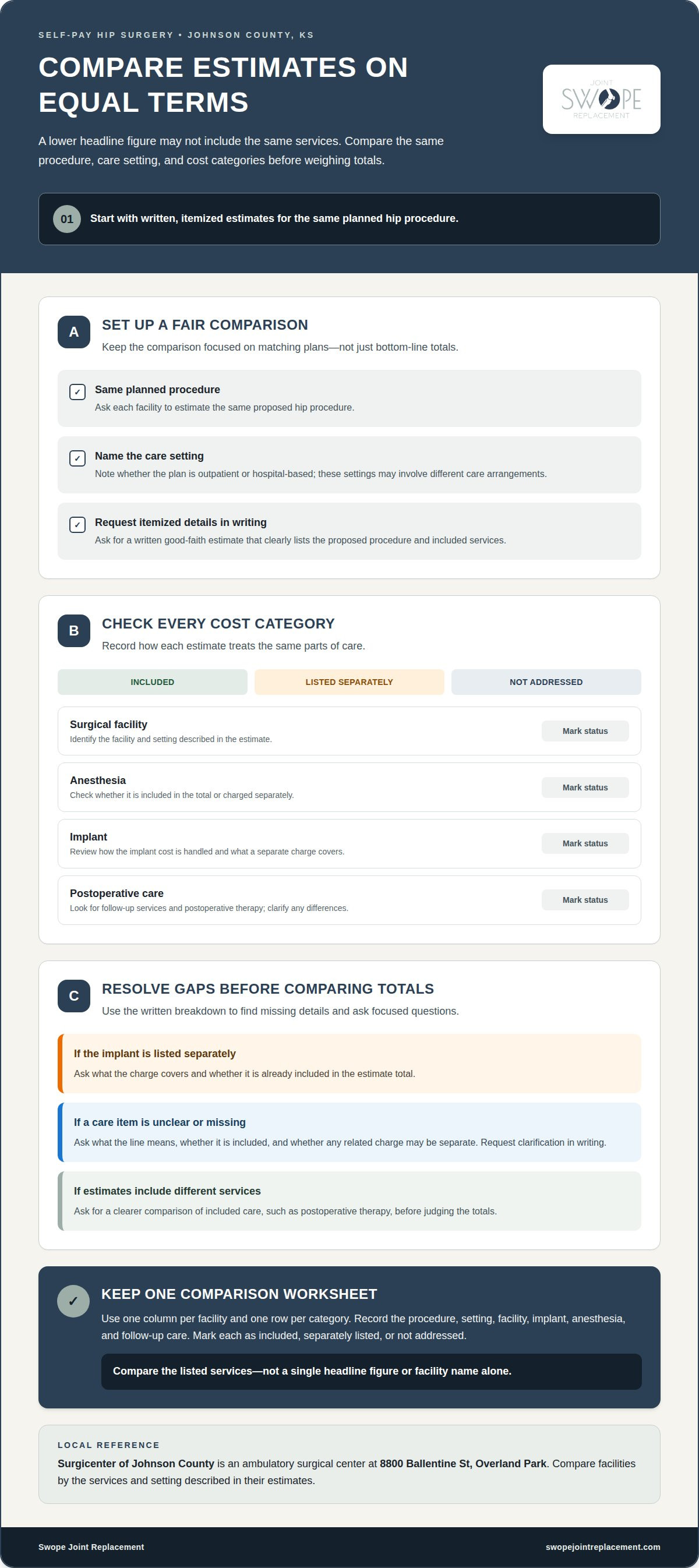
When comparing hip surgery estimates in Kansas, ask for a written breakdown of the proposed procedure and included services. This helps you understand what the total covers and which charges may be separate.
Facility Quote Comparisons
Compare estimates for the same planned hip procedure, not just the bottom-line total. Note whether each includes the surgical facility, anesthesia, implant, and postoperative care. For example, outpatient and hospital-based plans may involve different care settings. A side-by-side list makes it easier to see what each estimate covers before comparing costs.
Potential Implant Surcharges
Review the implant details carefully. If an estimate lists an implant charge separately, ask what it covers and whether it is already included in the total. The implant is part of a hip replacement plan, so the written estimate should explain how its cost is handled. Compare the listed items rather than assuming similar totals include the same services.
Benefits of Comparing Options
A consistent comparison can reveal differences in facility charges and included care, helping you understand the overall financial picture and identify questions before scheduling. If one estimate includes postoperative therapy and another does not, ask for clarification in writing. Itemized details support a more informed decision than choosing a facility based on a single headline figure.
Written Good-Faith Estimates
To request a written estimate, provide the planned procedure and ask for an itemized breakdown. Request clear entries for the facility, anesthesia, implant, and postoperative services. Keep the estimates together and compare the same categories. If a line is unclear, ask what it means and whether it is included in the total before deciding.
Use a simple comparison worksheet with one column per facility and one row per cost category. Record the planned operative procedure, facility setting, implant treatment, anesthesia, and follow-up care. Mark each item as included, separately listed, or not addressed. This step makes differences easier to spot without treating a lower initial figure as the complete cost. For a local reference point, Surgicenter of Johnson County is an ambulatory surgical center at 8800 Ballentine St in Overland Park. Compare facilities by the services and setting described in their estimates, not by name alone.
These figures offer a local price range for context, but each facility’s written estimate should still be checked for the same procedure, setting, and included services.
Payment methods and advance-payment timing
Cash-pay joint replacement involves direct payment, with pricing discussed upfront. The amount depends on your case and the proposed care. Before arranging payment, understand which services the estimate covers and when payment is due.
Payment methods and timing are separate details. A written estimate can outline the expected charges, covered services, and payment schedule. It can also help you plan around the procedure date without assuming every facility uses the same process. Ask for the payment terms in writing alongside the estimate.
Review the proposed total against the planned treatment. A hip replacement estimate may include the procedure, facility, anesthesia, implant, and postoperative care. If any category is listed separately, account for it in your budget. An estimate that includes facility services but excludes anesthesia does not show the full amount for those components.
Timing matters for practical planning. Ask when payment is expected, whether any portion is due before surgery, and when the balance is collected. Keep those dates with your procedure schedule. If the timing is unclear, request a written schedule showing each due date and associated amount. This helps distinguish the date you receive an estimate from the date payment is required.
Payment method: Ask which forms of payment are accepted and how payment is submitted.
Due dates: Record when any advance payment and remaining balance are due.
Included care: Match the payment schedule to the services named in the estimate.
Changes: Ask how a change in the treatment plan affects the estimate and payment schedule.
Insurance can also affect how you plan. Some patients can combine insurance benefits with certain aspects of cash-pay joint replacement care, depending on their coverage. Patients with high-deductible plans may find cash-pay surgery costs as much as or less than using insurance benefits. Compare the expected out-of-pocket amount and covered services in each option, rather than focusing only on the payment method.
Your physical condition and treatment goals shape the recommended procedure, while the quote request provides the basis for individualized pricing. Whether the plan involves a hip replacement or another procedure, keep the estimate, payment terms, and schedule together. For a clearer picture of cash-pay joint replacement care, review the included services and payment details as one decision, not separate questions.
Surgery and recovery timelines
Hip surgery options in Johnson County include total hip replacement and hip arthroscopy. Total hip replacement removes damaged cartilage and bone and replaces them with artificial components. Arthroscopy uses small incisions to diagnose and treat hip conditions.
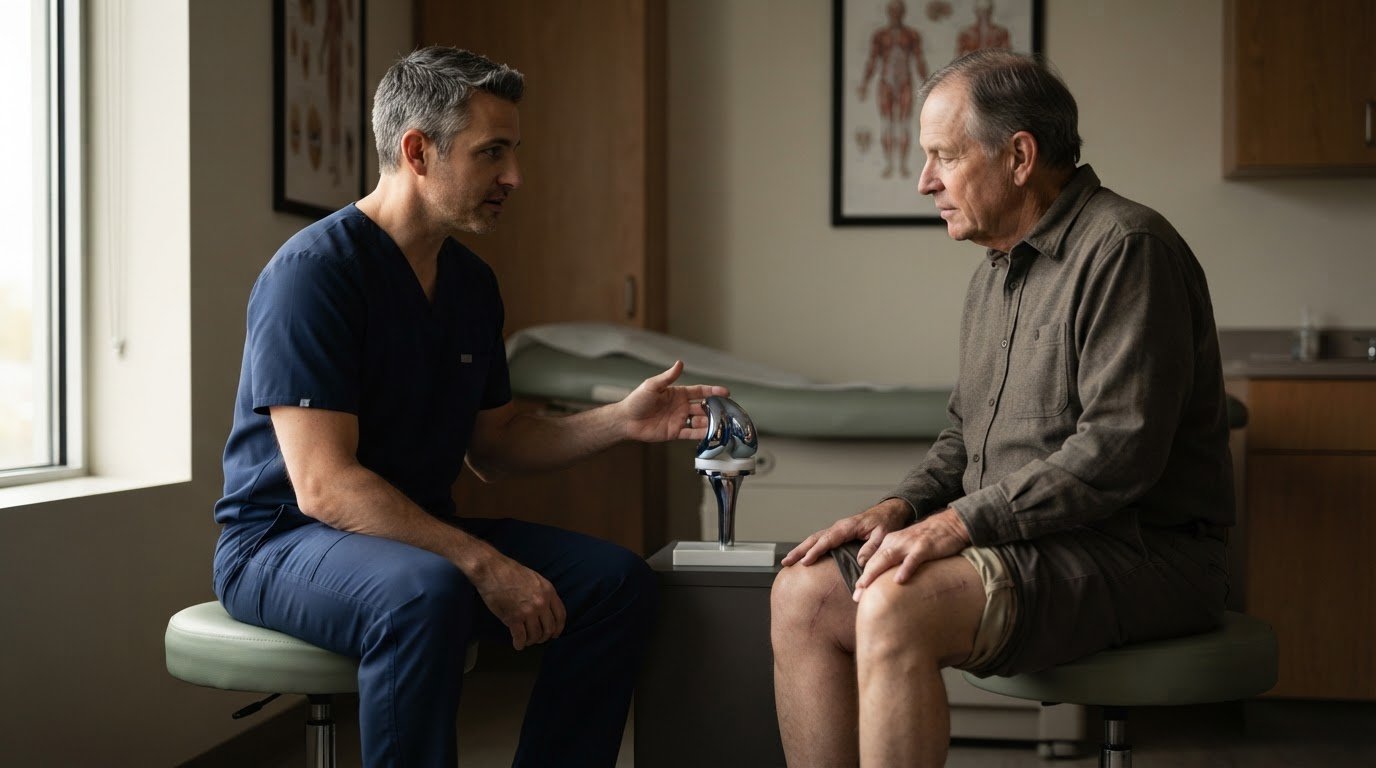
To assess a surgeon’s recommendation or seek a second opinion, bring your medical history, imaging, and questions about the proposed procedure. Discuss the reasoning, alternatives, risks, and recovery plan, then consider how each opinion addresses your symptoms and goals.
Total hip replacement typically takes about 1.5 hours. The procedure replaces damaged parts of the hip joint, while the surrounding plan includes anesthesia and postoperative rehabilitation. The surgical setting affects the immediate schedule: hip replacement may be outpatient, with a return home the same day, or inpatient, with an overnight stay. Some patients spend a few nights in the hospital.
Recovery depends on the procedure and your health. Many patients begin walking shortly after surgery, then continue improving over several weeks and months with rehabilitation. Light activities may be possible 3 to 6 weeks after hip replacement surgery; return to regular activities may take 10 to 12 weeks. These milestones describe different stages, not a single finish line.
After surgery: A replaced hip can bear full weight as soon as you wake up, according to the recovery guidance provided.
First 6 weeks: After minimally invasive total hip replacement, place a pillow between your legs while sleeping.
During recovery: After total hip replacement, avoid bending the hip past 90 degrees or combining hip bending with turning your foot inward.
At home: Use an elevated toilet seat, avoid low chairs, and use a grabber instead of bending to pick things up.
Physical therapy helps guide movement and rehabilitation as you progress. Follow the plan provided for your operation, and discuss changes in pain, mobility, or daily function during follow-up. For example, returning to light activity at 3 to 6 weeks is not the same as resuming regular activity, which may take 10 to 12 weeks.
Arthritis-related pain, imaging findings, physical function, and treatment goals help shape a discussion about replacement surgery or another approach. A second opinion can clarify why a surgeon recommends total hip replacement rather than arthroscopy, or whether continued non-operative treatment may suit your situation. Bring the same questions to each discussion so you can compare the proposed procedure, recovery steps, and expected activity milestones.
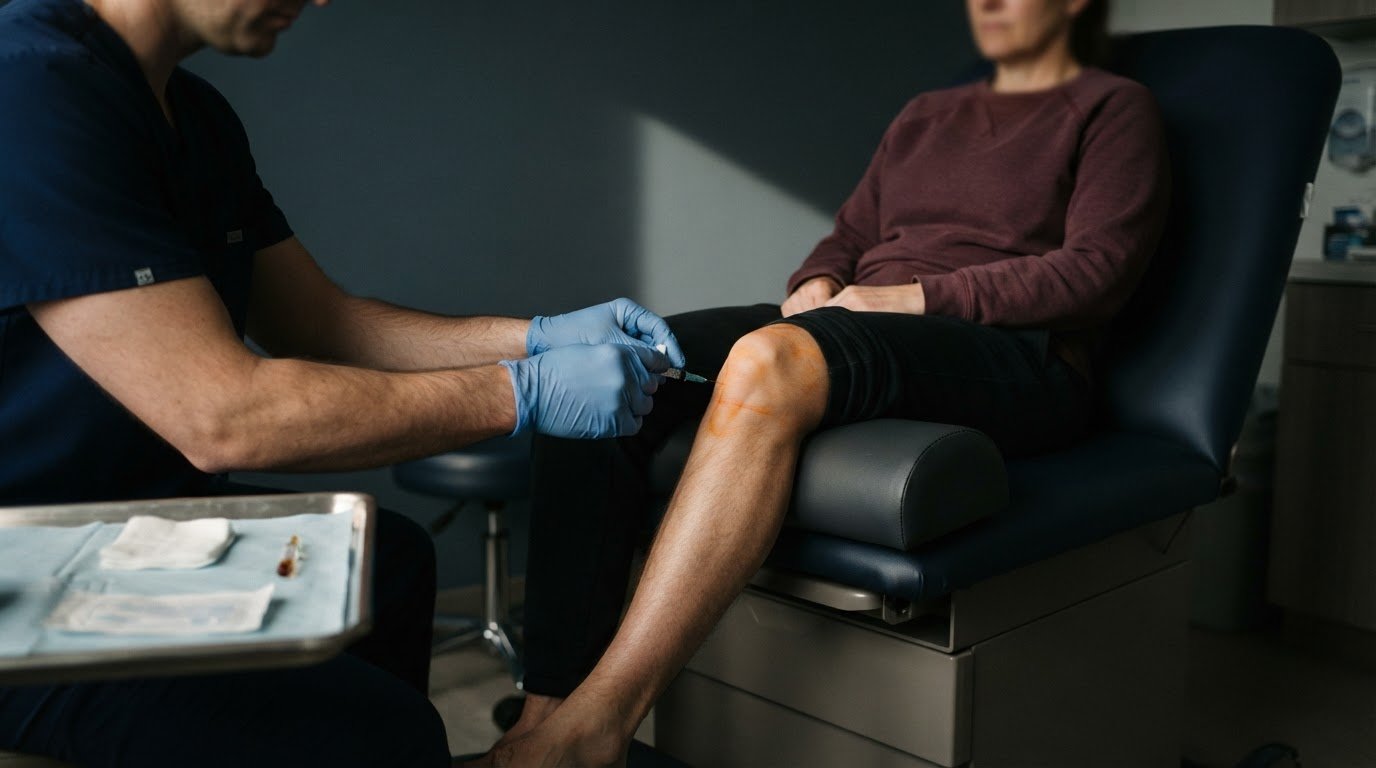
Cash-pay pricing information for uninsured patients
For patients comparing self-pay hip surgery options in Johnson County, KS, the cost depends on the individual case and proposed care. The procedure, facility, anesthesia, implant, and postoperative care can affect the estimate. Ask for a written breakdown to see which services the total includes.
For a total hip replacement, the procedure replaces damaged parts of the hip joint with artificial components. Ask how the estimate accounts for the surgeon’s services, facility, anesthesia, implant, and follow-up care. These may appear as separate items or within a combined quote. The written estimate should distinguish included services from separate charges.
Patients in Overland Park and the wider Kansas City area can compare estimates using the same categories. An outpatient plan and a hospital-based plan may involve different facility arrangements. The setting and proposed treatment help explain what an estimate covers, rather than suggesting that different totals include identical services.
Insurance, Medicare, or Kansas financial-assistance arrangements can affect out-of-pocket responsibility through applicable coverage or eligibility. Swope Joint Replacement is out of network with all insurance carriers by design. Surgeries at a hospital or accredited surgical center are billed out-of-network; when out-of-network benefits exist, the No Surprises Act requires insurers to apply the same deductible and cost-sharing structure as in-network care.
Patients with high-deductible plans may find cash-pay surgery costs as much as or less than using insurance benefits. Some patients may combine insurance benefits with certain aspects of cash-pay joint replacement care, depending on coverage. For a patient evaluating self-pay hip surgery options in Johnson County, KS, the key comparison is expected out-of-pocket responsibility against the services each option covers.
Use these categories to organize an estimate:
Procedure: Match the quote to the planned hip operation.
Services: Identify surgeon, facility, anesthesia, implant, and follow-up care.
Coverage: Separate cash-pay amounts from applicable insurance benefits.
Setting: Note whether the plan is outpatient or hospital-based.
Whether joint replacement is appropriate depends on your condition, medical history, and treatment goals. Self-employed people, retirees, and uninsured patients may consider cash-pay care. Ask for a written estimate, then review its service descriptions alongside your financial plan and the proposed care setting. This can make the financial commitment easier to understand before deciding.
Which hospitals and orthopedic surgery centers in Johnson County, KS offer hip surgery for self-pay patients?
Surgicenter of Johnson County is an ambulatory surgical center at 8800 Ballentine St in Overland Park, Kansas. Its location identifies a local surgical facility, while the facility name alone doesn’t establish which hip procedures or payment arrangements apply to a particular patient.
Hospitals and ambulatory surgery centers are different care settings. A hospital may provide inpatient services, while an ambulatory center focuses on surgical care that does not require an extended hospital stay. The appropriate setting depends on the planned procedure, your medical needs, and the care plan. For self-pay planning, the estimate should identify where the surgery is scheduled.
Use the facility name on an estimate to understand where charges originate. Separate the surgeon’s professional services from facility charges, anesthesia, implants, and postoperative care. For example, an estimate naming an Overland Park facility but grouping all services under one total may not show each component’s cost. An itemized estimate gives a clearer basis for comparing care settings.
Location matters for practical planning, too. A center in Overland Park may be convenient for someone living nearby, while travel from elsewhere in Johnson County can affect transportation plans. Consider arrival, the trip home, and follow-up visits before choosing a setting. These details connect the facility decision with your recovery arrangements.
For each Johnson County option under consideration, organize the details in one comparison:
Facility: Record the hospital or surgery center named in the care plan.
Procedure: Match the facility information to the planned hip operation.
Estimate: Note whether facility, anesthesia, implant, and follow-up costs appear separately.
Setting: Identify whether the plan describes outpatient or inpatient care.
Logistics: Map the route and transportation plan for the procedure and follow-up.
This approach keeps the facility’s identity distinct from its estimate and proposed clinical plan. For instance, Surgicenter of Johnson County’s Overland Park address helps locate the center, while a written estimate explains the charges tied to planned care. A useful comparison considers both details alongside the procedure and recovery arrangements.
If you’re weighing self-pay care in Johnson County, connect the setting, proposed procedure, and payment details before making a decision. Discuss your hip surgery options as part of planning care that fits your medical needs and goals.
Surgicenter of Johnson County is a local ambulatory surgical center in Overland Park. Whether it performs the planned hip surgery and offers self-pay arrangements needs to be confirmed with the facility.
Swope Joint Replacement: Non-Operative Treatment Options
Swope Joint Replacement offers non-operative treatment options for patients with hip symptoms. If pain, stiffness, or limited movement affects daily activities, an evaluation can help clarify whether non-operative care or surgery fits your needs and goals.
When hip replacement is appropriate, care may include Direct Anterior Hip Replacement. Revision Hip Replacement is an option when a previous hip replacement needs revision. The recommended path depends on your condition, medical history, and treatment goals, with attention to symptom relief and your preferred level of activity.
For a thoughtful discussion of non-operative care or hip surgery, contact Swope Joint Replacement.
Choose a Next Step That Fits Your Care Goals
If you’re weighing self-pay hip surgery options in Johnson County, KS, start with a clear conversation about your priorities. Consider what matters most in daily life, which activities you hope to return to, and what questions remain. Those details can frame a discussion about treatment choices without reducing the decision to price alone.
Swope Joint Replacement offers Non-Operative Treatment Options, Direct Anterior Hip Replacement, Knee Replacement, and Revision Hip Replacement. A thoughtful evaluation can help connect your symptoms, medical history, and goals with a suitable path. You can bring questions about treatment approaches, recovery planning, and cash pricing to that discussion.
For a personal conversation about your orthopaedic care, contact Swope Joint Replacement. Take the next step at your own pace, with your priorities at the center.
Frequently Asked Questions
What are the self-pay prices for hip replacement in Johnson County, KS?
There isn’t one self-pay price that applies to every hip replacement in Johnson County. The amount depends on the planned procedure, facility, anesthesia, implant, and postoperative care. Swope Joint Replacement provides transparent cash pricing for office visits and in-office procedures. Surgeries at a hospital or accredited surgical center are billed out-of-network. Request a quote based on the proposed procedure and care setting to understand your expected charges.
Which providers in Johnson County, KS offer bundled or all-inclusive cash prices for hip surgery?
A provider’s name or facility location alone doesn’t establish that a hip surgery quote is bundled or all-inclusive. Surgicenter of Johnson County is an ambulatory surgical center at 8800 Ballentine St in Overland Park, but that fact doesn’t establish its pricing structure. At Swope Joint Replacement, office visits and in-office procedures have transparent cash pricing; hospital and accredited-center surgeries are billed out-of-network.
Do Johnson County hospitals and surgeons offer self-pay discounts, deposits, payment plans, or medical financing?
Cash payment, a discount, a deposit, an installment plan, and medical financing are different arrangements, so do not assume one means another is available. Coverage and cost-sharing for hospital or accredited surgical center care can depend on your insurance plan, so confirm how the services will be billed before proceeding.
What are the risks and recovery timeline for hip replacement or hip arthroscopy?
Hip replacement risks can include infection, dislocation, fracture, nerve or blood vessel injury, blood clots, leg-length inequality, persistent pain, and implant wear. Recovery varies with the procedure and your health. After hip replacement, light activities may be possible in 3 to 6 weeks, while regular activities may take 10 to 12 weeks. Hip arthroscopy is a different procedure, so its recovery plan depends on the condition treated.
Are there lower-cost hip surgery options near Johnson County, such as Kansas City-area facilities or ambulatory surgery centers?
An ambulatory surgery center may be a useful facility to include in a local comparison, but its setting alone doesn’t establish a lower total cost. Surgicenter of Johnson County is located at 8800 Ballentine St in Overland Park. Compare the planned procedure and services in each estimate, including facility, anesthesia, implant, and follow-up care, so you can assess the full scope rather than a headline total.

Comments