Total Knee Replacement Cash Pricing: A Checklist for Clear Decisions

A low estimate can be the least useful number if it doesn’t describe the same care as a higher one. With total knee replacement cash pricing, the key question isn’t only what an estimate costs, but what it covers and what may be billed separately.
It’s reasonable to want a clear figure before planning for surgery. But “cash price,” “self-pay,” and “out-of-network” can describe different payment arrangements. Estimates may also cover different parts of care, such as the surgeon, facility, anesthesia, or follow-up services. Comparing amounts without comparing their scope can leave you with more questions than answers.
This guide explains how to review an estimate, compare direct cash payment with out-of-network benefits, and identify details to clarify before making a decision. It also explains why your treatment plan and financial questions belong in the same conversation. Swope Joint Replacement offers cash pricing and out-of-network options for knee care, with direct physician access to support a discussion tailored to your needs.
Table of Contents
What Does Total Knee Replacement Cash Pricing Mean in the Kansas City Area?
Total Knee Replacement Cash Pricing Checklist: What Should an Estimate Clarify?
Cash Pay or Out-of-Network Benefits: How to Compare Knee Replacement Options
Your Kansas City Knee Replacement Pricing Checklist Before Choosing Care
How Swope Joint Replacement Approaches Cash-Priced Knee Replacement
What Does Total Knee Replacement Cash Pricing Mean in the Kansas City Area?
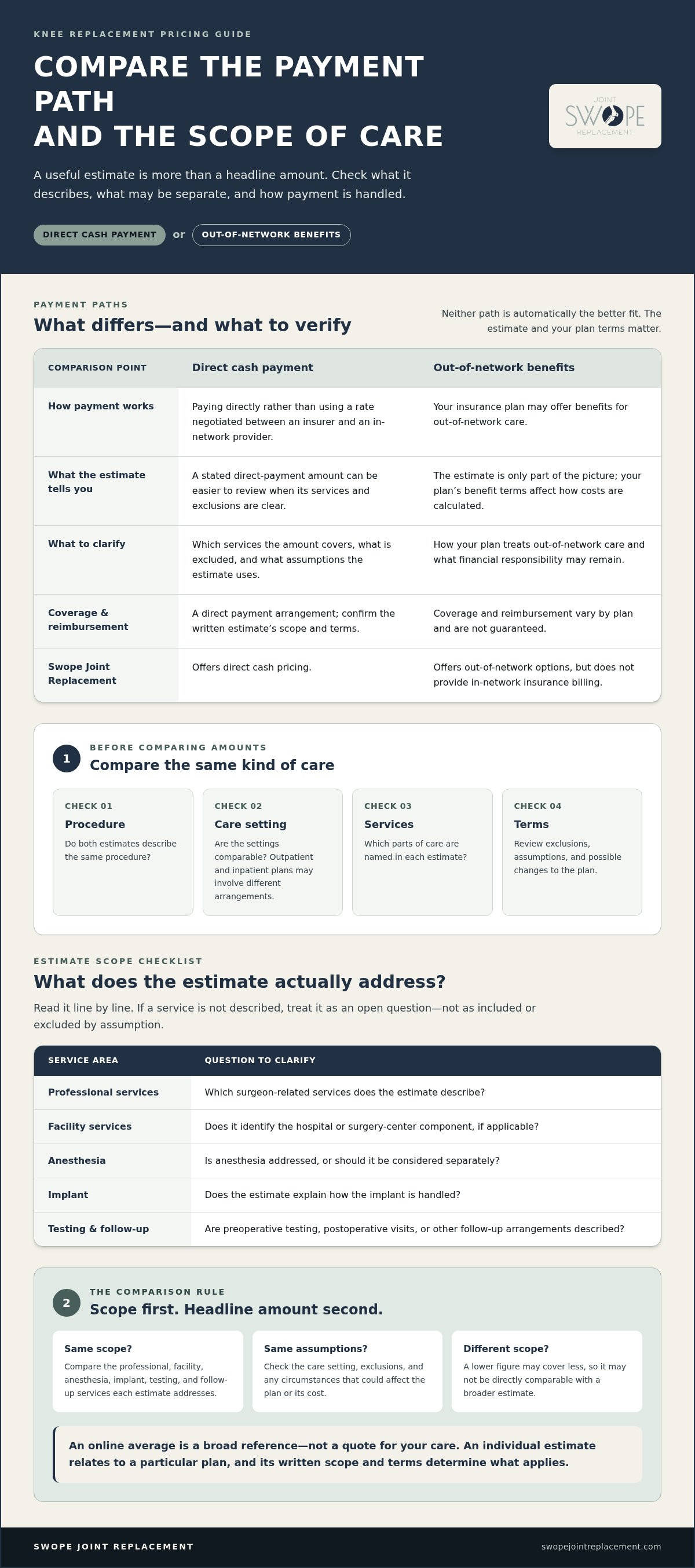
A knee replacement brings practical financial questions alongside important medical decisions. Before using an estimate to plan care, make sure you understand what it describes. Total knee replacement cash pricing generally refers to paying directly rather than using a rate negotiated between an insurer and an in-network provider. The label alone doesn’t tell you which services are included.
An estimate is most useful when its scope, exclusions, and assumptions are clear. It should distinguish the proposed surgical care from services that may be billed separately, rather than present a number without context. Details can depend on your individual care plan and where different services are provided. Knee replacement surgery can involve different approaches, so a general figure may not describe your specific plan.
Swope Joint Replacement offers direct cash pricing and out-of-network options, but does not provide in-network insurance billing. These payment paths work differently. Identify which one an estimate reflects before comparing it with another figure.
How Is a Cash Price Different from an Average Procedure Cost?
An online average is a broad reference, not a quote for your care. It may combine figures from different locations, care settings, and service scopes. An individual estimate, by contrast, relates to a particular plan. For a fair comparison, check whether estimates describe the same procedure and setting, and whether they account for similar services. A lower figure may cover less and therefore may not be comparable.
Does Cash Pricing Mean the Same Thing as Self-Pay?
Patients may use “cash-pay” and “self-pay” to mean paying directly rather than having an insurer pay a provider under a negotiated in-network rate. Out-of-network care is different: your insurance plan may offer benefits, but coverage and reimbursement vary and aren’t guaranteed. Clarify which payment path applies and what financial responsibility remains. For more context, read our out-of-pocket knee replacement options guide.
Total Knee Replacement Cash Pricing Checklist: What Should an Estimate Clarify?
A useful estimate shows what the figure represents, not just the amount. Before comparing total knee replacement cash pricing, review the services named, the assumptions behind the estimate, and any care that may be billed separately. Use these questions to identify what needs clarification in a conversation with your surgeon.
Which Services and Assumptions Should Patients Look For?
Read the estimate line by line. If a service isn’t described, treat it as an open question rather than assuming it’s included or excluded. Look for clarity on:
Professional services: Which surgeon-related services does the estimate describe?
Facility services: Does it identify the hospital or surgery-center component, if applicable?
Anesthesia: Is anesthesia addressed, or should it be considered separately?
Implant: Does the estimate explain how the implant is handled?
Testing and follow-up: Are preoperative testing, postoperative visits, or other follow-up arrangements described?
Also look for exclusions, the assumed care setting, and circumstances that could affect the plan or its cost. For example, an estimate may describe a particular procedure and setting, while your individualized plan may involve different clinical needs. These are possible estimate components to clarify, not a statement that every component is included in Swope Joint Replacement pricing. The estimate’s written scope and terms determine what applies to your care.
How Can You Compare Two Estimates Fairly?
Start with scope, not the headline amount. Check whether both estimates describe the same procedure and comparable care settings. Then compare the professional, facility, anesthesia, implant, testing, and follow-up services they address, along with their exclusions and assumptions. A figure that covers fewer services may not be directly comparable to one with a broader scope.
The care setting matters, too. An outpatient and an inpatient plan may involve different arrangements. For context on outpatient care, see the outpatient knee replacement overview. Your surgeon can help connect the proposed clinical plan with the details shown in an estimate.
Use this checklist to bring specific pricing questions into a personalized knee care conversation. Explore Swope’s personalized knee care to learn about the practice’s approach.
Cash Pay or Out-of-Network Benefits: How to Compare Knee Replacement Options
Choosing between direct cash payment and using out-of-network benefits depends on more than an estimate’s headline amount. The two paths handle payment differently, and neither is automatically the better fit. Compare the estimate’s scope and your potential costs with the way your insurance plan treats out-of-network care.
When Might Direct Cash Pricing Feel More Straightforward?
A stated direct-payment amount may be easier to plan around when it clearly describes a defined set of services. That clarity comes from the estimate’s detail, not from the word “cash” alone. Review what it covers and excludes, and note any assumptions about the procedure or care setting. Cash pricing isn’t automatically less expensive for every patient; the right path depends on your finances, plan terms, and clinical needs.
What Should Patients Understand About Out-of-Network Benefits?
Your plan documents determine whether and how out-of-network benefits apply. They may describe conditions, limits, or cost-sharing that affect your responsibility. The surgeon’s charges and an insurer’s benefit calculation are separate: an estimate of professional charges doesn’t establish what your plan will reimburse. Review the relevant plan terms before relying on a projected payment, since reimbursement isn’t guaranteed. For more context, read the out-of-network knee replacement options guide.
To compare pathways thoughtfully, set the estimate beside your plan details and consider both in relation to the proposed care. Swope Joint Replacement offers direct cash pricing and out-of-network options, with an individualized discussion of the financial and clinical considerations together.
Your Kansas City Knee Replacement Pricing Checklist Before Choosing Care
Bring both medical and pricing questions to a Kansas City-area consultation. Information about your knee, treatment history, and daily priorities helps your surgeon discuss a care plan that fits your needs. It also gives you a more meaningful basis for reviewing total knee replacement cash pricing. Swope Joint Replacement serves patients in Overland Park, Kansas City, Olathe, Lees Summit, Lenexa, Leawood, Blue Springs, and Independence.
What Information Helps Make a Pricing Discussion More Personal?
Gather details that can help your surgeon understand how knee symptoms affect your life. Your checklist might include:
Medical records and imaging: Bring relevant records and available X-rays or other imaging.
Symptoms: Note where you feel pain or stiffness, what tends to worsen it, and how it affects your daily activities.
Treatment history: Summarize treatments you’ve tried and how they’ve worked for you.
Medications and health history: Prepare a current medication list and share relevant health conditions or past procedures.
Mobility goals: Consider the activities you want to manage more comfortably, such as walking, using stairs, or keeping up with household routines.
This information supports a focused conversation, but it can’t replace an individualized medical assessment. Your surgeon’s examination and review of imaging help determine whether total knee replacement is appropriate. Depending on the clinical findings, partial knee replacement may also be worth discussing. Explore the partial knee replacement guide for Kansas City for more context.
Which Questions Help Clarify the Estimate and Care Plan?
Use the consultation to connect the written estimate with the proposed treatment. Consider asking:
Which professional and facility services does this estimate describe, and what may be separate?
What assumptions does it make about the procedure and care setting?
How could my examination, imaging, or health history change the recommended plan?
If the care setting or treatment plan changes, could the estimate change too?
How does the recommended approach relate to my mobility goals and the treatment options discussed?
Compare the written scope and assumptions alongside the surgeon’s clinical recommendation. A price figure alone can’t tell you whether a procedure suits your knee or your goals. Swope Joint Replacement provides personalized knee care in the Kansas City area, with direct physician access to support an informed discussion.
Explore a personalized knee replacement consultation with Swope to discuss your clinical needs and pricing questions together.
How Swope Joint Replacement Approaches Cash-Priced Knee Replacement
For a major procedure, a useful pricing discussion belongs alongside a careful conversation about your knee, health, and activity goals. Swope Joint Replacement provides primary and partial knee replacement and revision knee surgery, with direct cash pricing and out-of-network options. The practice brings the clinical plan and financial information into the same conversation, without assuming one payment path suits everyone.
What Does a Personalized Knee Replacement Discussion Address?
Your symptoms and mobility goals help shape the conversation, but they’re only part of the picture. A physician evaluates your knee and considers your health history and clinical findings when discussing treatment. That assessment helps determine whether total or partial knee replacement may be appropriate, or whether another approach should be considered. The recommendation is individualized, not based on a price estimate alone.
Once there’s a proposed plan, you can discuss how cash pricing or out-of-network benefits relate to it. Review an estimate according to its written scope and assumptions. Out-of-network benefits depend on your insurance plan, and neither pathway guarantees savings or a particular reimbursement. Direct physician access and transparent communication keep questions about treatment and pricing connected to your circumstances.
How Can Patients Take the Next Step in Overland Park?
If you’re preparing for a discussion in Overland Park or elsewhere in the Kansas City area, bring relevant medical information and any estimate you’re reviewing. Notes on symptoms, previous treatment, and everyday mobility goals can help focus the conversation. The estimate checklist in this article can also help you identify what the written figure describes and which assumptions you want to discuss.
A knee replacement consultation is a chance to understand the clinical recommendation, consider your goals, and discuss cash pricing or out-of-network options in context. Bring your questions and take time to understand the care being considered.
Discuss knee replacement care with Swope and take the next step toward an individualized plan.
Make Your Next Knee Care Decision With Clarity
A clear estimate is about more than a number. Understanding which services it describes, what may be separate, and what assumptions shape it helps you compare payment paths thoughtfully. Cash pricing and out-of-network benefits work differently, so consider your plan terms and personal circumstances rather than assuming one option will cost less.
Your clinical plan matters just as much. A surgeon’s assessment can help determine whether primary, partial, or revision knee replacement fits your needs and mobility goals. At Swope Joint Replacement, direct cash pricing and out-of-network options are part of personalized concierge orthopaedic care, with direct physician access and transparent communication.
Bring your estimate, medical information, and questions to a conversation about the care that may be right for you. Discuss your knee replacement options with Swope Joint Replacement and take a considered next step with greater confidence.
Frequently Asked Questions
How much does total knee replacement cost with cash pricing?
The amount depends on your care plan and what the written estimate describes; one figure doesn’t apply to every patient. Swope Joint Replacement offers direct cash pricing for knee care. Review the estimate’s scope, including which professional services it covers and what may be separate. Discussing the estimate alongside your clinical plan makes total knee replacement cash pricing more useful than an unqualified online number.
What should a total knee replacement cash-price estimate include?
A clear estimate should describe its services, assumptions, and exclusions. Look for details about the surgeon’s professional services, facility care, anesthesia, implant, testing, and follow-up arrangements. These are possible components to clarify, not items to assume are included. Check whether the estimate describes your proposed procedure and care setting, and identify any services or circumstances that could change the plan or your financial responsibility.
Is cash pricing cheaper than using out-of-network insurance benefits?
Not necessarily. A direct cash amount may be easier to understand if its scope is clear, while out-of-network benefits depend on your plan’s terms and calculations. Neither option is automatically less expensive for every patient. Compare the services and exclusions in the estimate, review your plan documents, and consider your financial circumstances. A projected insurance benefit isn’t the same as guaranteed reimbursement or a final out-of-pocket amount.
Can I use out-of-network benefits for knee replacement surgery?
You may be able to use out-of-network benefits, depending on your specific insurance plan and its terms. Swope Joint Replacement offers out-of-network options but does not provide in-network insurance billing. Review your plan documents to understand whether benefits apply and how the insurer calculates them. The surgeon’s charges and your insurer’s benefit determination are separate, and an estimate does not guarantee coverage or reimbursement.
Does a total knee replacement cash price include anesthesia and facility fees?
Don’t assume anesthesia or facility fees are included just because an estimate is described as a cash price. Inclusions depend on the written scope and terms of that estimate. Review whether it addresses the surgeon’s services, facility, anesthesia, implant, testing, and follow-up, and identify anything described separately or left unclear. This helps you understand what the estimate represents without treating possible components as automatically included.
Is total knee replacement outpatient surgery?
Total knee replacement may be planned in an outpatient or inpatient setting; the appropriate care setting depends on your clinical needs and surgical plan. Your surgeon considers your health and other relevant factors when recommending an approach. Since the setting can affect which services an estimate describes, compare estimates only after understanding the assumptions behind each one. Discuss how the proposed setting relates to your care and recovery plan.
What information should I bring to a knee replacement pricing discussion?
Bring relevant medical records and imaging, a current medication list, your health history, notes on symptoms, and a summary of treatments you’ve tried. Include your estimate and questions about what it covers. It can also help to describe daily mobility goals, such as managing stairs or walking more comfortably. Patients in Overland Park, Kansas City, Olathe, Lees Summit, Lenexa, Leawood, Blue Springs, and Independence can use these details to support a focused conversation about individualized knee care.


Comments